US XRP ETFs Reportedly Outperform the Token by Up to 100%, Highlighting a Pricing Imbalance
Key Takeaways
- •Certain US-listed XRP ETFs have reportedly outperformed the underlying token by as much as 100%, though the underlying data has not been fully verified.
- •Spot XRP ETFs began trading in the United States only after SEC approval in 2025, so these funds remain in early price discovery.
- •Wide or persistent ETF premiums typically indicate that the creation-and-redemption arbitrage mechanism is constrained, such as by thin liquidity or slow share creation.
- •A pricing gap in the fund does not change the value of directly held XRP, since direct holders track the spot price rather than the fund premium.
- •Whether the gap between ETF prices and XRP's spot price closes will indicate whether the imbalance was temporary or structural.
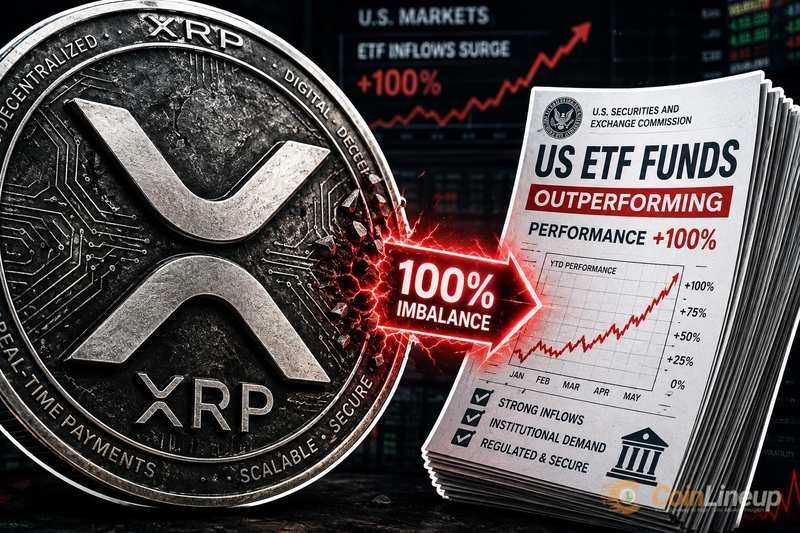
XRP is showing an unusual gap between certain US exchange-traded funds and the token itself, with select funds reported to have outperformed the underlying asset by as much as 100%. This XRP ETF imbalance points to a pricing disconnect that everyday holders should understand before drawing any conclusions.
What happened with XRP ETF trading?
An ETF, or exchange-traded fund, is an investment product that trades on a stock exchange and is designed to track the price of an asset — in this case, XRP. The expectation is that when XRP moves, the fund moves with it. In practice, US-listed crypto ETFs are a relatively new access point: spot XRP ETFs began trading in the United States only after the SEC approved them in 2025, so these funds are still in their early price-discovery phase compared with long-established ETF markets.
According to a report from U.Today, that link has broken down for XRP, with certain US funds reported to have outperformed the token by up to 100%. That figure is best treated as a market observation rather than a confirmed structural explanation, since the underlying data has not been fully verified.
Select US XRP ETFs have outperformed the underlying token by up to 100%, reflecting a significant net-asset-value-to-spot imbalance. You can compare that against XRP's own spot price — the live market rate for the token — on its CoinGecko market page. The spot price is the baseline the funds are supposed to follow.
Why the imbalance matters for XRP holders
A fund's price can diverge from the token's spot price for several reasons, including supply and demand for the fund shares themselves. When more people want the fund than there are shares available, the fund can trade above the value of the XRP it represents. In mature ETF markets, this premium is normally kept tight by a creation-and-redemption mechanism: authorized participants can create or redeem fund shares in exchange for the underlying asset, which pulls the fund's price back toward its net asset value. Wide or persistent premiums typically indicate that this arbitrage channel is constrained — for example, when shares are hard to create quickly or trading liquidity is thin.
Here is the key point for everyday holders: a pricing gap in a fund does not automatically mean the XRP token itself has changed in value by the same amount. If you hold XRP directly, your position tracks the spot price, not the fund premium.
This kind of product-versus-token divergence is worth watching as more regulated crypto products reach the market. New access points can change how demand for a token flows through different products, and institutional or retirement-brokerage demand that cannot easily buy the token directly can concentrate in fund shares instead.
What to watch next in XRP's market
The single most useful metric to follow is the relationship between the ETF price and XRP's spot price. If the reported gap closes, it suggests the imbalance was temporary rather than structural.
Beyond that, keep an eye on simple signals: the token's spot price, trading volume, and whether the fund premium persists over several days. Regulation is also part of the backdrop, as authorities tighten oversight of crypto products.
For a regular holder, the practical takeaway is straightforward. Watch the spot price you actually own against, and treat headline fund-outperformance figures as a signal to check the data yourself — not as a change in the token's real value.
Disclaimer: This article is for informational purposes only and does not constitute financial or investment advice. Cryptocurrency and digital asset markets carry significant risk. Always do your own research before making decisions.

