Xi Tells Egypt's Sisi That 'External Interference' in the Middle East Should Be Opposed
Key Takeaways
- •Xi Jinping made his first visit to Egypt in ten years and held talks in Cairo with President Abdel-Fattah el-Sissi, urging opposition to external interference in Middle Eastern affairs.
- •Xi offered Chinese cooperation to safeguard international shipping lanes, which is especially significant for Egypt given revenue losses from Red Sea shipping disruptions.
- •China has positioned itself as a Middle East diplomatic player, notably brokering the 2023 restoration of diplomatic ties between Saudi Arabia and Iran.
- •The United States has threatened expanded sanctions to isolate Iran economically that could affect Chinese banks, while China, a major buyer of Iranian oil, has vowed to defend its interests.
- •Chinese firms operate in Egypt's Suez Canal Economic Zone, and Egypt is among the Arab states that have deepened economic and political ties with Beijing.
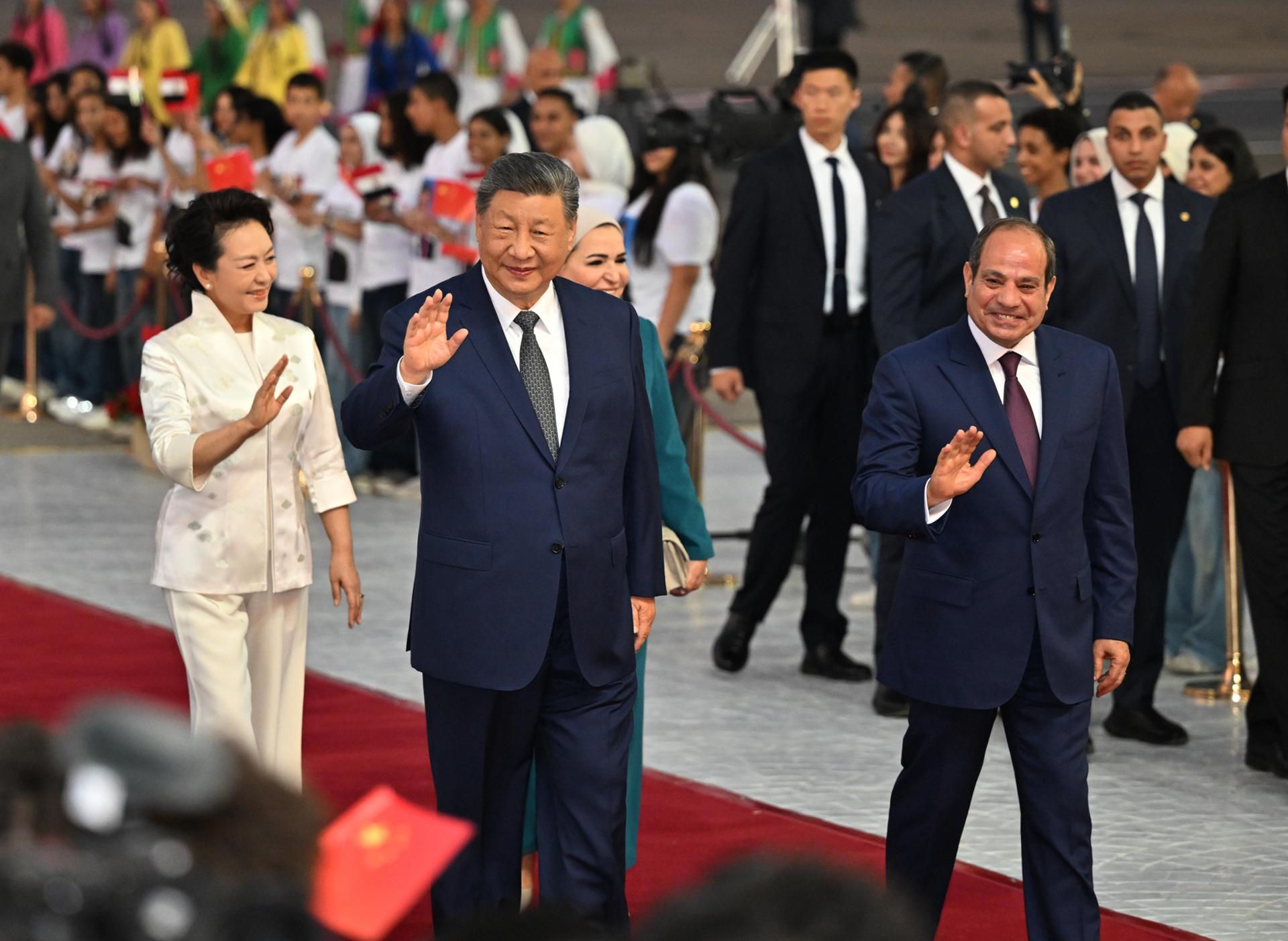
Chinese President Xi Jinping told his Egyptian counterpart on Wednesday that "external interference" in the Middle East should be opposed, according to Beijing's state media, following talks in Cairo between the two leaders.
Xi arrived at Cairo International Airport on Tuesday, where he and his wife Peng Liyuan were welcomed by Egyptian President Abdel-Fattah el-Sissi and his wife Entissar Amer, as shown in images distributed by Xinhua-Yonhap.
"We must uphold the principle that the people of the Middle East are the masters of their own affairs, oppose external interference (and) support regional countries in strengthening dialogue on peace and security," Xi told President Abdel Fattah al-Sisi, according to Chinese state news agency Xinhua.
The visit is Xi's first to Egypt in a decade, and it comes as Beijing seeks a greater foothold in the region against the backdrop of the U.S.-Iran war. Egypt is a key Arab state and a major recipient of Chinese investment — Chinese firms operate in the Suez Canal Economic Zone along the strategic waterway linking the Mediterranean and Red Sea — and China has in recent years positioned itself as a promoter of Middle East diplomacy, having brokered the restoration of diplomatic ties between Saudi Arabia and Iran in 2023. Egypt is also among the many Arab states, alongside regional powers such as Saudi Arabia and the United Arab Emirates, that have deepened economic and political ties with Beijing in recent years.
Washington vowed last month to isolate Iran economically, threatening expanded sanctions that could also hit Chinese banks, among others. China, a major buyer of Iranian oil, has vowed to safeguard its interests.
Xi also said during talks with Sisi that Beijing was willing to help protect maritime shipping in the energy-rich region, which has been upended since US-Israeli strikes on Iran in late February triggered the war. The offer carries particular weight for Egypt, whose Suez Canal revenue has been hit hard by shipping disruptions in the Red Sea in recent years.
"China stands ready to work with countries in the region to safeguard the security of international shipping lanes, advance development cooperation... and eliminate the breeding grounds for conflict," Xi said, according to Xinhua.
Source: The Korea Times

