Wall Street Journal Editorial Criticizes Sen. Roger Marshall Over Social Security Tax Cap Proposal
Key Takeaways
- •Sen. Roger Marshall (R-KS) has called for eliminating the $184,500 cap on income subject to the Social Security payroll tax.
- •The Wall Journal's editorial board criticized the plan as one of the largest peacetime tax increases in recent decades, estimating it would raise the marginal rate by 12.4 percent on earnings above the cap, split between workers and employers.
- •The board argued that removing the cap would not come close to filling Social Security's funding gap and could push effective marginal income-tax rates above 60 percent for millions of earners in some states.
- •Social Security's trust fund is projected to run out in 2032, which would trigger deep benefit cuts unless Congress enacts reforms before then.
- •Former Social Security Commissioner Martin O'Malley argued that broad public support exists for requiring the wealthiest Americans to pay the same Social Security tax rate as other workers.
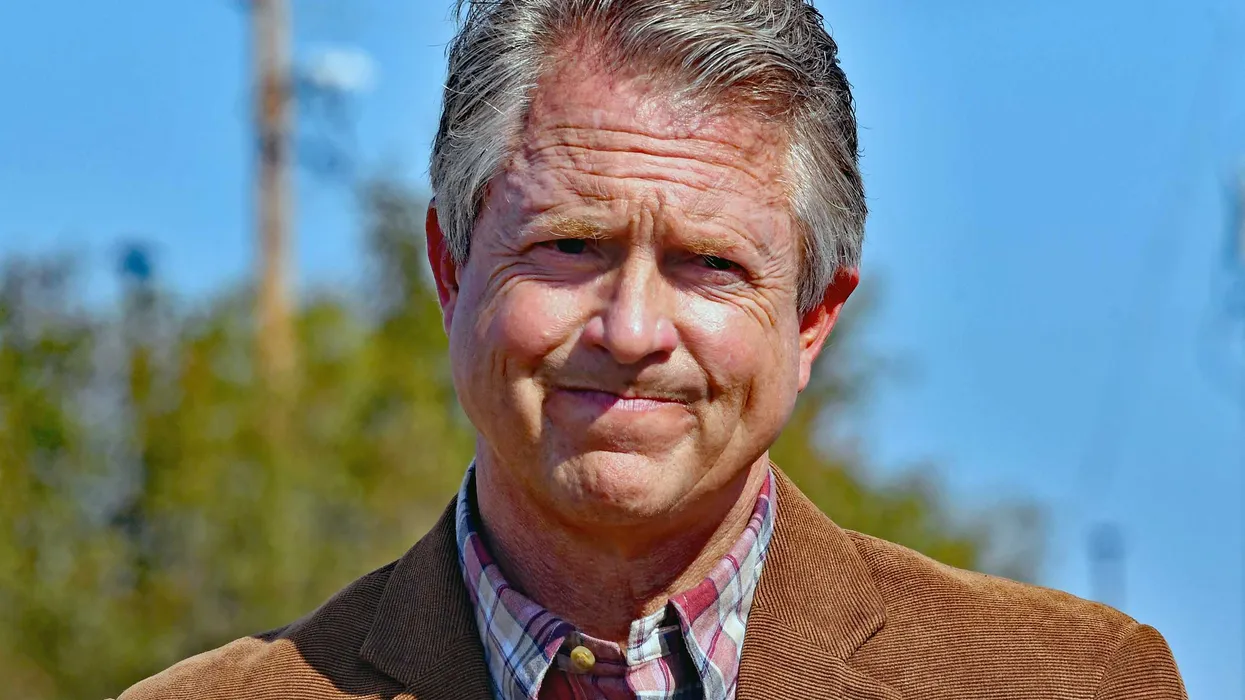
Sen. Roger Marshall (R-KS) — who has already drawn controversy for his closeness to President Donald Trump and for allegedly harassing poor patients while working as a doctor — is now facing criticism from an unexpected quarter: the editorial board of The Wall Street Journal, which takes issue with his support for what it calls a "left-wing, tax-and-spend" policy.
"No politician wants to campaign on promises of difficult Social Security reforms," the Journal's editorial board wrote on Thursday. "Even so, the Republican surrender on the old-age entitlement that's gathering steam is something else. Sen. Roger Marshall of Kansas is the latest to call for a giant tax increase even without any policy reform."
The editorial noted the political context: "Mr. Marshall, the Republican incumbent, is in a tight Senate race with a centrist-presenting Democratic challenger, and Social Security inevitably came up in debate this week. Senators elected this year will be in office when the old-age program's trust fund runs out in 2032, which will trigger deep benefit cuts if Congress doesn't reform the program." That timeline puts the next Senate class directly on the hook: once the trust fund is depleted, payroll tax revenue alone would no longer cover full scheduled benefits, leaving recipients exposed to reductions unless lawmakers act first.
The board argued that Marshall — "the Republican, remember" — had come out in favor of "one of the largest peacetime tax increases in recent decades." "I would eliminate the cap altogether," Marshall said, referring to the current $184,500 cap on income subject to the payroll tax that funds Social Security. Under the current structure, high earners stop paying Social Security tax on wages beyond that threshold, which is what makes the cap a recurring focal point in debates over the program's finances. According to the Journal, removing the cap would amount to a 12.4 percent marginal tax rate increase on workers earning above that amount — 6.2 percent each on workers and their employers — which it described as "a punitive tax on work."
The editorial also argued that "eliminating the cap wouldn't come close to filling the entitlement's funding gap. And that's before accounting for the damage to the economy from pushing effective marginal income-tax rates on millions of earners above 60 percent in some states."
The board concluded: "This is a political mistake for the ages because this debate is bigger than Social Security. In its impact on the federal budget and consequences for economic growth, Social Security reform may be the most important policy this year's class of Senators will debate during their term. Why vote for Republicans if all you'll get is left-wing, tax-and-spend economic policies masquerading as right-wing populism?"
Not everyone shares the Journal's position. Speaking to AlterNet earlier this month, Martin O'Malley, who served as Social Security Commissioner under former President Joe Biden, argued against the editorial's stance.
"I actually think as people come to understand the solution and what's at stake as that cliff gets closer and closer, I think you're going to find broad public support for requiring that the wealthiest of Americans pay the same Social Security tax rate that all of the rest of us do," O'Malley told AlterNet at the time.
The exchange frames the choice awaiting the next Senate as the 2032 deadline approaches: raise additional revenue, absorb the deep benefit cuts that follow a trust fund depletion, or pursue some combination of the two — with Marshall's cap elimination now one of the concrete proposals on the table.
In addition to siding against many Republicans on Social Security reform, Marshall has reportedly been aggressive in pursuing repayment of medical debts from patients who claimed they were too poor to afford them. He did so while still a practicing physician — despite being quite affluent himself — and experts agreed that it was unusual for him to go as far as he did, including seeking arrests in 81 cases.
Marshall has also been protested for his role in squashing the publication of the Jeffrey Epstein files. Trump is accused of engaging in sex crimes, including allegedly with children, while associating with Epstein during their decades-long friendship.

