World Liberty Financial Backs WorldClaw Amid U.S. Scrutiny of Chinese AI Models
Key Takeaways
- •WorldClaw is a Hong Kong-based AI routing platform that accepts USD1 for payments and offers models from both Chinese and U.S. developers.
- •Reuters found that 43 of the roughly 90 models on WorldClaw came from Chinese firms, including Alibaba, Baidu, Z.ai, DeepSeek, and Moonshot.
- •Several of the Chinese companies on the platform face U.S. restrictions or official concerns, including military-linked designations, Entity List placement, and IP theft allegations.
- •WorldClaw says it has more than 10,000 users and processes over 50 million requests per day, with lower-priced Chinese models helping drive demand.
- •World Liberty Financial, WorldClaw, and the White House all denied a conflict of interest, while outside experts continued to raise security and data-protection concerns.
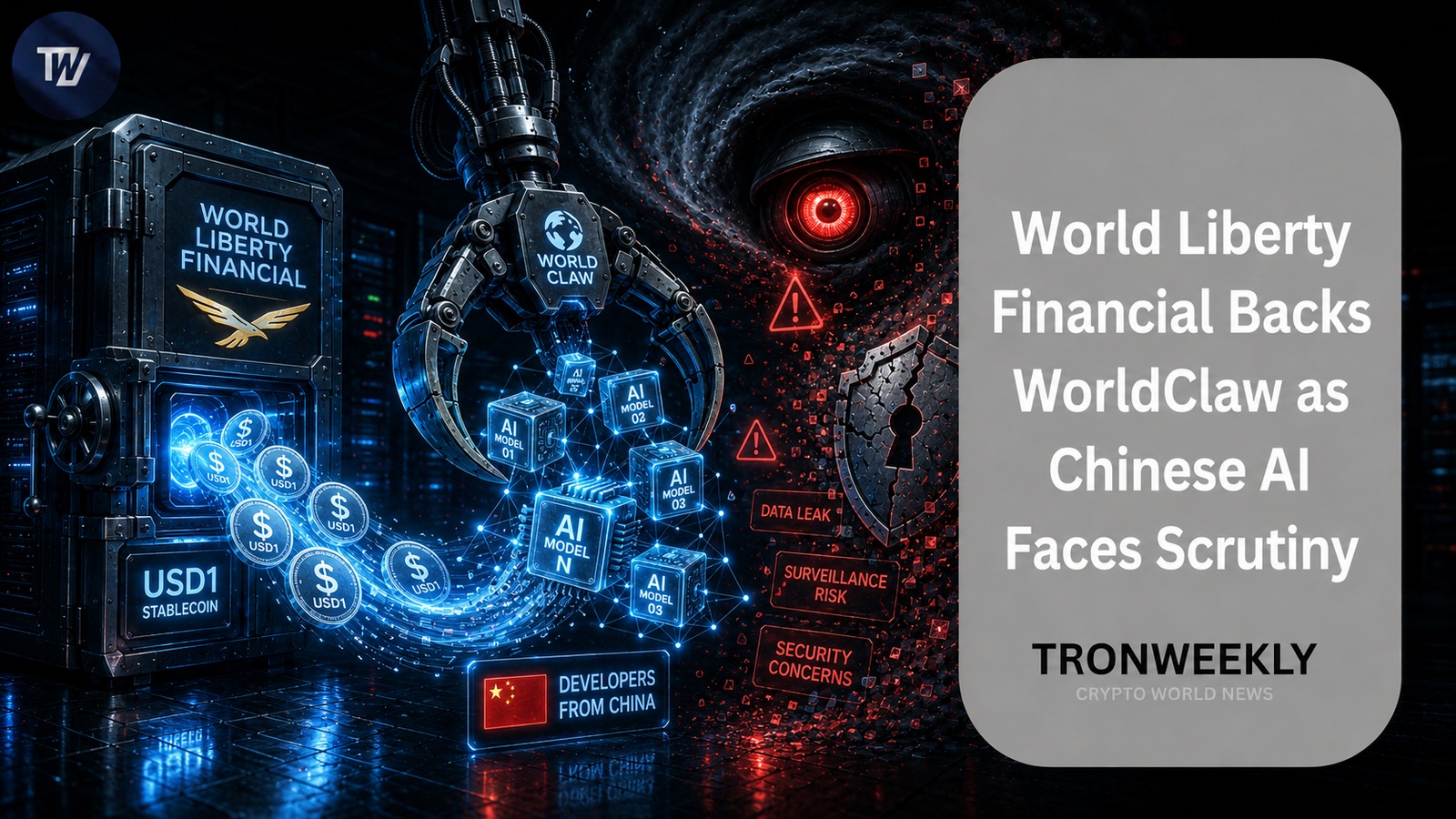
World Liberty Financial has ties to WorldClaw, a Hong Kong-based artificial intelligence platform that accepts the USD1 stablecoin for payments. The platform also offers Chinese AI models that have drawn scrutiny from U.S. government agencies over security and military concerns.
According to a Reuters report, WorldClaw lists roughly 90 AI models on its routing platform — a type of service that relays each request to whichever underlying model best matches a customer's price and performance needs — and Reuters found that 43 of them came from Chinese developers. These include Alibaba, Baidu, Z.ai, DeepSeek, and Moonshot. Models from OpenAI and Anthropic are also available.
INTEL: Trump-backed World Liberty partners with Hong Kong AI platform WorldClaw, which offers Chinese AI models from firms restricted or flagged by the US | Per Reuters pic.twitter.com/hvGMBsuYNr — Solid Intel 📡 (@solidintel_x) August 17, 2026
What Links World Liberty Financial, USD1, and WorldClaw
Several of the Chinese developers featured on the platform face U.S. restrictions or official warnings. The U.S. Defense Department has designated Alibaba and Baidu as Chinese military-linked businesses, a classification that reduces the Pentagon's capacity to collaborate with the two organizations.
Z.ai, originally named Zhipu AI, falls under stricter guidelines: the firm appears on the Commerce Department's Entity List, and U.S. organizations generally require a license to offer technology to it. U.S. officials have also accused DeepSeek and Moonshot of misappropriating intellectual property from their American competitors. Moonshot denied the claims.
USD1 forms the core funding link between the two companies. WorldClaw uses the U.S. dollar-based stablecoin — a token engineered to hold a steady one-to-one value against the dollar — to pay for AI services. USD1 is issued by World Liberty Financial and holds a range of assets, including U.S. Treasury bonds, the reserve structure typical of major stablecoins. U.S. payment stablecoins gained their first federal rulebook under the GENIUS Act, the regulatory framework signed into law in July 2025. Reuters revealed that members of the Trump family receive a cut from the venture.
The Trump family has made substantial profits from the broader crypto enterprise. According to Reuters, World Liberty token sales have earned the family well over $1.4 billion, and their crypto gains were calculated at around $2.3 billion. World Liberty Financial has also obtained preliminary permission from the United States for a national bank charter — clearance that precedes any final approval — a business proposal that centered mainly on USD1.
A further connection comes from Ryan Fang, head of growth at World Liberty, who previously served as an advisor to WorldClaw. According to WorldClaw, Fang's role was strictly advisory, focusing on USD1 adoption, partnerships, and wider access to AI services. Donald Trump Jr. and Eric Trump have also promoted WorldClaw on X.
Why WorldClaw's AI Raises Security Concerns
Daniel Remler, a senior fellow at the Center for a New American Security, expressed concerns about the Chinese AI models offered on WorldClaw. He warned that such models could expose users to possible government surveillance, and he also raised concerns about malicious code that could interfere with or hijack independent AI agents.
According to WorldClaw, user information may be provided to the companies that create the models it lists — a policy that has kept customer data protection issues in focus. WorldClaw says it has more than 10,000 users and processes over 50 million requests each day. Reuters reported that lower prices for Chinese AI models have helped drive demand for the platform, a cost advantage central to how Chinese labs built international reach: DeepSeek drew worldwide attention in early 2025 for low-cost, openly available models widely described as competitive with leading U.S. systems.
World Liberty Financial rejected claims that the relationship creates a conflict of interest. Company spokesman David Wachsman said WorldClaw operates as an independent business, and he noted that other major U.S. companies also provide access to Chinese-built AI models. WorldClaw likewise rejected the criticism, saying that listing AI models does not mean endorsing their developers. The White House also denied any conflict of interest, though outside experts continued to raise security and data concerns. The dispute now sits at the intersection of two active fronts in Washington policy: limiting the reach of restricted Chinese technology firms, and implementing the new federal rules for payment stablecoins such as USD1.

