Sheikh Tahnoon-Linked Investors Hold 49% of WLTC Holdings as OCC Grants Preliminary Approval for World Liberty Bank
Key Takeaways
- •Sheikh Tahnoon and his co-investors hold 49% of WLTC Holdings through StringZ Holding RSC.
- •A Trump family-affiliated entity owns about 38% of WLTC Holdings.
- •The OCC granted preliminary conditional approval for World Liberty Financial’s proposed national trust bank.
- •The planned bank would handle issuing, redeeming and safeguarding USD1, the venture’s stablecoin.
- •World Liberty must satisfy OCC conditions and complete a final examination before the bank can begin operations.
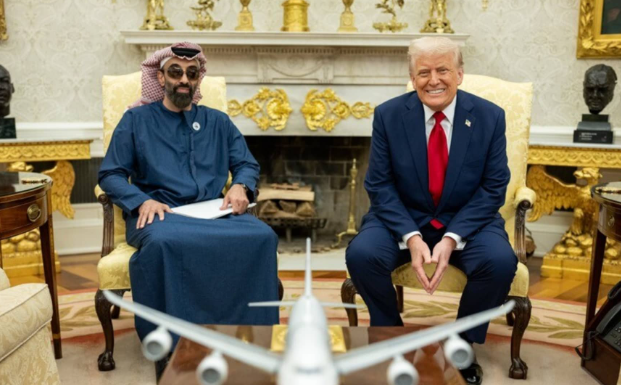
Sheikh Tahnoon bin Zayed al Nahyan, the United Arab Emirates' national security adviser, and his co-investors hold a 49% stake in WLTC Holdings, the holding company behind World Liberty Financial's planned banking venture, according to The Wall Street Journal and information shared by @WuBlockchain on X. A Trump family-affiliated entity holds approximately 38% of the company.
Sheikh Tahnoon, a brother of UAE President Sheikh Mohamed bin Zayed al Nahyan, also chairs the Abu Dhabi sovereign investor ADQ and the conglomerate International Holding Company, positions that have made him one of the most influential figures in the emirate's outward investment activity. The ownership details emerge as World Liberty Financial, the cryptocurrency venture associated with Donald Trump and his family, advances plans to establish a national trust bank in the United States. The Office of the Comptroller of the Currency (OCC) granted preliminary conditional approval this month for the proposed institution, which is expected to play a role in the operation of World Liberty's USD1 stablecoin.
Tahnoon-Linked Investors Hold 49% of WLTC Holdings
Under the reported ownership structure, Sheikh Tahnoon and his co-investors control 49% of WLTC Holdings through StringZ Holding RSC. WLTC Holdings serves as the holding company for World Liberty Financial's planned banking venture. A Trump family-affiliated entity holds approximately 38%, giving that entity a significant ownership position alongside the group connected to Sheikh Tahnoon.
The arrangement follows an earlier investment: in January 2025, Sheikh Tahnoon and his co-investors put $500 million into World Liberty Financial in exchange for a 49% stake in the company. The current structure places the UAE-linked investors at the center of ownership of the proposed banking business while maintaining a substantial position for the Trump family-affiliated entity. The Trump family's crypto ventures have drawn scrutiny from lawmakers and ethics groups over potential conflicts of interest during Donald Trump's presidency, a backdrop that accompanies the venture's push into the regulated U.S. banking system.
OCC Grants Preliminary Approval for National Trust Bank
The proposed bank received preliminary conditional approval from the OCC this month. The OCC, a bureau of the U.S. Treasury that charters and supervises national banks and federal savings associations, grants several types of charters: national trust banks operate under a narrower model than full-service banks, focused on fiduciary and custody activities rather than deposit-taking and lending. The authorization would allow World Liberty to establish a national trust bank, subject to the regulator's requirements.
The institution is planned to issue, redeem and safeguard USD1, the stablecoin associated with World Liberty Financial. Its proposed responsibilities would tie the bank's operations directly to the management of the digital asset.
The preliminary approval does not mean the bank can immediately begin operating. World Liberty must first satisfy the conditions established by the OCC and subsequently pass a final examination before the institution can commence operations. The regulatory process therefore remains ongoing, with final authorization dependent on the company meeting the requirements imposed by the U.S. banking regulator.
World Liberty's USD1 Stablecoin Strategy
The planned banking venture is closely linked to World Liberty Financial's broader cryptocurrency activities, particularly USD1, which the venture introduced in 2025. A stablecoin is a type of cryptocurrency designed to maintain a stable value relative to a reference asset, typically a fiat currency. USD1 has already been used for a transaction of scale: in 2025, Abu Dhabi-based investment firm MGX settled a $2 billion investment in the crypto exchange Binance using the stablecoin.
Under the proposed structure, the national trust bank would be responsible for issuing, redeeming and safeguarding USD1, giving the institution an important operational role in supporting the stablecoin once the bank receives final approval and begins operations.
The development also represents a further expansion of World Liberty Financial's activities into the regulated U.S. financial system. The push comes as U.S. stablecoin regulation takes shape under the GENIUS Act, the federal law enacted in July 2025 that created a framework for payment stablecoins, with requirements covering reserves, disclosure and permitted issuers, and with the OCC serving as one of the supervisory regulators. The preliminary OCC approval, however, remains conditional, and the proposed bank must complete additional regulatory steps before it can operate.
Regulatory Conditions Remain Before Launch
The OCC's preliminary decision marks an important stage in the proposed banking venture, but it does not constitute final authorization. World Liberty must meet the conditions specified by the regulator and successfully complete a final examination; only after those requirements have been satisfied can the bank begin operations.
The reported ownership structure and the regulatory approval come more than a year after the $500 million investment made by Sheikh Tahnoon and his co-investors in January 2025. With the UAE-linked group holding 49% of WLTC Holdings and a Trump family-affiliated entity holding about 38%, the proposed banking venture has ownership ties to both groups as it proceeds through the U.S. regulatory process. The next milestones are the satisfaction of the OCC's conditions and the completion of the final examination; until then, both the bank and its operational role with USD1 remain prospective.
