White House Pushes Back Against Senate Democrats' Ethics Concerns Over CLARITY Act
Key Takeaways
- •The CLARITY Act would establish a federal regulatory framework defining how the SEC and CFTC divide oversight responsibilities for digital assets.
- •Senator Elizabeth Warren and other influential Senate Democrats have formally objected to the revised bill text, citing ethics shortcomings and other unresolved issues.
- •The White House is pressing Democrats to accept a negotiated ethics deal that it characterizes as a landmark resolution to the dispute.
- •Senator Ruben Gallego's office is among the Democratic offices centrally involved in ongoing negotiations over the bill's revised language.
- •Continued disagreement over ethics provisions leaves the CLARITY Act's Senate timeline uncertain and prolongs regulatory ambiguity for crypto industry participants.
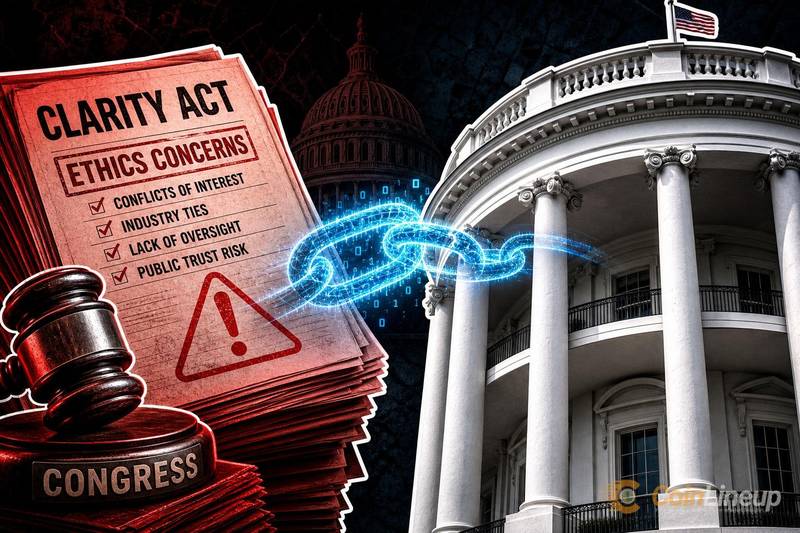
The White House is pushing back after key Senate Democrats raised ethics concerns over the CLARITY Act, the cryptocurrency market structure bill that would define how federal regulators divide oversight of digital assets between the SEC and CFTC, deepening a political standoff that could determine the legislation's trajectory through the Senate.
Democrats Raise Ethics Objections
Key Democratic lawmakers say the crypto CLARITY Act falls short on ethics and other issues, according to reporting from CoinDesk. The objection is being voiced by influential members of the caucus rather than fringe voices, which increases the political weight of the criticism.
Senator Elizabeth Warren has issued a statement on the new text of the bill, published through the Senate Banking Committee minority newsroom. The pushback frames the dispute as a credibility question for crypto market structure legislation rather than routine partisan opposition.
The ethics dimension carries significance because the CLARITY Act establishes the regulatory framework for digital assets. For an industry that has operated for years under fragmented and sometimes contradictory agency guidance, the bill represents one of the most consequential legislative attempts to provide legal certainty — making the ethics fight a test of whether that framework can command bipartisan trust. Similar tensions surfaced when officials defended the bill's crypto crime provisions, indicating that the ethics debate is part of a broader conflict over the bill's substance.
White House Response
The White House has pressed Senate Democrats to accept what it describes as a historic crypto CLARITY Act ethics deal, according to CoinDesk's reporting. The administration is casting its position as an offer to resolve the ethics concerns rather than a rejection of them.
That framing puts the White House on offense, presenting a negotiated deal as the path forward. It mirrors an earlier period when the White House pushed back amid a CLARITY delay as the bill's timeline slipped.
Democratic offices, including that of Senator Ruben Gallego, remain central to the negotiations, with his Senate office among those weighing the revised text. The administration's message discipline is aimed at maintaining the deal framing while Democrats press their objections.
Implications for the Bill's Prospects
A clash involving the White House and influential Democrats can shift momentum around a major crypto bill. With the ethics dispute unresolved, the CLARITY Act's timing in the Senate now depends on whether the two sides can reconcile the new text. For crypto firms, exchanges, and institutional participants, prolonged uncertainty means continued difficulty navigating compliance obligations, listing decisions, and product development while the regulatory dividing lines remain in flux.
The stakes extend beyond Washington optics because the bill defines crypto market structure policy. The fight follows earlier friction over the legislation's DeFi language, when an industry group challenged a CLARITY Act DeFi provision ahead of a Senate vote.
The near-term pressure point is whether Democrats accept the White House's proposed ethics deal or hold out for further changes — a decision that will determine whether the bill keeps its scheduled path or stalls.

