White House to Host AI Industry Leaders for U.S. Artificial Intelligence Policy Framework Review
Key Takeaways
- •The White House plans to convene executives from major AI companies on Tuesday to review the national AI policy framework and discuss regulation, innovation, security, and competitiveness.
- •The meeting follows earlier government-industry efforts, including voluntary safety commitments secured from leading AI developers in 2023 and an executive order directing federal agencies to establish AI safety and security standards.
- •Major AI companies such as OpenAI, Google, Anthropic, Meta, Amazon, and Microsoft have already committed to external safety testing, cybersecurity investments, and watermarking mechanisms for AI-generated content.
- •The European Union finalized its AI Act in 2024, creating the world's first comprehensive legal framework that categorizes AI systems by risk level and imposes varying regulatory obligations.
- •AI policy decisions from Washington carry significant implications for global financial markets, as investors increasingly direct capital toward companies involved in AI software, semiconductors, cloud infrastructure, and related technologies.
White House to Host AI Industry Leaders for U.S. Artificial Intelligence Policy Framework Review
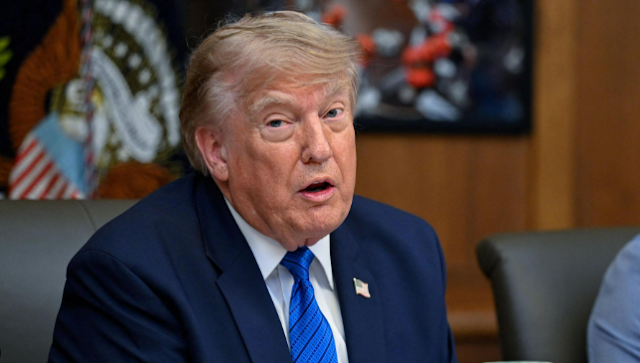
The White House is expected to host executives from several leading artificial intelligence companies on Tuesday as part of a high-level review of the United States' evolving AI policy framework, according to reports.
The meeting will bring together government officials and private-sector technology leaders to discuss the future direction of AI regulation, innovation, security, and economic competitiveness. The gathering underscores Washington's growing focus on establishing policies that support rapid technological advancement while addressing concerns surrounding safety, national security, privacy, intellectual property, workforce transformation, and responsible AI development.
The development attracted attention across technology and financial markets after being highlighted by the X account of Cointelegraph. While the update circulated widely among cryptocurrency and blockchain communities, its broader significance extends far beyond digital assets, reflecting the increasingly central role AI plays across nearly every sector of the global economy.
The upcoming session builds on a series of prior White House engagements with AI executives and researchers, including voluntary safety commitments secured from major AI developers in 2023 and the sweeping executive order on artificial intelligence issued in October of that year, which directed federal agencies to establish standards for AI safety assessments, content authentication, and critical infrastructure protection.
As governments worldwide race to develop AI governance frameworks, the upcoming White House meeting may provide further insight into how the United States intends to balance technological innovation with regulatory oversight.
Source: X Post – Cointelegraph
AI as a National Strategic Priority
Artificial intelligence has rapidly evolved from a specialized research field into one of the world's most influential technologies. AI systems are now transforming industries including healthcare, finance, education, manufacturing, transportation, cybersecurity, media, defense, and scientific research. Businesses increasingly deploy AI to automate workflows, improve productivity, analyze massive datasets, enhance customer experiences, and develop new products and services.
Given AI's broad economic impact, governments have begun treating artificial intelligence as a matter of national strategic importance rather than simply another emerging technology. The White House meeting reflects this shift in policy priorities.
Government-Industry Collaboration
Developing effective AI policy requires close collaboration between governments and private technology companies. Many of the world's most advanced AI models are developed by private enterprises with specialized expertise, computing infrastructure, engineering talent, and research capabilities. Government agencies, meanwhile, remain responsible for ensuring public safety, protecting consumers, maintaining national security, promoting competition, and encouraging innovation.
Several major AI developers, including OpenAI, Google, Anthropic, Meta, Amazon, and Microsoft, have already entered into voluntary commitments with the White House to submit their most advanced models for external safety testing, invest in cybersecurity safeguards, and develop watermarking mechanisms for AI-generated content. These arrangements represent an early model of cooperation that the upcoming review may seek to expand or formalize.
Regular dialogue between policymakers and industry leaders has become increasingly common as AI capabilities continue advancing. The upcoming White House meeting represents another example of this collaborative approach.
The Importance of an AI Framework
Artificial intelligence develops much faster than traditional regulatory systems. Without clear policy guidance, businesses may face uncertainty regarding compliance obligations, intellectual property rights, privacy protections, cybersecurity standards, and liability.
An effective national AI framework can provide greater regulatory certainty while encouraging responsible innovation. Such frameworks typically address multiple priorities simultaneously: innovation, economic growth, consumer protection, transparency, security, ethical deployment, and international competitiveness. The White House review is expected to examine how existing policies should evolve alongside increasingly sophisticated AI technologies.
Global AI Competition
Artificial intelligence has emerged as one of the most competitive technological sectors worldwide. Governments across North America, Europe, Asia, and the Middle East continue investing heavily in AI research, semiconductor manufacturing, cloud computing, data infrastructure, and workforce development. Many policymakers view AI leadership as essential for future economic growth and geopolitical competitiveness.
The European Union's AI Act, finalized in 2024, established the world's first comprehensive legal framework for artificial intelligence, categorizing AI systems by risk level and imposing obligations ranging from transparency requirements to outright bans on certain applications. The legislation has become a reference point for policymakers in other jurisdictions evaluating their own regulatory approaches.
The United States remains home to many of the world's leading AI companies, making federal policy decisions especially influential for the global technology industry.
National Security Considerations
Artificial intelligence increasingly intersects with national security. Governments are evaluating AI applications involving cybersecurity, intelligence analysis, defense technologies, critical infrastructure protection, autonomous systems, and information security. Advanced AI models may improve military planning, cyber defense, disaster response, and intelligence gathering. At the same time, policymakers continue examining potential risks associated with malicious AI use.
Balancing technological opportunity with security concerns remains one of the central challenges facing governments worldwide.
Businesses Seek Regulatory Certainty
Technology companies generally support greater clarity regarding AI regulation. Predictable rules enable businesses to make long-term investment decisions involving research, infrastructure, product development, and international expansion. Uncertainty can slow innovation by increasing legal and operational risks.
Industry participants continue encouraging governments to establish balanced regulatory frameworks supporting both innovation and responsible deployment. Meetings between policymakers and AI companies provide opportunities to discuss practical implementation challenges.
AI's Impact on Financial Markets
AI has become one of the strongest themes influencing global investment markets. Investors increasingly allocate capital toward companies developing AI software, cloud infrastructure, semiconductors, networking equipment, robotics, cybersecurity solutions, and enterprise automation platforms. The rapid expansion of generative AI has significantly increased demand for high-performance computing resources, and major technology companies have experienced substantial valuation growth as investors anticipate continued AI-driven expansion. Government policy therefore carries significant implications for financial markets.
Cryptocurrency and Blockchain Industry Watches Closely
Although the White House meeting focuses on artificial intelligence, cryptocurrency and blockchain companies also monitor AI regulation closely. AI increasingly intersects with blockchain through automated trading, smart contract development, cybersecurity, decentralized computing, fraud detection, digital identity verification, and enterprise automation. Several blockchain projects now integrate AI capabilities into decentralized applications. Consequently, developments involving national AI policy often influence investor sentiment across broader digital technology sectors.
Responsible AI Development
Governments worldwide continue emphasizing responsible AI deployment. Important policy discussions frequently involve transparency, explainability, fairness, accountability, privacy protection, bias mitigation, and consumer safety. Technology companies likewise recognize that public trust remains essential for widespread AI adoption. The White House framework review may examine methods for encouraging innovation while strengthening safeguards that protect businesses, governments, and consumers.
Accelerating Innovation Across Sectors
Artificial intelligence capabilities continue advancing at remarkable speed. Large language models, autonomous agents, computer vision, robotics, scientific discovery, healthcare diagnostics, software engineering, and financial analysis represent just some of the fields now incorporating AI. Nearly every technology sector integrates AI into long-term strategic planning. Because innovation continues evolving rapidly, policymakers regularly revisit existing frameworks to ensure regulations remain relevant. The upcoming meeting reflects that ongoing policy adaptation process.
International Policy Coordination
Artificial intelligence increasingly requires international cooperation. Technology companies operate globally, data crosses national borders, cybersecurity threats often originate internationally, and supply chains involve multiple countries. Consequently, national AI policies increasingly influence international regulatory discussions.
The United States continues working alongside allied governments, technology companies, academic institutions, and international organizations to encourage responsible AI development. The White House meeting may contribute to these broader policy conversations.
Looking Ahead
The White House's planned meeting with leading artificial intelligence companies represents another important step in shaping the future of AI governance within the United States. As AI becomes increasingly central to economic growth, technological innovation, national security, and global competitiveness, policymakers face the complex challenge of developing regulations that encourage innovation while addressing emerging risks.
The upcoming review of the national AI framework highlights the growing collaboration between government and industry as both sides work to establish policies capable of supporting long-term technological leadership. For businesses, investors, researchers, and technology companies worldwide, the meeting offers another indication that artificial intelligence has become one of the defining policy priorities of the modern digital economy.
As AI continues transforming industries at unprecedented speed, the decisions emerging from Washington are likely to influence not only the future of American innovation but also the broader direction of global artificial intelligence development for years to come.
Source: Hokanews

