What Is DEXTools? A Guide to the DEX Analytics Platform, Its Features, and the DEXT Token
Key Takeaways
- •DEXTools aggregates decentralized exchange data such as token prices, liquidity pools, trading volume, and holder distribution into one interface spanning networks like Ethereum, Solana, BNB Chain, and Base.
- •The platform's proprietary DEXTScore evaluates factors including liquidity, holder counts, transaction activity, and audit information on a scale from 1 to 99, but it does not certify a token's safety.
- •Core tools such as the Pair Explorer, Live New Pairs, and Multichart are available on a free tier, while expanded analytics and enhanced notifications require paid or DEXT-based memberships.
- •DEXT, the platform's utility token, grants access to membership benefits but does not guarantee returns or produce staking rewards under the published structure.
- •The article stresses that analytics cannot eliminate decentralized finance risks, urging users to independently verify contracts, liquidity, and token details through explorers such as Etherscan or Solscan.
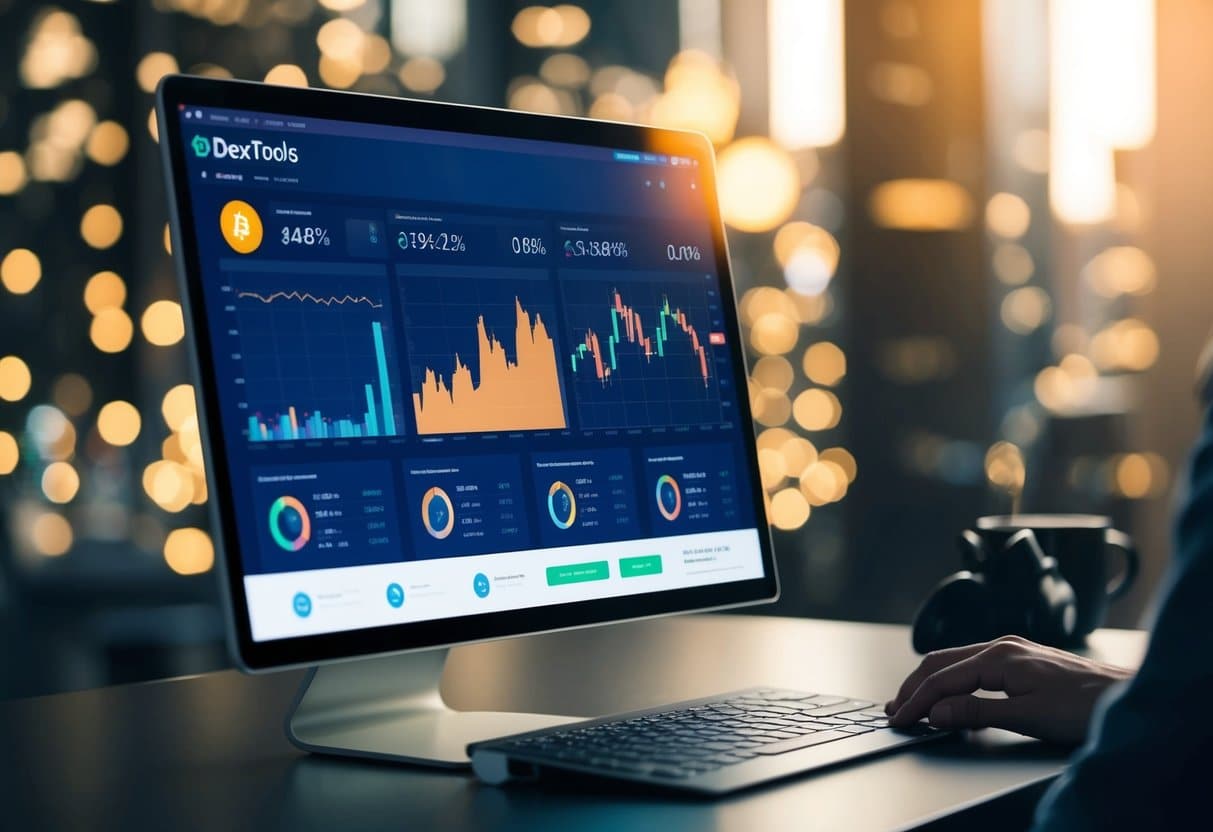
DEXTools is a decentralized exchange (DEX) analytics and trading platform that helps cryptocurrency users monitor token prices, trading pairs, liquidity, transaction activity, and market trends across the blockchain networks it supports. The service consolidates real-time charts, a Pair Explorer, Hot Pairs rankings, a proprietary DEXTScore metric, and portfolio-related features into a single interface for researching decentralized markets.
Unlike a traditional cryptocurrency exchange, DEXTools is not primarily a venue for trading. It functions as a market research and trading interface, pulling information from decentralized exchanges into one place so users can investigate tokens and compare trading activity without manually checking multiple liquidity pools. Whether the goal is researching a newly launched cryptocurrency, monitoring an established token, or comparing liquidity across trading pairs, the platform provides information that can support more informed decisions.
Key takeaways:
- DEXTools is a crypto analytics platform focused on decentralized exchanges and on-chain markets.
- Its features include token charts, the Pair Explorer, liquidity data, Hot Pairs, and trading analytics.
- Users can access basic features for free, while additional functionality is available through premium plans.
- DEXT is the platform's utility token and provides access to certain membership benefits.
- DEXTools supports multiple blockchain ecosystems, including Ethereum and Solana.
- Its analytics can help identify potential risks, but they cannot guarantee that a cryptocurrency is legitimate or profitable.
How Does DEXTools Work?
DEXTools collects and organizes decentralized exchange information so that users can examine cryptocurrency markets from a centralized interface.
Decentralized exchanges operate through blockchain-based smart contracts, often relying on liquidity pools rather than traditional order books. When users trade tokens through these exchanges, each transaction is recorded on the relevant blockchain. Each individual exchange only reflects the pools hosted on its own contracts, which is why market-wide views of decentralized trading depend on aggregators that consolidate data across venues.
Drawing on available blockchain and exchange data, DEXTools presents information such as:
- Token prices and historical price movements
- Trading volume and transaction activity
- Liquidity pool information
- Trading pair details
- Token holder information
- Market rankings and trending pairs
- Available token and contract information
As an example, consider a newly launched token trading against ETH on a decentralized exchange. Rather than manually searching for the token's trading activity across different blockchain explorers, a user can locate its trading pair through DEXTools and review the available market information in one place. That makes the platform useful both for beginners learning about decentralized finance and for experienced traders who need to monitor multiple markets at once.
DEXTools also offers API access for developers who want to retrieve decentralized exchange information and integrate it into their own applications. Its official API documentation describes blockchain, exchange, token, and liquidity-pool data services.
What Are the Main Features of DEXTools?
The platform combines several analytics and trading-related features designed to help users make sense of decentralized cryptocurrency markets. These are the most important ones to understand.
1. Pair Explorer and New Trading Pairs
The Pair Explorer lets users investigate individual cryptocurrency trading pairs across supported decentralized exchanges. A trading pair represents two assets that can be exchanged against one another — ETH/USDC and SOL/USDC are common examples.
When examining a pair, users can review:
- Current token price
- Trading volume
- Liquidity
- Price changes
- Transaction activity
- Pair creation information
- Available token and project details
The New Pairs feature is particularly useful for tracking recently created liquidity pools. That said, a newly listed pair is not automatically a promising investment. Newly launched tokens can carry limited liquidity, concentrated ownership, misleading project information, or malicious contract functions. The Pair Explorer is best used as a research starting point rather than a shortcut to buying unfamiliar tokens.
2. Real-Time Crypto Charts and Trading Volume
DEXTools provides cryptocurrency charts that let users study price movements over different timeframes. Depending on the chart configuration available, traders can examine candlestick patterns, historical prices, volume bars, and technical indicators.
Three chart elements matter most:
- Candlesticks show how an asset's price changes during a selected period, with each candle capturing the opening, closing, highest, and lowest prices.
- Trading volume measures how much of an asset has been traded during a specific period.
- Timeframes allow users to examine price movements over shorter or longer intervals, depending on their trading strategy.
For example, a token might rise in price while trading volume stays low. Such a movement deserves additional scrutiny, because a small number of transactions can sometimes produce significant price changes in an illiquid market. Conversely, increased trading volume may signal greater market activity, although it does not necessarily mean demand will persist.
Charts help explain market behavior, but technical indicators cannot reliably predict future cryptocurrency prices.
3. Liquidity and Token Holder Analytics
Liquidity is one of the most important metrics to check before trading a cryptocurrency on a decentralized exchange. It refers to how easily an asset can be bought or sold without materially moving its price. DEXTools provides liquidity information that helps users assess trading conditions for individual pairs.
Consider two hypothetical tokens with relatively similar trading volumes: if Token B has substantially less liquidity, a relatively large transaction could cause greater price impact or slippage when trading it.
Token holder information is another valuable research element, showing how a token's supply is distributed across wallets. If a small number of wallets control a significant share of the circulating supply, concentration risk may be elevated. Wallet distribution still requires context, however — exchange wallets, liquidity pools, and smart contracts can all skew holder statistics.
4. DEXTScore and Token Security Checks
DEXTools includes DEXTScore, a proprietary scoring system designed to assess the information associated with cryptocurrency projects. According to the platform's official glossary, the scoring methodology weighs factors such as:
- Token and social information
- Transaction activity
- External audit information
- Number of token holders
- Trading pair liquidity
- Contract creation information
The platform displays the score on a scale from 1 to 99.
This information can help users pinpoint areas that warrant closer inspection. A token with limited liquidity, concentrated ownership, and incomplete project information, for instance, may call for more caution than a project with stronger available market data.
DEXTScore should not, however, be treated as a definitive security certification. A high score does not guarantee that a token is safe, and an external audit does not guarantee that a smart contract is free of vulnerabilities. Before trading, users should independently investigate the token contract, ownership privileges, liquidity arrangements, and available audit reports.
5. Hot Pairs, Rankings, and Market Alerts
DEXTools also ships market discovery tools that help users identify active trading pairs. Hot Pairs rankings highlight markets receiving attention according to the platform's ranking methodology. Other discovery features surface:
- New trading pairs
- Biggest gainers
- Biggest losers
- High-volume trading activity
- Significant swaps
- Changes in market conditions
These tools are useful when researching market movements or monitoring emerging projects. Price alerts offer another way to follow selected tokens without watching their charts continuously — a trader researching a token, for example, might set a notification for a particular price level or market movement. The availability of specific alert types and notification channels can depend on the account's membership tier.
Trending tokens are not necessarily good investments. Rankings can reflect short-term speculation, sudden liquidity changes, or promotional activity.
6. Multichart, MultiSwap, and Wallet Tracking
DEXTools rounds out its offering with features for users who manage several trading activities from one interface. Multichart lets users monitor multiple trading pairs together, making it easier to compare market movements. MultiSwap provides trading functionality through supported decentralized exchange integrations. Wallet and position-related tools help users track supported wallet activity, holdings, and trading performance.
The exact features available depend on the supported network, account configuration, and membership tier. These tools are particularly valuable for traders who monitor several assets rather than concentrating on a single cryptocurrency.
How to Use DEXTools: A Step-by-Step Guide
DEXTools can be used for basic market research without connecting a cryptocurrency wallet right away. More advanced account and trading features may require wallet authentication or additional setup. Here is a practical starting process.
Step 1: Access the Official DEXTools Platform
Visit the official website at DEXTools official website. Check the website address carefully before connecting a wallet or signing any transaction. Market information and analytics can be explored before deciding whether an account is needed.
Step 2: Select a Blockchain and Trading Pair
Choose the blockchain network relevant to the cryptocurrency being researched. DEXTools supports multiple networks, including Ethereum, Solana, BNB Chain, Base, and other supported ecosystems. Search for the token by name, ticker, or contract address. Multichain coverage matters in this step: tokens can trade on several networks at once, and liquidity conditions on one chain do not carry over to another, so selecting the right network is part of locating the correct market.
Important: searching by contract address is generally preferable when several tokens share similar names or symbols. Always confirm that the contract address belongs to the intended asset.
Step 3: Analyze Price, Volume, and Liquidity
Once the trading pair is located, review its market information, paying attention to:
- Current price and historical price movements
- Trading volume over different periods
- Available liquidity
- Recent buy and sell transactions
- Price changes and trading activity
Avoid making decisions based on a single metric. A sudden price increase may look attractive, but checking liquidity and transaction activity can reveal whether the movement is backed by meaningful market participation.
Step 4: Review Token Information and Risk Indicators
Investigate a token's available information before considering a trade. Check:
- Contract address and blockchain network
- Holder distribution
- Liquidity pool information
- Ownership and administrative privileges
- Available audit reports
- DEXTScore and its underlying indicators
- Official website and social media accounts
Where possible, cross-check the information through an independent blockchain explorer, such as Etherscan for Ethereum or Solscan for Solana. Do not assume a token is safe simply because it appears on DEXTools.
Step 5: Set Alerts and Monitor Market Activity
After identifying a token worth monitoring, use available alerts and favorites to follow its market activity. Price changes and other supported conditions can be tracked without keeping the chart open constantly. Research should be reviewed regularly, since cryptocurrency liquidity, trading activity, and token ownership can change quickly.
What Is the DEXT Token and How Does It Work?
DEXT is the native utility token associated with the DEXTools ecosystem. Its primary platform-related purpose is to provide access to certain premium features and membership benefits. According to the official DEXTools website, the platform offers different access levels based on its current membership structure.
DEXT Utility and Premium Membership
DEXT is used within the platform's membership system. The official plans currently describe a structure in which the published membership requirements include holding specified amounts of DEXT — or using an eligible subscription option — for Standard access, while Premium access is associated with a higher DEXT holding requirement.
These requirements and benefits can change, so users should check the official DEXTools website and membership plans before acquiring tokens specifically for platform access. For anyone following the platform over time, the published membership tiers and the roster of supported networks are the details most worth tracking, since both directly determine which features remain accessible.
Does owning DEXT guarantee profits? No. DEXT is a cryptocurrency asset carrying market risk. Its price can fluctuate, and purchasing it does not guarantee financial returns or successful trades.
Is DEXT Staking Available?
DEXT should not automatically be described as a staking investment that generates passive income. Staking generally involves locking or delegating cryptocurrency to participate in a blockchain's proof-of-stake validation process or another defined reward mechanism. DEXTools' published membership benefits focus on platform access and ecosystem participation.
Users should not assume that holding DEXT produces staking rewards. Any currently available reward program, along with its terms and associated risks, should be verified on the official platform before committing funds.
Is DEXTools Free to Use?
Yes. DEXTools offers a free access tier with several core analytics and trading-related features. Its official plans list free access to tools such as:
- Live New Pairs
- Pair Explorer
- Big Swap Explorer
- Multichart
- Selected Hot Pairs
- Favorites
- Desktop alerts
- Other basic platform features
Paid or DEXT-based membership levels provide additional functionality, such as expanded analytics, wallet information, and enhanced notifications.
For beginners, the free tier can be a reasonable starting point — there is no need to purchase DEXT simply to learn how the platform's basic analytics work.
Is DEXTools Safe and Reliable?
DEXTools can be useful for researching cryptocurrency markets, but using the platform does not eliminate the risks associated with decentralized finance. Its analytics provide information that can help users investigate trading activity, token distribution, liquidity, and available security indicators. Still, there are important limitations:
- Token scams can still appear in market listings. A token appearing in a trading pair explorer has not necessarily passed a comprehensive security review.
- Liquidity can disappear. A project may hold substantial liquidity at one point and lose it later. Always check the latest pool information.
- Token ownership can be concentrated. A small number of wallets may control enough supply to influence market prices.
- Smart contracts can contain vulnerabilities. Available audits and security indicators cannot guarantee that a contract is free from exploitable weaknesses.
- Trading data can be misleading. Low-liquidity markets, unusual transactions, and artificial trading activity can distort the appearance of demand.
- Wallet connections require caution. Only connect wallets through the official website. Never share a seed phrase or private key, and carefully review transaction permissions before signing.
The safest approach is to combine DEXTools analytics with independent blockchain explorers, contract reviews, and reputable security information. DEXTools is a research tool, not a substitute for independent due diligence.
DEXTools vs. DexScreener vs. GeckoTerminal
DEXTools is not the only platform offering decentralized exchange analytics. Two popular alternatives are DexScreener and GeckoTerminal. The competition among these dashboards reflects the structure of decentralized markets themselves: trading activity is spread across many pools and networks, and each tool indexes that activity differently.
Which Platform Should You Choose?
- Choose DEXTools for a combination of pair analytics, DEXTScore, market discovery tools, and additional trading-related functionality.
- Choose DexScreener for a straightforward interface for discovering new trading pairs and comparing decentralized exchange markets.
- Choose GeckoTerminal for another source of decentralized exchange pool data and CoinGecko-associated market analytics.
None of these platforms should be considered a complete security solution. A useful research approach is to compare information across multiple platforms rather than relying on a single source.
Who Should Use DEXTools?
DEXTools can serve different types of cryptocurrency users depending on their experience and research needs:
- Beginners: People learning about decentralized exchanges can use its charts and trading-pair information to understand how crypto markets work.
- Active traders: Traders monitoring price changes, liquidity, trading volume, and newly created pairs may find its analytics useful.
- DeFi researchers: People investigating emerging tokens and decentralized exchange activity can use its market information to identify projects for further research.
- Developers: Developers can explore DEXTools API services to retrieve market and blockchain information for their applications.
Beginners should nonetheless take time to understand liquidity, slippage, smart contracts, and wallet security before attempting to trade unfamiliar tokens.
Frequently Asked Questions About DEXTools
Is DEXTools an exchange?
No. DEXTools is primarily a cryptocurrency analytics and trading interface, not an independent decentralized exchange. It provides integrations that allow users to access supported swapping services.
Does DEXTools support Solana?
Yes. DEXTools supports Solana alongside several other blockchain ecosystems. Its official 2025 getting-started guide describes Solana wallet integration and Solana trading functionality.
Can beginners use DEXTools?
Yes. Beginners can use DEXTools to explore token prices, trading pairs, charts, and liquidity information. However, understanding basic cryptocurrency and decentralized finance concepts is important before making trading decisions.
Can DEXTools identify scam tokens?
DEXTools provides information such as DEXTScore, liquidity metrics, holder data, and available audit information that can help users investigate potential risks. These tools cannot guarantee scam detection or prevent financial losses.
Do you need a wallet to use DEXTools?
Not necessarily. Basic market research can be performed without connecting a wallet. Wallet connection is needed for certain account, membership, portfolio, and trading functions.
Does DEXTools have an API?
Yes. DEXTools offers API services that allow developers to retrieve information about supported blockchains, decentralized exchanges, trading pairs, tokens, and liquidity pools. API access and usage limits depend on the applicable subscription.
Can you trade directly through DEXTools?
Yes. DEXTools provides trading-related functionality through supported integrations and services. The actual transactions, however, are processed through the relevant blockchain, wallet, and decentralized exchange infrastructure.
Is DEXT necessary to use DEXTools?
No. Users can access the platform's free features without holding DEXT. The token is associated with additional membership benefits and premium functionality.
What is DEXTScore?
DEXTScore is DEXTools' proprietary scoring system that evaluates factors such as token information, transaction activity, liquidity, holders, contract creation, and external audit information. It is a research indicator, not a guarantee of security.
Is DEXTools better than DexScreener?
Neither platform is universally better. DEXTools offers its own scoring system and membership-based ecosystem, while DexScreener provides an alternative interface for discovering and analyzing decentralized exchange trading pairs. The better choice depends on the features and workflow a user needs.
Final Thoughts: Is DEXTools Worth Using?
DEXTools is a useful analytics platform for anyone seeking to understand decentralized cryptocurrency markets. Its combination of Pair Explorer, real-time charts, liquidity information, token analytics, Hot Pairs, and DEXTScore gives users multiple ways to investigate cryptocurrencies and monitor trading activity.
For beginners, the free features offer an opportunity to learn how decentralized exchange markets work. More experienced traders may benefit from the additional analytics, wallet-related tools, and trading integrations.
That said, no analytics platform can predict cryptocurrency prices with certainty or eliminate the risks of decentralized finance. The best way to use DEXTools is as one part of a broader research process: compare market data, investigate smart contracts, examine liquidity, and verify important information independently before making financial decisions.
Ultimately, DEXTools can help users make better-informed decisions by making decentralized market information easier to understand and analyze.
Disclaimer: This article is for educational and informational purposes only. It does not constitute financial or investment advice. Cryptocurrency trading involves substantial risk, including the possible loss of your entire investment. Always conduct independent research before making financial decisions.
This article is a standardized English rewrite of a report first published on Cryptsy, written by Ethan Blackburn.

