What a Banker Learned by Listening to African Farmers
Key Takeaways
- •Watson Matsa left a career in credit analytics at South African bank FNB to found eSusFarm Africa, driven by the observation that missing information blocks capital from reaching African smallholders.
- •eSusFarm has profiled about 380,000 smallholder farmers across Uganda, South Africa, Zimbabwe and Eswatini, with roughly 20,000 actively using its solution and spreading adoption through word of mouth.
- •The platform pairs back-end technologies such as AI, blockchain and credit scoring with a USSD delivery channel so services work on basic feature phones without internet access.
- •A conversation with former Grobank CEO Benny van Rooy taught Matsa that banks lend only after insurance or assurance is in place, reshaping eSusFarm's market-entry strategy.
- •Matsa argues that financial systems built around monthly salaries exclude farmers and informal daily earners, and that agriculture's job-creating multiplier effect is underappreciated by investors and policymakers.
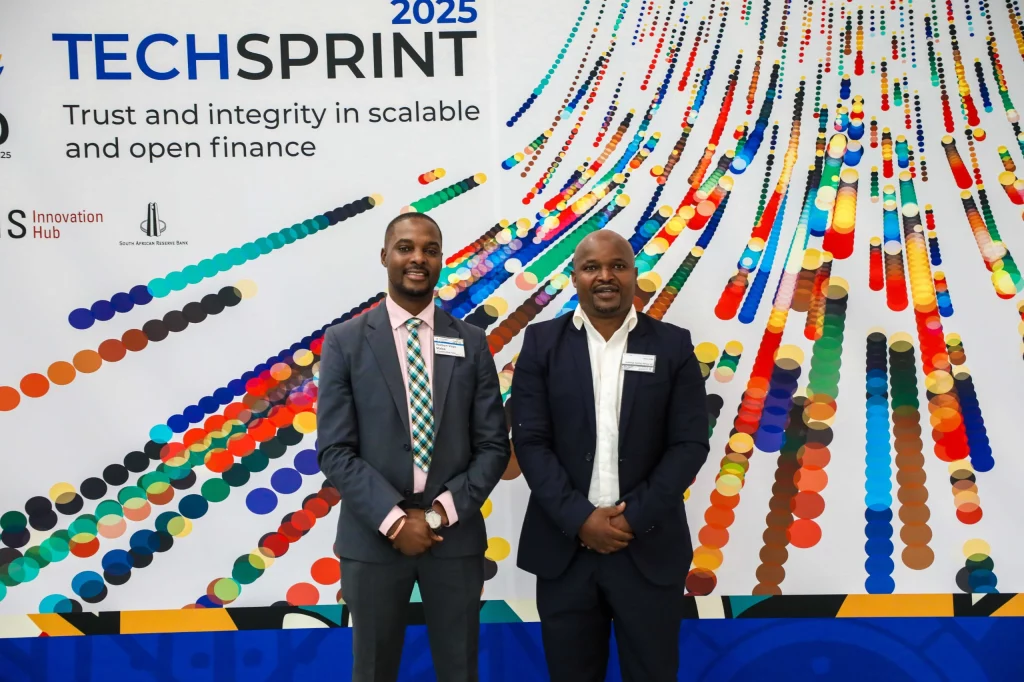
At the Somerset Westview Hotel in Nairobi, Watson Matsa speaks about farmers and banks with the conviction of someone who has spent enough time inside a bank to understand why financial institutions often fail to understand agriculture.
It is Friday evening, July 26. Nairobi is warming up for the weekend. Over coffee and tea, Matsa discusses soil, rainfall and credit scores.
The founder of eSusFarm Africa did not begin his career in agriculture. He studied economics and accounting at Rhodes University in South Africa before working in credit analytics at FNB, one of South Africa’s largest banks. Finance was meant to be his professional focus. But an idea he encountered at university stayed with him: information unlocks capital.
Matsa’s concern was that the information needed to unlock capital is often missing in Africa. That question eventually led him to smallholder farmers and to eSusFarm Africa. The gap carries weight well beyond one startup: smallholder farming anchors food production across much of the continent, yet much of it sits outside the formal data trails banks depend on to lend.
Matsa still uses the language of a banker—risk, underwriting and cash flows—but increasingly thinks like a farmer. He says banks are structured around the predictability of a salary arriving every month, while farmers earn seasonally, save for unexpected events and wait for the next harvest or payment. In his view, farmers may not be the problem; the banking system may simply be too rigid.
There is one part of his former corporate life he misses.
“The SMS that comes on the 24th of the month,” Matsa says, laughing. “The SMS saying the money has arrived—on time. A good credit score. Being able to plan trips with my family.”
His life now involves managing payroll, persuading farmers and challenging long-standing assumptions about finance across the continent.
This interview has been edited for length and clarity.
You grew up fascinated by financial systems, not farming. How did a banker end up spending his days thinking about soil, weather and smallholder farmers?
It goes back to when I was studying at Rhodes University. I was double-majoring in economics and accounting, and there was one book that really had me in a chokehold. It said that information unlocks capital, and that capital markets have enough information to make that possible.
I thought: in Africa, that’s not true. There isn’t enough information flowing fairly for capital to flow.
Initially, I was thinking about small businesses. How do we obtain data on them that can facilitate capital flows? I took the idea to my co-founder, who has a PhD in agricultural economics. He said, “What if this applies to agriculture? Money isn’t flowing to small farmers because there isn’t enough information.”
I asked him what data we would need. He said soil, climate, farmer-reported and crop information. Those are some of the pillars required when assessing risk. You can examine the soil and determine that a farmer needs a particular fertiliser, then finance it. You can look at the weather and determine that the farmer needs insurance.
We began mapping the data points that affect financial decisions.
I also worked at FNB in credit analytics as a project manager on initiatives designed to improve credit scoring. That helped me understand how banks think.
Consider ongoing risk management. Even if I vet and qualify you for a loan, I still need to monitor you until it is repaid. That type of continuing risk-management system does not really exist for smallholder farmers.
We took on the task of building it.
If we spoke to your younger self in South Africa, what career would he swear he would never end up pursuing?
I always wanted to work in finance. It is my skill set; it is my thing.
I would advise my younger self not to pursue anything unrelated to STEM—science, technology, engineering or mathematics. When we were growing up, the question was: how do you put food on the table? STEM was where much of the employment was.
For me, mathematics could mean accounting, economics or banking. Engineering was a good field. Technology was a good field. Science was a good field.
I still think STEM is important in Africa. We are still trying to master how we compete in science, technology, engineering and mathematics.
You have lived in boardrooms and on farms. Which world has taught you more about human behaviour?
They have taught me different sides of human behaviour.
The boardroom taught me about governance and how to implement policies and procedures so that, when you do something, it can be replicated.
Working on the ground taught me that interpersonal relationships are more important than almost anything else. You may be intelligent, but if you do not know how to relate to the person opposite you and communicate in an easy, simple and articulate way, you will not get their buy-in.
The ground taught me how to simplify complex concepts. On one side, I am very technical. On the other, the question is how to communicate that technical knowledge so that someone with a Grade Seven education can understand what you are saying and the value you are bringing.
It has made me a much better communicator. Working on ground has also taught me empathy and how to relate to people. Those skills transfer back into the boardroom.
You often describe finance as infrastructure. What is one lesson from banking that agriculture urgently needs, and one thing banking could learn from farmers?
One thing banking could learn from farmers is that incomes are not earned in the same way.
Banking tries to structure things around very rigid rules: you are paid monthly, so I will charge you monthly. Farming is seasonal. You receive money and then have to preserve it for a much longer period until the next payment arrives.
Banking has been too rigid. Income flows are not always monthly. They can be daily, weekly or every four months. Banks need to start adapting to people’s income cycles rather than dictating them.
Farmers also understand how to use money prudently because they are constantly preparing for unexpected events. It could be a weather event or a disease outbreak. They develop a resilient mindset around preserving cash so they can survive those events.
That is something banking can learn from farming.
People often assume farmers are poor because they lack money. Do you think the bigger problem is that financial systems have never really been designed for them?
Absolutely. The financial system was designed around salaried people—monthly earners.
But farmers and people in the informal economy can earn daily. They are micro daily earners. You may not earn $2,000 every month, but you could earn $20 a day.
Small farmers and small businesses are earning money, but they are earning smaller amounts consistently.
If banks understood this better, they could reach this class of daily earners instead of focusing almost exclusively on monthly earners.
The financial system has been designed around formal employment rather than people’s actual income potential and earning patterns.
Every founder has one meeting that changed everything. Which conversation altered the direction of eSusFarm more than any funding round could have?
We always wanted to enter finance, but we did not know where to start. Was it credit? Was it insurance?
Then we spoke with Benny van Rooy, the former CEO of Grobank. He said, “Watson, you’ve got enough data, and I like calling you a data company. But what you need to understand is that banks can’t lend if there is no insurance.”
That conversation began our understanding that banks come after insurance; they do not come before it.
Banks want assurance. If you cannot assure a bank of some stability in earnings, you are going to struggle to unlock finance.
Farmers are largely an unsecured portfolio, so insurance—or assurance—becomes important. The assurance comes from data; the insurance comes from underwriting. Without those two things, banking will not come in.
That insight changed how we thought about entering the market.
Your platform combines AI, mobile money, blockchain and insurance. How do you stop yourself from falling in love with technology instead of the problem you are trying to solve?
For us, it has always been about not allowing the small farmer to fall behind.
The back end of the system can be sophisticated. It can use AI, blockchain, credit scoring and insurance. But we still ensure that the delivery model can work through something as simple as USSD, making it accessible through a device the farmer already has.
USSD—a menu-based mobile protocol that runs on basic feature phones without an internet connection—remains one of the most widely accessible channels in African markets.
We have learned that even when complex technology is operating in the background, it still has to be delivered simply at the last mile.
We do not allow technology to override the mission of supporting the farmer. Technology is there to help us do that better.
If I spent a week shadowing you, what would surprise me most? Would I find you writing code, negotiating partnerships, visiting farms or worrying about payroll?
Everything.
But you would probably see a lot of partnership work. We have a partnership-led growth strategy and believe in embedding our technology within existing systems.
People ask me, “Where is your app?” I tell them we do not want to build an app. We want to be involved in what people are already using.
If you are in Kenya and using mobile money, let me provide the solution through that ecosystem. If you are using WhatsApp, let me provide the solution on WhatsApp. Kenya is a natural anchor for that approach: mobile money has been part of everyday Kenyan finance since Safaricom launched M-Pesa in 2007.
We have MTN as a partner, Sanlam as an insurance partner and Microsoft as a technology partner helping us scale. MTN is one of Africa’s largest mobile network operators, and Sanlam is one of the continent’s largest insurers.
Building standalone apps and systems does not always make sense. I would rather integrate our technology into existing infrastructure with a captive market than go door-to-door to acquire every user ourselves.
The second thing you would see me worrying about is payroll. As we expand into more countries, we need larger teams, and funding in Africa remains limited.
What we have found is that many African investors want to invest in profitability, while American investors are often more willing to invest in technology for the future before profitability. They are willing to lose money in the short term to jump the next curve.
That affects us. We have to find capital elsewhere, including grants, to help us build for that future. That makes grant funding, alongside the partnership model, central to how eSusFarm finances its push into new countries.
When was the last time a farmer challenged an assumption you had made and forced you to rethink the business?
We assumed farmers would willingly report information about their operations.
We built technology to collect information, and part of it depended on farmers’ self-reporting. We thought they would do it because they understood that reporting was necessary to access finance.
That was one of the biggest lessons we learned: many farmers do not understand why they need to report. They do not necessarily care about reporting.
We call some of them “sceptical survivors”. These are farmers between roughly 45 and 65 who have been farming for years. They have put their children through school through farming. They have no appetite for a 35-year-old Watson coming to tell them to report information when there is no clear incentive.
Why should I report? If I report, what is the immediate benefit?
We have had to connect reporting directly to finance. The more information you provide, the better we can monitor and understand your risk. Then we can score that risk and potentially finance it.
We had to create an incentive structure for farmers to begin reporting.
Founders often say they “empower” communities. Was there a moment when you realised the community was actually empowering you?
Yes.
We have profiled about 380,000 smallholder farmers across Uganda, South Africa, Zimbabwe and Eswatini. From that pool, about 20,000 smallholder farmers were actively using our solution.
What we did not predict was that those 20,000 farmers would become ambassadors in their communities.
farmers we had met and trained in person began onboarding thousands of others through word of mouth.
It taught us something very important about rural communities: word of mouth is incredibly powerful.
Start with a small group and make sure you do a damn good job with that group. They will tell the rest of the community, and other people will follow.
That is also how the technology can scale. Do not worry about trying to reach all 380,000 people yourself. Get the 20,000 right, and they will help bring in the rest.
You left the predictability of banking for entrepreneurship. What luxury from your corporate life do you still secretly miss?
The SMS that comes on the 24th of the month.
That SMS says the money has arrived on time. A good credit score. Being able to plan trips with my family.
I cannot plan like that now because I am reinvesting whatever money I receive into this baby. I miss the predictability of income.
What I do not miss is the ceiling on how much I could earn.
What I love now is that there is no ceiling. It is an open canvas. If we work hard enough, do the right things and execute the right strategy, the earning potential can become bigger than I could ever have imagined.
What is the most uncomfortable truth you have learned about African agriculture that investors and policymakers rarely acknowledge?
They misunderstand the multiplier effect of agriculture.
We have analysed this and found that a single farmer who does well can create jobs throughout the value chain.
Think about a farmer buying the right seed. The seed provider may need to hire someone because of increased demand. Then there are transporters and the fertiliser company. When production increases, more workers and perhaps tractors are needed.
When the crop is ready to harvest, people are needed to do so. It then has to be packaged, transported, exported or distributed. Eventually, it reaches shops and the end consumer.
The multiplier effect of agriculture in Africa is enormous. One successful farmer on one hectare can create jobs across the value chain. The stakes are broad: agriculture remains one of the largest sources of employment in Africa, so jobs created along a value chain reach well beyond a single farm.
Policymakers and investors do not fully understand that. Not focusing on agriculture in Africa is almost a sin, given its economic multiplier effect. Very few sectors can create jobs across so many different parts of the economy.
Imagine you are appointed Finance Minister for a day—not Agriculture Minister. What is the first financial rule you would change to make farming a genuinely attractive business for young Africans?
One of my dreams is actually to become African Union (AU) president, so I have thought about these things a lot.
If I were Finance Minister, I would provide better financing solutions for young people—a combination of grants and debt—and direct that financing towards crops that can substitute imports.
If your country has a huge rice import bill, finance young people to grow rice.
If we are importing a million tonnes of rice and want to reduce the import bill, let us finance young farmers to produce part of what we import.
I would focus heavily on import substitution and financing young people to produce in those value chains. It would help us become more self-sustaining in areas where we currently depend heavily on imports.
What part of success worries you most: the expectations, the visibility, the responsibility or something else entirely?
Visibility is a big one for me.
Even as an organisation, we are an embedded solution. We like working in the background.
Too much visibility brings too many eyes and can create enemies. I try not to be too visible personally. The company can be visible, but I do not necessarily need to be.
I think Africans are still getting used to seeing success stories from within our own communities, and sometimes success can attract jealousy. For now, I would rather keep myself away from too much of that.
So visibility is probably the thing that worries me most.
Complete this sentence: “The biggest lie we’ve told ourselves about African agriculture is…”
That there is more money than you can ever imagine—and that it is easy to get.
There is money in agriculture, but it is not what people think. It takes time. It is not fast. Agriculture is a slow industry.
It is different from the financial sector I come from, where you can launch a lending product and potentially acquire customers very quickly.
In agriculture, you have to go out and train people. Then people have to understand the product. Eventually, the income starts coming in.
There is a huge amount of training and change management that has to happen before the money comes in. That means you need a much longer runway. You have to put money into the business before you see results.
But when the volumes eventually come, they can arrive in huge chunks.
We have done case studies in which farming one hectare can involve about $3,000. Multiply that across a million people, and you are talking about a lot of money.
The quantum can be enormous. But unlocking it requires learning, training and ecosystem development.
A lot of investors, financiers and bankers do not understand that. You have to invest heavily in training and change management before you see the results.
Finally, if your children asked, “What exactly were you trying to fix?” what answer would you give that has nothing to do with AI, blockchain or fintech?
My son actually asked me this.
I told him, “I help make food. You’re eating today, aren’t you?”
He said, “Yes.”
I asked him, “Where does the food come from?”
He said, “I don’t know, Dad.”
I told him, “It comes from a farmer. If there are no farmers, you don’t have food. So I’m trying to help farmers make more food so that you can eat.”
That is what I told my child, and it is probably the simplest way I can explain what I am trying to do.
Source: TechCabal.

