Government cash is reshaping mining finance, GEM report finds
Key Takeaways
- •GEM Mining Consulting reports that governments are becoming lenders, investors, and customers in critical-mineral projects rather than acting solely as regulators.
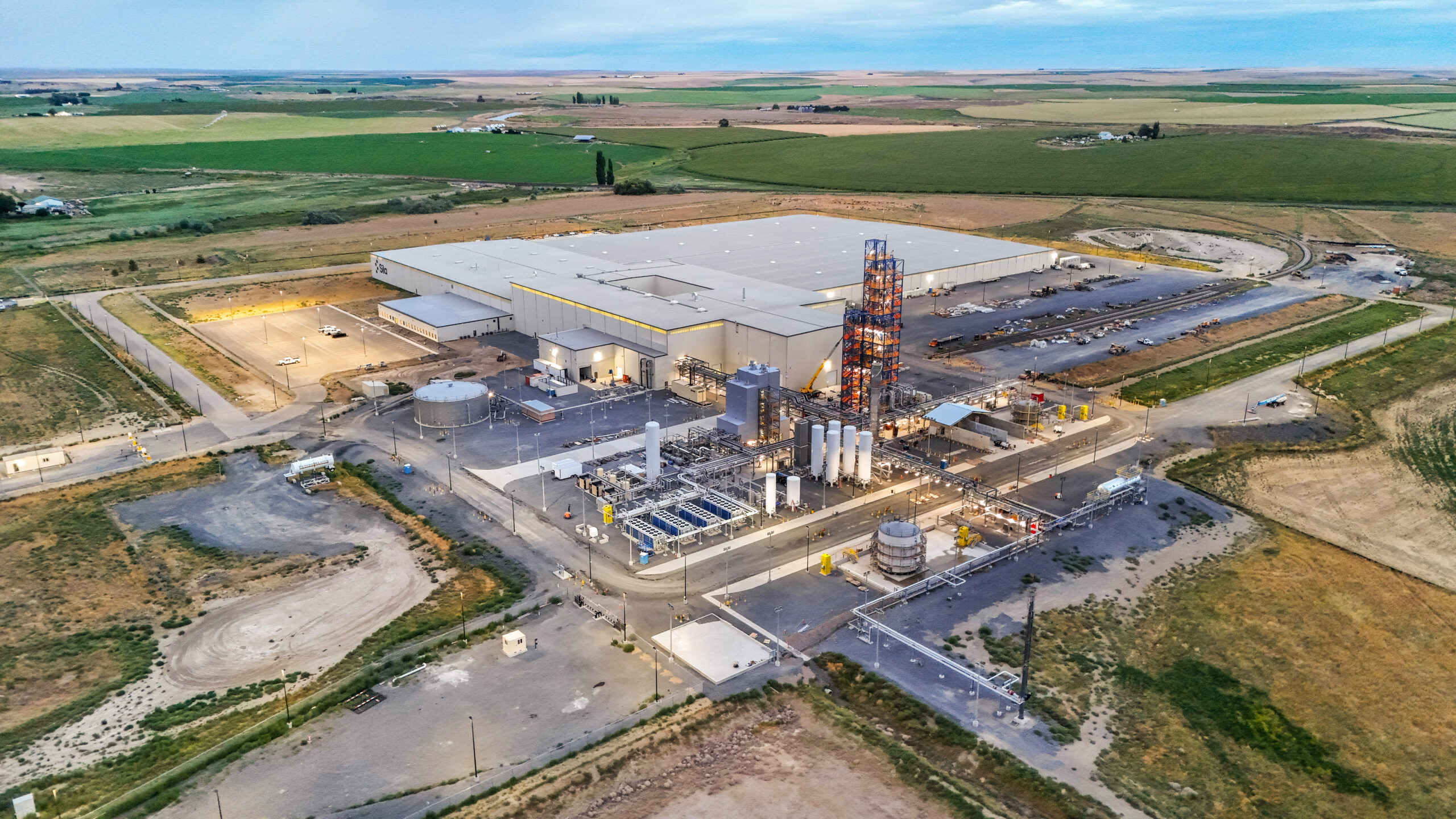
- •U.S. federal backing of roughly $2 billion includes about $1.4 billion for Sila Nanotechnologies, $400 million for Sunrise Energy Metals, and more than $180 million for mining education and workforce development.
- •Companies pursuing public funding must meet government requirements on product origin and qualification, domestic or allied content, workforce, reporting, and supply security in addition to traditional project metrics.
- •Canada, Australia, the EU, and Japan each use distinct mixes of financing tools, with the United States employing the broadest combination of loans, equity, grants, purchase rights, and stockpiles.
- •GEM calls for public disclosure of government support through a credible database and warns that public financing should produce development that would not otherwise occur.
As Washington ramps up investment in mining and mineral processing, a new study argues that mining companies — and the general public — must pay closer attention to how the trend is redefining the government's role in the sector, its economy and its control.
Governments are moving beyond regulating critical-mineral projects to become lenders, investors and customers, reshaping how mining companies finance projects and who ultimately holds influence over their output, GEM Mining Consulting says in the report.
The intervention has a shared backdrop: minerals such as lithium, nickel, rare earths and scandium feed batteries, electric vehicles, power grids and defense equipment, while the processing of many of them is concentrated in a small number of countries — a fact that has pushed supply security up the policy agenda in Washington and allied capitals.
The shift means companies seeking public funding must now compete on more than geology, costs and conventional bankability. Increasingly, they must also satisfy government requirements covering product origin and qualification, domestic or allied content, workforce, reporting, and security of supply.
Washington's commitments
The scale and variety of U.S. involvement is illustrated by recent federal backing of critical-minerals projects. That support included a conditional loan of about $1.4 billion for Sila Nanotechnologies, which will build a lithium-ion battery cell manufacturing plant, and $400 million for Australia's Sunrise Energy Metals (ASX: SRL) via the U.S. Department of Defense's Office of Strategic Capital, an office set up to channel capital into supply chains relevant to national security. Sunrise will build the world's first primary scandium mine — a metal used to strengthen aluminum alloys for aerospace and as an input in solid oxide fuel cells. President Donald Trump also announced more than $180 million for mining education and workforce development.
The estimated $2 billion commitment shows that federal support cannot be treated as the same thing for all beneficiaries, because each of them will have different goals, purposes and rights.
Different types and quantities of government funds will produce different results over the long term, GEM's study argues. A large loan, for example, can lower the cost of capital for a project moving toward commercial scale, while a much smaller grant could prove more consequential if pilot testing or customer qualification unlocks substantially more private financing. Education funding does not directly increase mine production, but it could ease workforce shortages affecting multiple projects.
Global models
The United States is not alone. Canada, Australia, the European Union (EU) and Japan have each developed their own approaches to financing mining and critical-mineral supply chains, and GEM's analysis shows that no major system relies on a single funding tool. Japan's approach builds on decades of state-backed resource development through agencies such as the Japan Oil, Gas and Metals National Corporation (JOGMEC), while U.S. strategic-materials stockpiling dates to the mid-20th century.
The U.S. uses the broadest mix of loans, equity, grants, purchase rights and stockpiles, while Canada places greater emphasis on infrastructure and equity participation. Australia combines financing with output rights and strategic inventories, the EU emphasizes public credit, grants and permitting coordination, and Japan focuses on financing, offtake and deployable stockpiles.
GEM says all of this information should be made readily available to the public through a credible public database. Guarantees and insurance should be reported as contingent exposure rather than money already spent, while repayments, fees, equity value and recovered rights should also be disclosed.
Matching funds
Mining projects should choose a jurisdiction not by how much capital it offers, but by which one can help them solve their issues — and what comes with that support, GEM says.
Canada, for instance, may be particularly suited to remote projects requiring corridors and shared infrastructure, while EU programs may better fit integrated mining and processing projects supplying European customers. Japan's system is geared toward overseas supply linked to Japanese users, while Australia's approach suits projects that can provide allied supply and strategic reserve services.
Governments should try to manage the capital they plan to invest in the sector as a portfolio and make support staged and conditional, GEM says. These models can be replicated in other countries as long as a similar framework is used, aiming to convert a credible project into qualified and reliable supply.
The study's final test is whether government involvement produces development that would not otherwise occur. Without that added value, public financing risks merely replacing private capital — or granting governments strategic rights over projects that would have proceeded anyway.

