Artemis Gold's first Blackwater expansion holes cut broad mineralization below current reserve
Key Takeaways
- •The first two holes in Artemis Gold’s Blackwater expansion program intersected mineralization below the existing reserve, indicating possible resource growth.
- •Hole BWDD-26-0001 returned 259 metres of mineralization, including an 85-metre higher-grade interval, and BWDD-26-0003 reached 1,134 metres to become the deepest hole on the property.
- •Artemis plans to use the drilling results in its next mineral reserve update, which is expected in 2027.
- •The company is expanding Blackwater’s mill capacity and aims to lift annual gold production above 500,000 ounces by 2029.
- •Artemis shares rose 1.7% in Toronto after the drilling results were announced.
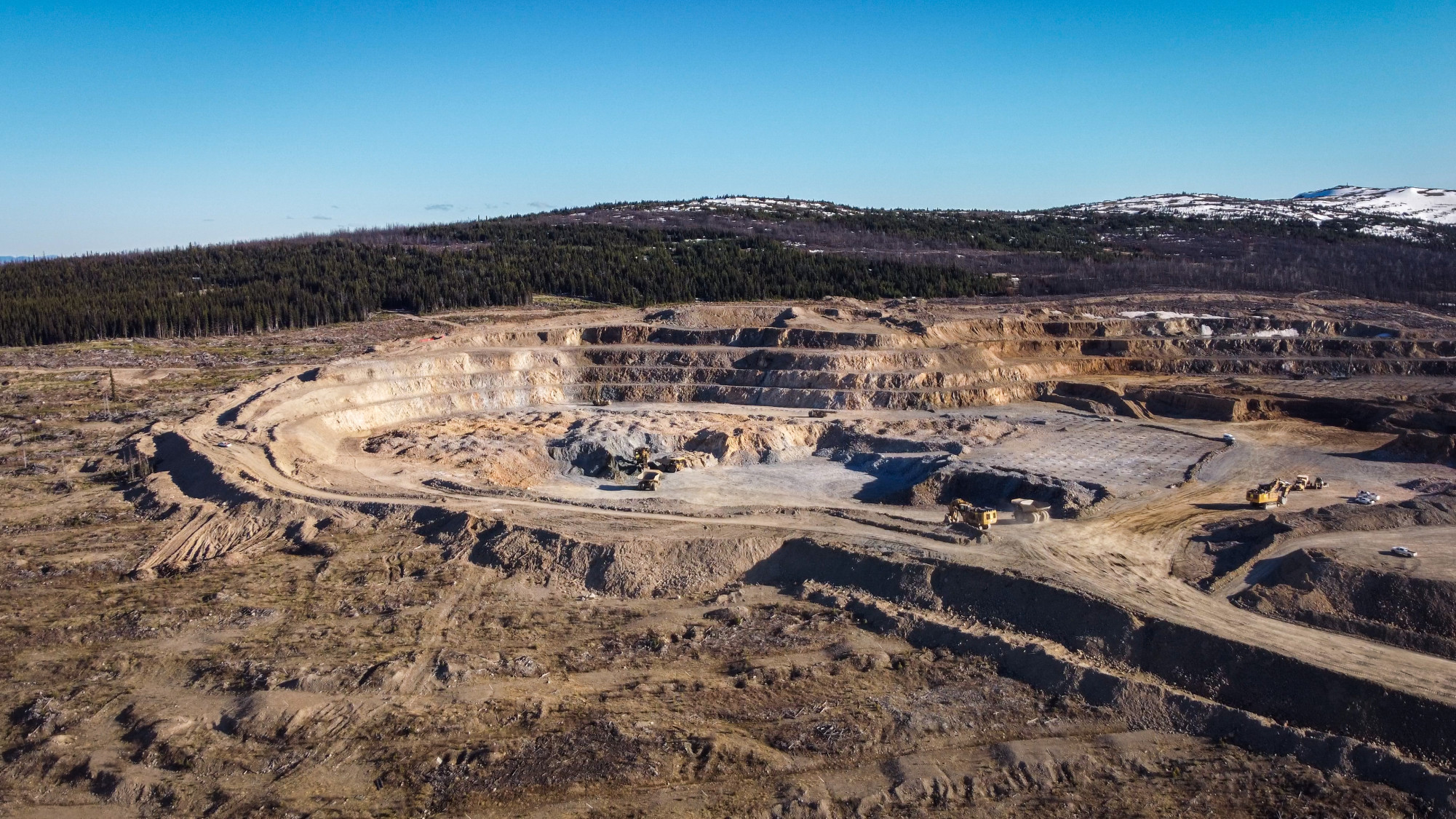
Artemis Gold (TSXV: ARTG; US-OTC: ARGTF) says the first two holes of a 25,000-metre expansion drilling program at its Blackwater mine in British Columbia have encountered substantial mineralization beyond the current reserve, suggesting the deposit could support additional resources. The company's shares rose on the news.
Hole BWDD-26-0001 cut 259 metres grading 1.22 grams gold per tonne, 3.2 grams silver and 0.49% zinc from 309 metres downhole, Artemis said late Thursday in a statement. The intercept included a higher-grade core of 85 metres at 2.29 grams gold, 4.1 grams silver and 0.80% zinc from 371 metres.
Artemis is counting on this year's drilling program at Blackwater, which coincides with a one-third expansion of the mill's capacity, to eventually lift annual output above 500,000 oz. gold by 2029. Blackwater, the company's sole producing asset, is expected to churn out 265,000-290,000 oz. gold this year, up from 193,000 oz. last year.
"Initial results from the Blackwater expansion program exceeded expectations," National Bank Financial mining analyst Don DeMarco said Friday in a note. "We view the results as supportive of future reserve additions, mine-life extension and the potential for a larger long-term production profile."
Artemis shares rose 1.7% to $42.73 in Toronto trading Friday morning, valuing the company at about $10 billion (US$7.1 billion). The stock has ranged between $27.36 and $48.80 over the past year.
Deepest hole
A second hole, BWDD-26-0003, cut 191 metres of 0.95 gram gold, 6.2 grams silver and 0.70% zinc from 163 metres depth, including 93 metres of 1.33 grams gold, 3.9 grams silver and 0.70% zinc from 228 metres downhole.
Drilled to 1,134 metres, BWDD-26-0003 is now the deepest hole on the Blackwater property, Artemis said. The mine is located 450 km northeast of Vancouver.
Both holes extended below previous drilling and provided further evidence of the scale of Blackwater, which remains open to the north, northwest and at depth. Artemis plans to use the results in its next mineral reserve update, expected in 2027.
"There aren't many deposits around the world where it's possible to drill more than a kilometre and intercept mineralization throughout," CEO Dale Andres said. "These two drill holes are just the beginning, and we look forward to updating the market as we continue stepping outwards to fully explore how big this system is."
Silver and zinc
After two drill rigs began turning in the second quarter, a third rig was recently mobilized to site. Artemis has budgeted about $10 million for exploration this year, and with most of the 25,000-metre program still to be drilled, further step-out results are expected in the run-up to the 2027 reserve update.
Because the deeper zones also contain silver and zinc, crews are starting metallurgical test work to assess whether zinc could eventually generate revenue. Blackwater's processing facility doesn't produce zinc for now.
Artemis declared commercial production at Blackwater in May 2025, four months after the first gold pour, and the mine produced a record 74,063 oz. in this year's second quarter.
Blackwater holds proven and probable reserves of 334 million tonnes grading 0.75 gram gold per tonne for 8 million oz. contained metal, according to a 2020 prefeasibility study. These sit within a broader measured and indicated resource of 597 million tonnes at 0.61 gram per tonne for 11.7 million ounces. That gap of roughly 3.7 million oz. between the reserve and the broader resource represents material that further drilling and study work could convert into reserves, while intercepts such as the two reported Thursday sit beyond the existing inventory and could add to it.

