Senator Warren Opposes CLARITY Act in Current Form, Citing Crypto Market Risks and Trump Conflict Concerns
Key Takeaways
- •Senator Elizabeth Warren supports federal crypto regulation but opposes the CLARITY Act in its current form, arguing it fails to adequately address corruption, consumer protection, national security, and financial stability concerns.
- •The CLARITY Act passed the House of Representatives in 2025 and would divide regulatory jurisdiction over digital assets between the SEC and CFTC to resolve longstanding legal ambiguity.
- •Warren has called on President Trump to disclose his cryptocurrency earnings after a federal filing showed approximately $1.4 billion in crypto-related income in 2025, including from the Official Trump token and World Liberty Financial.
- •Senate Majority Leader John Thune declined to file cloture on the bill, significantly reducing the likelihood of a Senate vote before the August recess.
- •Polymarket placed the probability of the CLARITY Act becoming law in 2026 at just 17 percent as of August 7, reflecting growing skepticism about congressional passage.
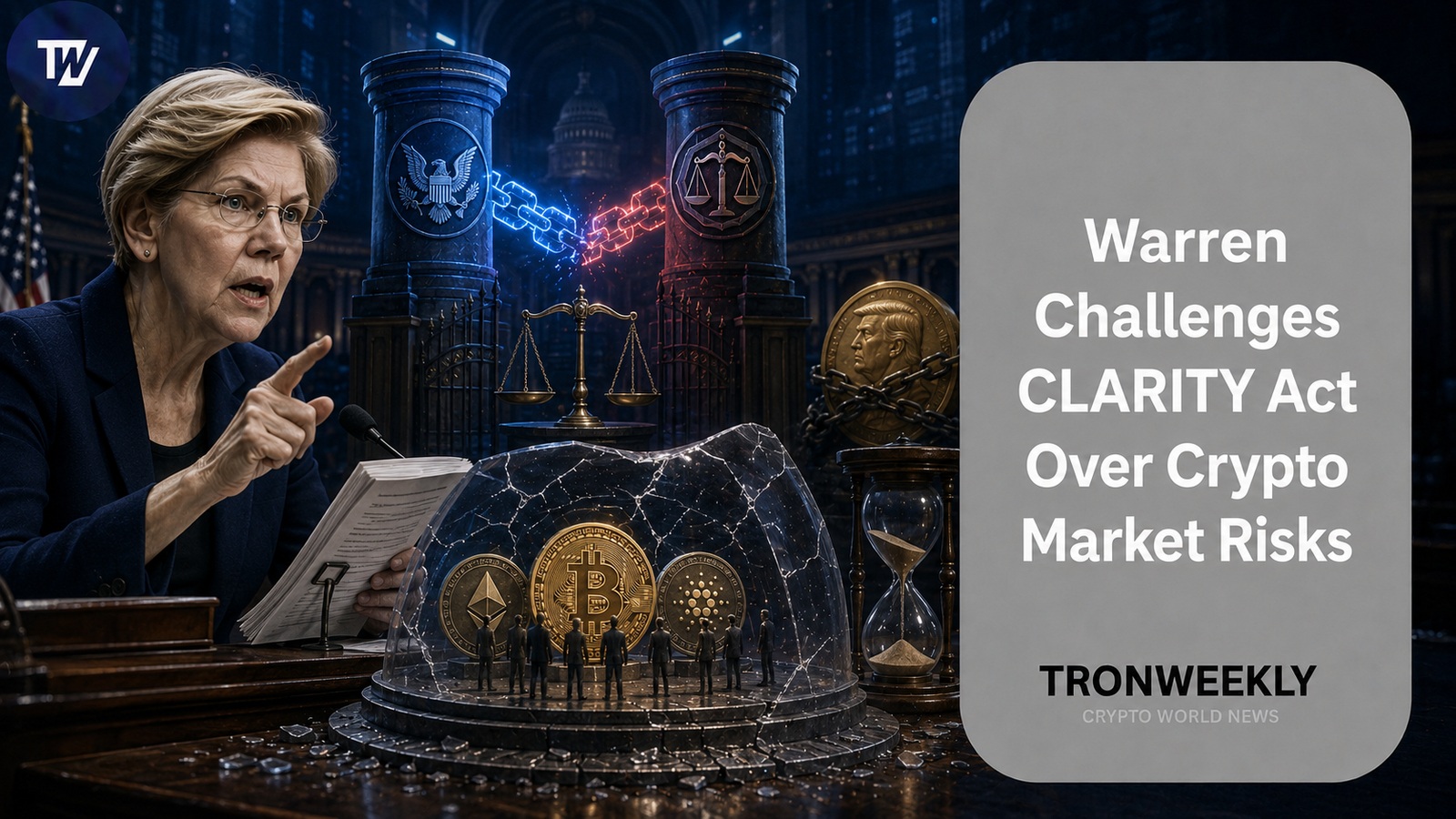
Senator Elizabeth Warren has reiterated her support for federal regulation of digital assets while opposing the CLARITY Act in its current form, adding another hurdle for the market structure bill as Senate leadership withholds the procedural step required to bring it to a floor vote.
The Massachusetts Democrat has stated that the cryptocurrency industry needs a clear regulatory framework. However, she argues that the current proposal fails to adequately address corruption, consumer protection, national security, and financial stability concerns.
Elizabeth Warren isn't backing down on CLARITY. Says crypto needs rules just not rules written BY the industry FOR the industry. Calls it a giveaway that helps Trump "make his next $1.4 billion" while retail eats the risk. 👀 This fight isn't over. $XRP $BTC pic.twitter.com/dDbyk1cPfJ — Xaif Crypto (@Xaif_Crypto) August 6, 2026
Why Warren Says the CLARITY Act Falls Short
The bill, which passed the House of Representatives earlier in 2025, aims to establish federal standards for digital asset issuers, exchanges, and other market participants. It would also classify digital assets to divide regulatory jurisdiction between the Securities and Exchange Commission (SEC) and the Commodity Futures Trading Commission (CFTC), resolving a long-standing ambiguity over whether digital tokens should be treated as securities or commodities—an issue that has fueled enforcement actions and pushed some crypto firms to move operations overseas.
Supporters contend that such a framework would eliminate legal uncertainties currently facing cryptocurrency firms operating in the United States. Warren, however, asserts that the proposed solution must not undermine investor protections or place the broader economy at risk.
According to Warren, inadequate legislation would constrain regulatory authorities while giving large crypto companies room to exploit gaps between agencies. She has called for tougher capital, liquidity, and risk management standards for digital asset firms.
Warren's position is not opposition to cryptocurrency regulation itself. A long-standing critic of the industry who has previously pushed for stricter anti-money-laundering rules on digital asset platforms, she seeks to strengthen the CLARITY Act on matters including financial crime, sanctions evasion, and consumer protection.
President Donald Trump's involvement in digital assets has also shaped the ongoing negotiations. Democrats are pushing for provisions ensuring that senior government officials and their families cannot profit from regulations they help shape.
Trump Ethics Dispute Complicates CLARITY Act Vote
Warren has called on Trump to disclose his cryptocurrency earnings and holdings for the period between January 1 and July 15, 2026. This request followed a federal government filing showing approximately $1.4 billion in earnings from crypto asset projects in 2025, including income tied to the Official Trump token and World Liberty Financial.
She has requested a new voluntary disclosure by July 23, citing the potential impact of the legislation on the value of assets held by the president and his family.
Conflict-of-interest rules remain among the most significant sticking points in negotiations. Other unresolved issues include oversight of decentralized finance, provisions addressing illicit finance, stablecoin incentives, and the scope of CFTC jurisdiction. The legislative effort follows Congress's enactment of stablecoin oversight legislation earlier in 2025, leaving the market structure bill as the next major component of the broader crypto regulatory agenda.
Prospects for swift passage dimmed when Senate Majority Leader John Thune did not move to file cloture on the CLARITY Act, a procedural step necessary to limit debate and advance the bill. Instead, the Senate calendar included cloture motions on other matters, including H.R. 6500, the Protect College Sports Act, and Todd Blanche's nomination for attorney general, but omitted the crypto market structure bill.
Without procedural action, the likelihood of a vote before the August recess diminished significantly. Republicans need Democratic support to reach the 60-vote threshold required in the Senate.
Prediction market participants are increasingly skeptical that Congress will pass the legislation this year. Polymarket placed the odds of the bill becoming law in 2026 at 17% as of August 7.
Future progress on the legislation will hinge on whether the parties can reach agreement on government ethics provisions, consumer protections, national security measures, and agency jurisdiction questions.

