Senator Elizabeth Warren Attacks Clarity Act as Boon to Trump and Criminal Elements
Key Takeaways
- •Warren said the revised Clarity Act would make it easier for criminals, cartels and terrorists to move money and finance operations.
- •Community notes on X stated that the Senate GOP draft includes restrictions on federal officials and their families issuing or sponsoring digital assets.
- •The Clarity Act seeks to define regulatory authority between the SEC and CFTC for digital asset markets.
- •Senate Republicans are circulating revised bill text as they prepare for a possible floor vote.
- •Goldman Sachs CEO David Solomon publicly endorsed the bill, signaling support from part of Wall Street for clearer crypto regulation.
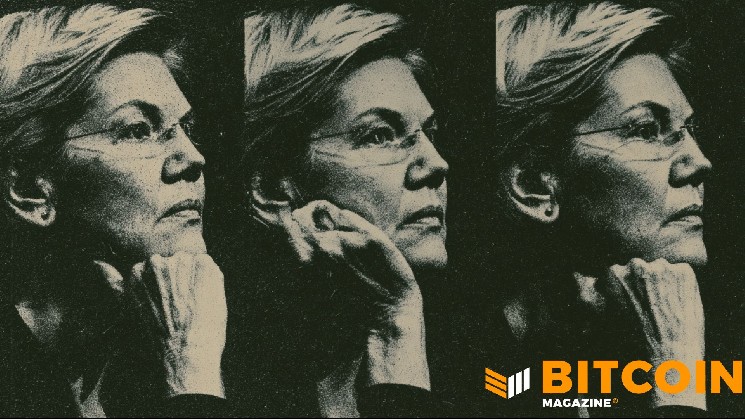
Senator Elizabeth Warren Attacks Clarity Act as Boon to Trump and Criminal Elements
Democratic Senator Elizabeth Warren has sharply criticized the latest draft of the Clarity Act, arguing that the proposed digital asset legislation would facilitate money laundering by criminal organizations while failing to rein in potential conflicts of interest involving President Donald Trump.
In a video statement posted on X on Thursday, Warren contended that the bill contains a significant gap: it does not prevent the President from profiting from cryptocurrency ventures.
"This latest draft bill would make it easier for criminals, oh, and cartels and terrorists to move money and finance their operations — and it fails to protect investors and our financial system," Warren said.
The new draft of the Senate GOP crypto bill does nothing to stop President Trump from making his next $1.4 billion from crypto. It'll supercharge Trump's crypto corruption. This bill should be dead on arrival. pic.twitter.com/HuNY52n3ex — Elizabeth Warren (@SenWarren) July 22, 2026
"It's going to a vote on the floor. There's a glaring omission: it does not stop Donald Trump from cashing in on his presidency," Warren continued. "This isn't regulation — this is a giveaway. This bill should be dead on arrival."
However, community notes attached to Warren's post on X pointed out that the Senate GOP's revised draft does include ethics provisions that prohibit federal officials and their families from issuing or sponsoring digital assets.
Lawmakers are currently reviewing the most recent iteration of the Clarity Act, which seeks to establish a comprehensive regulatory framework for digital assets by clarifying the jurisdictional boundary between the Securities and Exchange Commission and the Commodity Futures Trading Commission — a long-disputed area that has left token issuers, exchanges, and institutional investors operating under legal uncertainty for years. The updated draft specifically bars public officials and their relatives from issuing or promoting cryptocurrencies.
Warren's Track Record on Crypto
Warren has been a longstanding critic of the cryptocurrency industry. She first gained attention for her stance by arguing that billions of dollars are lost annually to tax evasion facilitated by crypto users.
More recently, Warren has called for an investigation into the Trump family's cryptocurrency ventures. President Trump campaigned on promises to support the digital asset sector, but several lawmakers in Washington have raised concerns about how the Trump family has benefited financially from projects such as the TRUMP meme coin and the World Liberty Financial initiative.
Trump and the White House have consistently denied any conflicts of interest.
Developments on the Clarity Act
Senate Republicans began circulating revised text of the bill this week in preparation for a potential floor vote, a milestone that would mark the furthest any major digital asset market structure bill has advanced in the upper chamber. Since last year, U.S. banking industry representatives, regulators, and prominent crypto sector figures have convened at the White House to work on the Clarity Act.
The legislation previously cleared the House of Representatives, but banking executives voiced concerns regarding stablecoin provisions, particularly around the yields that could be offered to customers. Industry representatives have cautioned that if companies are permitted to pay rewards on stablecoins, traditional banks could lose their deposit base, undermining their capacity to lend to American businesses.
On Thursday, Goldman Sachs Chairman and CEO David Solomon became one of the first major banking leaders to publicly endorse the bill, a signal that segments of Wall Street increasingly view regulatory clarity — even under terms they have previously resisted — as preferable to the status quo of enforcement-by-litigation that has defined U.S. crypto oversight.
This article first appeared on Bitcoin Magazine, written by Mathew Di Salvo.