Warby Parker Bets Its Next Chapter on Google-Powered Smart Glasses
Key Takeaways
- •Warby Parker's smart glasses, built with AI technology from Google and Samsung, are priced from $395 and launch on Nov. 12.
- •Meta currently leads the smart glasses category with about 69% share via its Ray-Ban devices made with EssilorLuxottica, which sold 7 million AI-supported pairs last year.
- •Warby Parker's most recent quarterly revenue rose 10% to $245 million, though new active customer growth slowed to 3.4% in a sluggish eyewear market.
- •The company told Wall Street analysts that smart glasses could contribute several percentage points to fourth-quarter growth, but revenue-sharing and intellectual-property terms with Google have not been disclosed.
- •Google is relying on Warby Parker's design and retail strengths to move past Google Glass, its failed 2013 smart glasses attempt that was bulky, costly at $1,500, and widely banned over privacy fears.
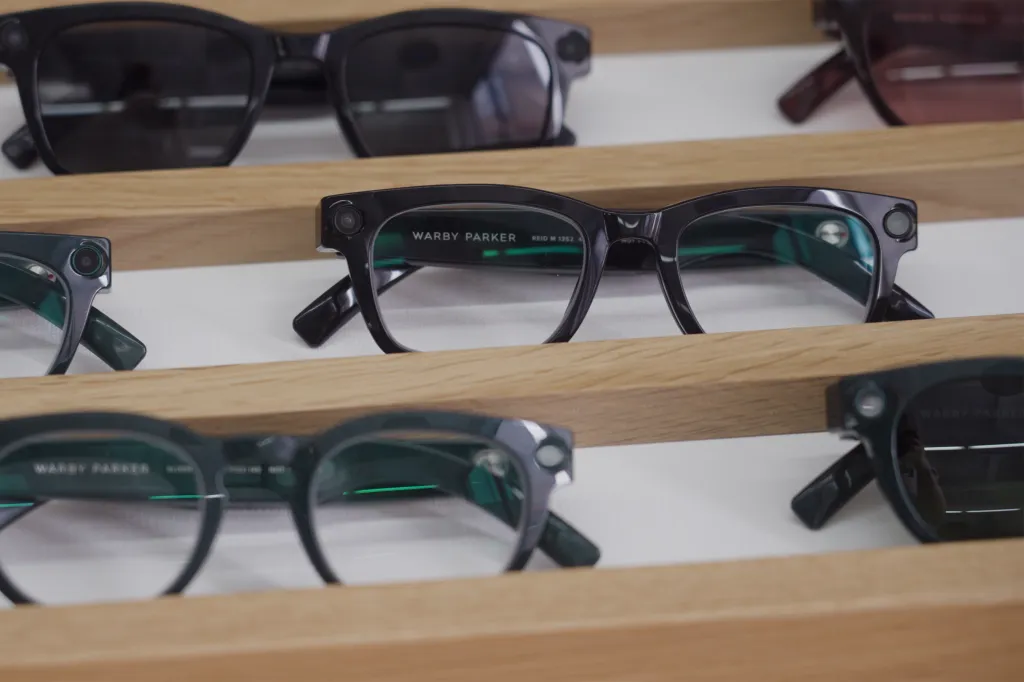
Warby Parker, one of the standout winners of the 2010s direct-to-consumer boom, is betting its next chapter on smart glasses built with Google — a move that places the eyewear retailer in direct competition with early market leader Meta in a category that remains small but is gaining traction.
The company rose alongside a wave of digital-first upstarts — Allbirds in shoes, Away in luggage, Casper in mattresses — that used e-commerce savvy to bypass middlemen such as wholesalers and sell straight to shoppers, upending their industries in the process. While many of those peers have since struggled or shut down, Warby Parker still operates an empire of 360 stores, and its revenue climbed 10% to $245 million in its most recent quarter.
Even so, the eyewear maker is contending with headwinds. Growth in new active customers slowed to just 3.4% last quarter, and the broader eyewear market remains sluggish. Searching for its next major growth engine, Warby Parker is planting its flag in the promising but still tiny smart glasses market through a partnership with Google.
Under the arrangement, the tech behemoth — together with partner Samsung — supplies the AI technology behind the glasses, including a high-resolution display tucked inside one lens that wearers can control with a wristband or watch. The Warby Parker glasses start at $395 and hit the market on Nov. 12.
For a company whose past innovations include a virtual try-on tool and features that let customers choose glasses from home, the partnership could bolster its tech-forward reputation, combining its strengths in design and retail with Google's AI to win the eyeglass buyers of the future.
"Glasses are the original wearable, right?" co-founder and co-CEO Neil Blumenthal said on Fortune's Behind the Business YouTube series. "The combination of form and function is something we can bring to this new category and create something that has a ton of technology in it."
The launch pits Warby Parker against an early market leader in Meta, whose Ray-Ban smart glasses are designed and made in partnership with Italy's EssilorLuxottica, the largest eyewear company in the world. Meta's glasses accounted for about 69% of smart glasses so far this year, and EssilorLuxottica has said it sold 7 million pairs of AI-supported glasses last year.
Google's and Meta's decisions to team up with established eyewear brands like Warby Parker and EssilorLuxottica show that both companies understand that so-called intelligent eyewear — Warby Parker's preferred term for the products — must be aesthetically pleasing and less sci-fi-like to achieve mass appeal.
"We've always innovated in technology," said Dave Gilboa, Warby Parker's other co-founder and co-CEO. "But our north star is that someone has to want to put this on their face."
The "smart" elements of the new glasses are deliberately understated. The cameras on the front of the frame could pass for screws, and wearers begin filming or take a photograph by pressing a small button near the temple. Outward-facing lights illuminate while the user is recording — a feature intended to assuage concerns that smart glasses could be used to photograph or film people surreptitiously.
Warby Parker commands just 1% of the U.S. eyewear market, but its history as a digital-first brand and its reputation for simple, attractive design have made it a desirable partner for Big Tech, according to Kate Winick, an analyst with Forrester Research.
"Warby Parker is a small player, but it's the right player," Winick said. "It has stores in these zip codes that tech companies desperately want to reach."
That matters especially for Google, which has a great deal riding on the glasses. The company needs Warby Parker, Winick said, to help it move past Google Glass, its first attempt at smart glasses, which flopped after its 2013 debut. Glass was bulky, its battery died quickly, and its $1,500 price was hard to justify. Worse, it made people uneasy: many bars, restaurants, and theaters banned the device over fears of non-consensual recording, and it came to embody the era's "tech bro" stereotype so completely that its wearers earned a nickname: "glassholes."
Google is eager for the new version of smart glasses to prove that its technology can work at scale across other wearables. Winick expects tech giants to extend the wearable tech featured in glasses into other devices, such as Meta's Muse Charm, a pocket- and keychain-sized AI companion.
Smart glasses dominated the discussion at Warby Parker's recent quarterly check-in with Wall Street analysts, where the company said the category could contribute several percentage points to its fourth-quarter growth. Google and Warby Parker have not disclosed the revenue-sharing and intellectual-property ownership details of their partnership.
Blumenthal and Gilboa acknowledge the privacy concerns smart glasses raise, but they argue the devices could also fix a modern habit: constantly reaching for our phones.
"For the first time, you can have this accessory that enables you to leave your phone in your pocket to keep your attention in the real world," Gilboa said.
This story was originally published on Fortune.com.

