Walmart offers Gen Z workers a debt-free road to six-figure jobs—no college degree required
Key Takeaways
- •Walmart's Associate to Driver program, launched in 2022, has moved more than 1,000 frontline associates into driving roles with average earnings of about $109,000 and top pay reaching $135,000 for experienced drivers.
- •The 16-week driver pathway covers the cost of a commercial driver's license while associates keep earning wages, and applicants must have at least one year at Walmart plus a commercial learner's permit.
- •Walmart's Associate to Technician program has trained and placed roughly 600 associates toward a commitment of 4,000 placements by 2030, lifting hourly wages from about $16-$20 to $35-$40.
- •The Associate to Optician pilot, launched in June, combines on-the-job apprenticeship with online coursework and is estimated to save each participant roughly $20,000 in tuition costs.
- •The initiatives were shaped by labor shortages, including a record 80,000-driver trucking shortfall estimated in 2021, and by employee requests for training connected directly to better-paying jobs.
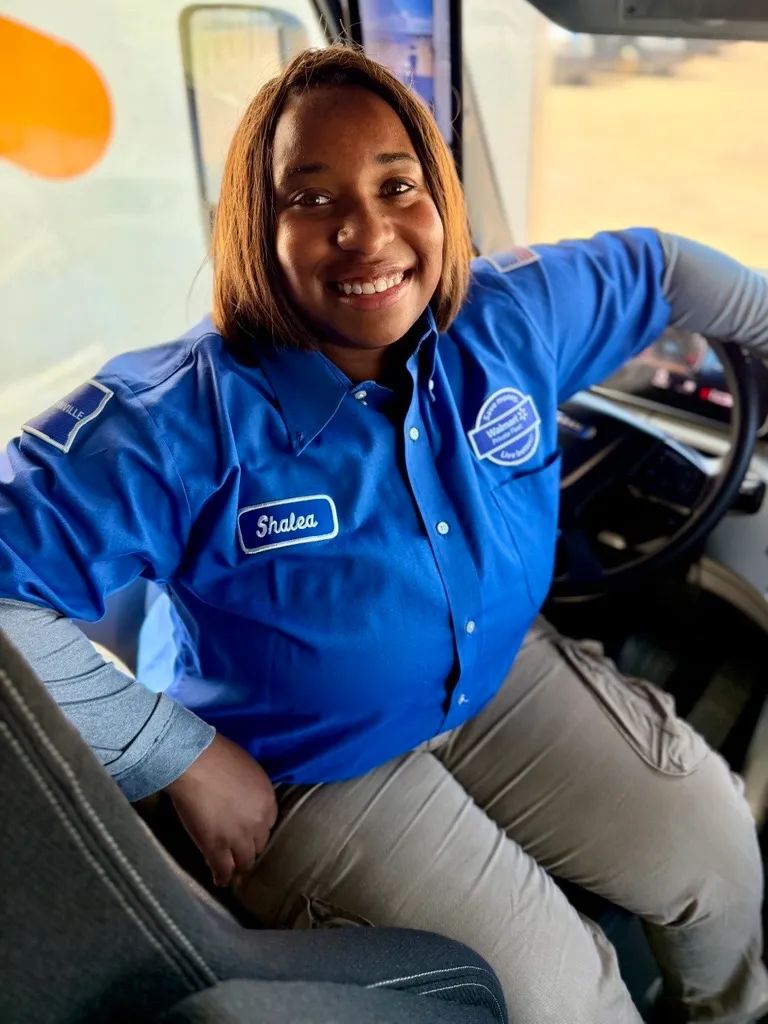
Walmart is wagering that, for Gen Z, the route to a six-figure salary may run through its store aisles rather than a college campus. The retail giant is building paid, debt-free training pathways that move frontline associates into higher-paying roles as truck drivers, skilled technicians, and licensed opticians—while also addressing labor shortages in those fields by tying instruction directly to positions the company needs to fill.
The flagship Associate to Driver program, launched in 2022, pays eligible associates while they earn a commercial driver's license and transition into the retailer's fleet. According to the company, more than 1,000 employees have moved into driving roles through the initiative, where first-year drivers can make up to $115,000 annually and more experienced drivers can earn up to $135,000. The structure inverts the usual college math: instead of borrowing against future earnings, workers collect wages while they train.
The effort is one major corporation's answer to a question looming over young people across the country as they graduate from high school. Rising college costs and uncertainty about the job market have left many Gen Z students rethinking the path forward. The average total cost of a four-year degree now stands at $108,584, according to a report by the Education Data Initiative. Betsy Mayotte, president and founder of The Institute of Student Loan Advisors, told Fortune that the days of education for education's sake are gone: "It's just not affordable," she said.
For many, though, the question is not simply whether college is worth the cost, but whether an affordable path to a quality education exists at all. Only one in four adults without a college degree believe most people can access an affordable, quality education, according to a Gallup and Lumina Foundation report%20believe%20most%20people%20can%20access%20a%20quality%2C%20affordable%20education.). Students should weigh a degree's price against their likely earnings after graduation, Mayotte said. "If the return on investment isn't there, then you need to find another path to get that degree to work in that profession," she explained.
Against that backdrop, it is little surprise that many in Gen Z are exploring alternatives to the traditional four-year college path—and showing a growing interest in skilled trades.
The birth of the Associate to Driver program
Walmart's upskilling push solves several problems at once for the big-box retailer. In 2021, the American Trucking Associations estimated that the trucking industry faced a shortage of 80,000 drivers—an all-time high at the time. Walmart, which runs one of the largest private fleets in American trucking, was recruiting from that same strained labor pool.
At the same time, Walmart was fielding employee requests for updates to its training programs. During "listening sessions" with associates about its education program Live Better U, workers said they wanted more than access to degrees and certificates, Walmart Chief Talent Officer Lorraine Stomski told Fortune. They also wanted a clearer connection between training and landing a better job at the company. "We're doing this and we're making the investment because we want to connect it with a job that Walmart has," Stomski recalled workers explaining.
That feedback, combined with an upcoming wave of Walmart driver retirements, sparked the initial pitch for the program, Stomski said: "Why don't we just build our own program and train them?"
Officially launched in 2022, the Associate to Driver program offered a compelling alternative to the traditional college route: instead of paying tuition to earn a credential, associates could earn a commercial driver's license at no cost while collecting a paycheck.
From concept to cab—what the program looks like now
To apply, associates must have worked at Walmart for at least a year and obtain a commercial learner's permit before entering the program. Walmart also gives applicants a "day in the life" preview of the career that walks through the schedule, time away from home, and demands of professional driving.
"While the rewards of this career path are great and it's an economic mobility platform for our associates, at the same time, a driving job is an intense job, and it's not made for everyone," Ryan McDaniels, Walmart's senior vice president of transportation, told Fortune.
The program lasts 16 weeks: associates spend the first eight weeks in training, then another eight weeks moving freight through Walmart's network alongside a dedicated trainer. Because wages continue through all 16 weeks, the pathway stays open to workers who could not afford an unpaid stretch of retraining.
That idea has grown into a major employment pipeline for Walmart's Private Fleet. Since launch, more than 1,000 associates have graduated into driving roles. The fleet counts more than 17,000 drivers, and Walmart has expanded from holding classes once every three months to bringing in a new class every month. Drivers earn an average of about $109,000, though pay can climb higher.
Giovani Diorio, who graduated from the program in February 2025, comes from a family of drivers—his father, brother, and uncle are all professional drivers. While he felt a pull toward commercial trucking from a young age, he once planned to attend college, he said. But uncertainty about what to study, combined with the potential cost, turned him away from that traditional path. "I didn't want to waste my time," he explained. "It's very costly to go to college, especially [if] you go and then you don't use the schooling that you went for."
When the opportunity to apply for the Associate to Driver program became available, Diorio jumped at the chance. Walmart covering the training while continuing to pay him made the program especially appealing. "It just opened up a lot of financial possibilities where I could save money, put money away, and just better set myself up for the future," he said.
Expanding the program beyond driving
The program's success has inspired two more career pathways at Walmart: Associate to Optician and Associate to Technician. Like Associate to Driver, both are designed to connect training directly to jobs Walmart expects to need filled.
The Associate to Technician program partners with third-party trade schools and combines formal training with an apprenticeship model led by experienced Walmart technicians. Stomski said associates can move from earning roughly $16 to $20 an hour to $35 to $40 an hour after becoming technicians. Walmart has committed to placing 4,000 technicians by 2030 and has already trained and placed about 600, she said. In the first technician pilot, all 105 participants who completed the program were placed in roles.
Associate to Optician is newer and still in its pilot phase. Launched in June, it combines on-the-job apprenticeship work with online coursework, allowing associates to keep working while training for a licensed role in Walmart's vision centers. The company estimates the pathway could save each participant about $20,000 in tuition costs. Set against the $108,584 average price of a four-year degree, the savings amount to less than a fifth of the cost—even before counting wages earned during the apprenticeship.
While Stomski did not reveal any future programs in the works, she said Walmart will "continue to look at the workforce and the external marketplace" to ensure the company stays current with the skills it needs. The milestones to watch are built into the programs themselves: whether technician placements climb from the roughly 600 already placed toward the 4,000 committed by 2030, and whether the optician pilot proves out a template for training associates into licensed roles.
The model will not replace college for everyone, nor will it make every skilled-trades job an easy fit. But it suggests that for workers weighing a costly degree, the most valuable education may be the one that comes with the promise of a job.
This story was originally featured on Fortune.

