Weekly Recap: Stocks Rise as Fed Rate Hike Bets Fade, Bonds Keep Selling Off
Key Takeaways
- •The U.S. economy added only 29,000 jobs in September, far below the 89,000 economists expected, while the unemployment rate rose to 4.2% and July and August job growth was revised down by a combined 60,000 positions.
- •Market-implied odds of a Federal Reserve rate hike later in October fell to about 23% following the weak employment report, although some officials, including Dallas Fed President Lorie Logan, still see a need for further increases.
- •The 10-year Treasury yield reached its highest level since 2002 despite falling rate-hike expectations, driven by rising government debt, heavy corporate borrowing for AI infrastructure, and inflation concerns.
- •Nike shares fell 3.6% after a quarterly revenue miss and weak guidance, while Tesla rose 4.7% on third-quarter deliveries of 486,532 vehicles that beat estimates of about 462,000.
- •Oil declined for the week—Brent crude down 4.4% and U.S. crude down 3.2%—after G7 nations agreed to release up to 100 million barrels from emergency reserves to stabilize energy prices.
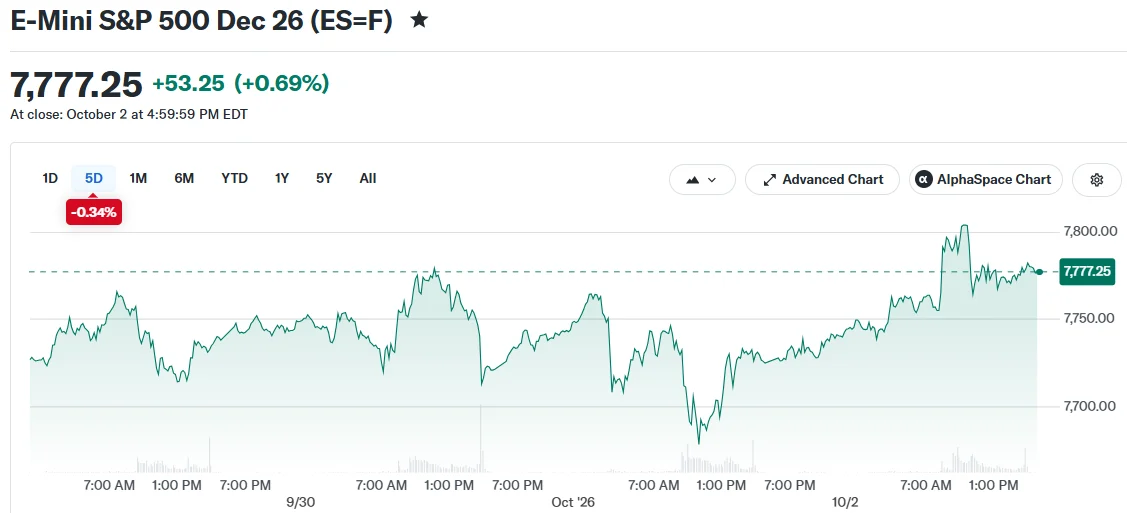
Wall Street closed higher on Friday to end a mixed week for stocks, as a weaker-than-expected September jobs report sharply lowered the odds of a Federal Reserve rate hike later this month. The S&P 500 gained 0.8% on the day, while the Nasdaq Composite jumped 1.2% and touched a new intraday record. The Dow Jones Industrial Average rose 0.5%. For the full week, however, only the Nasdaq finished in positive territory. The Friday rebound came despite continued selling in U.S. government bonds.
What the September Jobs Report Showed
The rally followed a September employment report that came in far below expectations. The U.S. Bureau of Labor Statistics said nonfarm payrolls rose by just 29,000 last month, well short of the 89,000 jobs economists had expected and the slowest month of hiring this year. The report, released on Friday, October 2, marked the third-weakest jobs report of 2026. The data pointed to a clear slowdown in the U.S. labor market. Employment data carries outsized weight in markets because the Federal Reserve weighs labor conditions when setting interest rates.
Market commentary account The Kobeissi Letter highlighted the shortfall in a post on X:
BREAKING: The US economy adds +29,000 jobs in September, well below expectations of +89,000. The unemployment rate rose to 4.2%, above expectations of 4.1%. August's job number was also revised down by -29,000 jobs. This marks the third weakest jobs report of 2026.
— The Kobeissi Letter (@KobeissiLetter) October 2, 2026
Source: The Kobeissi Letter on X
The softness extended beyond a single month. Job growth for July and August was revised down by a combined 60,000 positions, and August's figure alone was lowered by 29,000 jobs. The revisions underscored a summer hiring picture much weaker than initially reported. The unemployment rate climbed to 4.2% from 4.1% in August, coming in above the 4.1% rate economists had anticipated.
Wage growth cooled as well. Average hourly earnings rose just 0.1% for the month and 3% over the past year, the weakest annual pace since May 2021. Policymakers watch wage growth closely because of its role in the inflation picture.
Investors read the report as a sign that the Federal Reserve has room to leave interest rates unchanged at its meeting later this month. According to the CME FedWatch tool, which tracks market-implied expectations for Fed policy, the odds of a rate hike later in October fell to about 23%. Still, some Fed officials have said more rate increases may be needed to bring down inflation. Dallas Fed President Lorie Logan said rates may need to rise by at least half a point.
Bond Yields Keep Climbing
Even as rate-hike odds fell, the bond market told a different story. Longer-term Treasury yields kept climbing through the week, with the benchmark 10-year yield touching its highest level since 2002 and the 30-year yield hitting a level not seen since May 2002 — multi-decade highs for the long end of the curve. The 10-year yield acts as a reference rate across the economy, underpinning pricing and corporate borrowing, so sustained moves higher can raise costs well beyond financial markets.
Analysts pointed to a mix of factors behind the move. These include rising government debt, heavy borrowing by companies to fund AI infrastructure projects, and lingering concerns about inflation.
Oil prices moved in the opposite direction. Brent crude fell 4.4% for the week, and U.S. crude dropped 3.2%. The decline came after G7 nations, the Group of Seven advanced economies, agreed to release up to 100 million barrels from emergency reserves. The goal is to help stabilize global energy prices and calm energy markets. Energy costs feed directly into the inflation readings the Fed monitors, keeping the reserve release connected to the policy debate.
Company Movers: Nike and Tesla
Nike shares fell 3.6% after the sportswear company reported a quarterly revenue miss and gave weak guidance for the year ahead. The company said it plans further job cuts and a reorganization of its global business. Nike has struggled with competition and weak sales in China.
Tesla moved in the other direction, rising 4.7%. The electric vehicle maker delivered 486,532 vehicles in the third quarter, above analyst estimates of about 462,000. Quarterly delivery figures are among the most closely watched gauges of demand for Tesla's vehicles.
Looking Ahead
Investors are watching for the next round of inflation data. The consumer price index and producer price index reports are due October 14 and 15. The Federal Reserve's next decision is scheduled for October 28, meaning the two inflation prints will arrive just before that meeting.

