Nasdaq Falls for Second Day as AI Spending Concerns and Tariffs Pressure US Stocks
Key Takeaways
- •All three major U.S. stock indexes finished the week lower, with the Nasdaq posting the steepest weekly decline at 2%.
- •Concerns about AI investment spending, sparked by Alphabet's earnings report, caused the Magnificent Seven tech stocks to lose nearly $800 billion in combined market value during Thursday's trading session.
- •New U.S. tariffs under Section 301 took effect overnight with rates between 10% and 12.5% on imports from top trading partners, though some energy products were excluded.
- •Markets are pricing a 62.1% probability that the Federal Reserve will keep interest rates unchanged next Wednesday, while the odds of a rate increase rose to 37.9% from 12.8% a week earlier.
- •Intel shares dropped nearly 8% on Friday despite second-quarter results that exceeded Wall Street expectations, highlighting the cautious sentiment across the semiconductor sector.
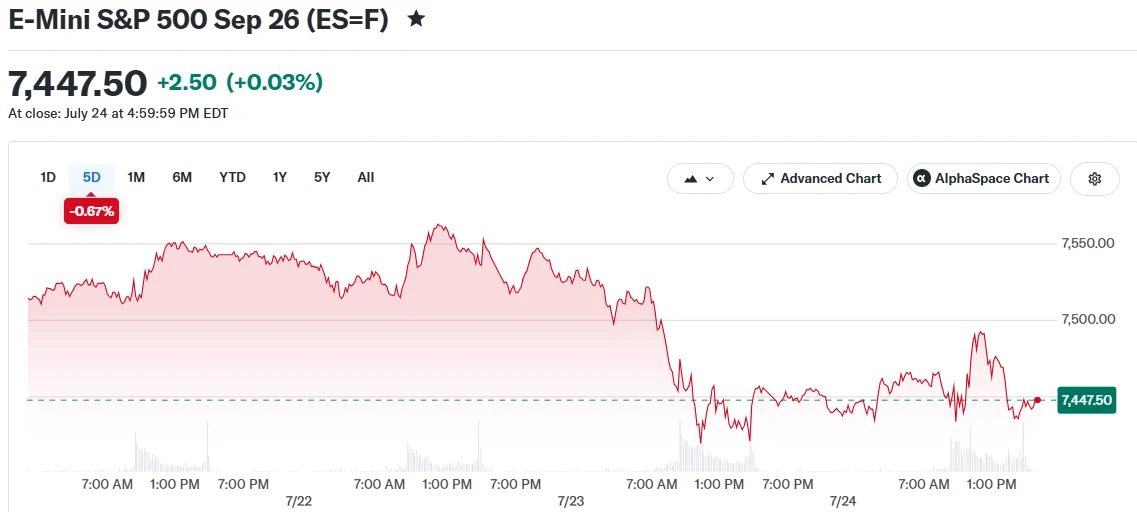
A volatile week on Wall Street ended with a mixed session Friday, as U.S. stocks struggled to rebound from the previous day’s sharp sell-off.
The Dow Jones Industrial Average rose 235 points, or about 0.5%, while the S&P 500 finished just above the flat line. The Nasdaq Composite fell 0.6%, extending pressure on technology shares.
Even with the Dow’s Friday gain, all three major U.S. indexes ended the week lower. The Nasdaq posted the steepest weekly decline, falling 2%.
AI Spending Concerns Weigh on Technology Stocks
Thursday’s market decline was driven largely by concerns about spending on artificial intelligence. The “Magnificent Seven” group of mega-cap technology stocks lost nearly $800 billion in combined market value during a single trading session.
Alphabet’s earnings report, released Wednesday evening, served as the catalyst. Investors became concerned about the pace of artificial intelligence investment and the lack of clear evidence of returns. The reaction showed how closely markets are scrutinizing capital spending plans at large technology companies, especially as AI infrastructure requires heavy outlays for data centers, chips, and cloud capacity.
Intel shares dropped nearly 8% on Friday, despite the company reporting second-quarter results that exceeded Wall Street expectations. The decline underscored the cautious tone surrounding the chip sector.
Apple, Amazon, Meta, and Microsoft are scheduled to report earnings in the coming week. After the market reaction to Alphabet, those reports are likely to remain closely watched by investors for updates on AI-related spending, margins, and demand trends across cloud, advertising, consumer devices, and enterprise software.
New Tariffs and Oil Prices Add Pressure
New U.S. tariffs under Section 301 took effect overnight on almost all American imports. The tariff rates range from 10% to 12.5% and apply to the country’s top trading partners.
The White House excluded some energy products from the tariff list, reflecting concern over rising oil prices and related inflation pressures. Tariffs can raise costs for importers and consumers, making them relevant for inflation expectations at a time when markets are already focused on the Federal Reserve’s next policy decision.
Oil prices pulled back on Friday. Brent crude futures fell about 4%, dropping below $96 per barrel. Despite the decline, oil remained on track for a weekly gain after briefly reaching $100 per barrel.
Treasury Yields, Rate Expectations, and Earnings
The 2-year Treasury yield ended the week at 4.33%, although it declined Friday and broke a six-day streak of increases. The 2-year yield is often watched as a gauge of expectations for near-term Federal Reserve policy, which made Friday’s move notable after a week of rising rate concerns.
Markets are pricing in a 62.1% probability that the Federal Reserve will keep interest rates unchanged at its meeting next Wednesday. The probability of a rate increase rose to 37.9%, up from 12.8% one week earlier.
In corporate earnings, Verizon, American Express, and NextEra Energy all reported profits that beat forecasts, while revenue missed expectations. American Express and Alphabet together pulled the Dow into negative territory for the week.
U.S. business activity expanded in July at its fastest pace in eight months, according to S&P Global’s flash PMI. The increase was partly supported by World Cup activity, adding another data point for investors assessing economic momentum alongside earnings, inflation pressures, and rate expectations.

