Tech Selloff Persists: Nasdaq Falls Again as AI Spending Concerns and Trade Tensions Weigh on Markets
Key Takeaways
- •The Dow gained about 0.5% Friday, but all three major U.S. indexes finished the week lower.
- •Technology stocks came under pressure after Alphabet’s earnings raised concerns about the cost and revenue timing of AI infrastructure investments.
- •New Section 301 tariffs of 10% to 12.5% took effect on nearly all U.S. imports, with certain energy commodities excluded.
- •Market pricing showed a 62.1% chance the Federal Reserve will leave rates unchanged next Wednesday, while expectations for a rate increase rose to 37.9%.
- •Brent crude fell about 4% Friday to below $96 per barrel but remained on pace for a weekly gain.
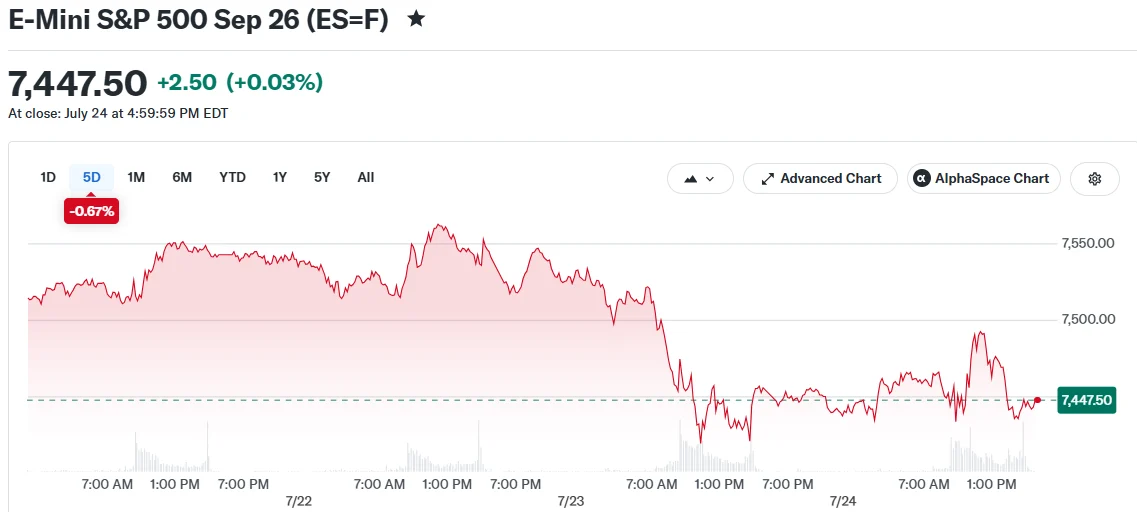
Wall Street closed out a turbulent trading week on Friday with mixed performance across major indexes, as markets struggled to recover from Thursday's sharp sell-off.
The Dow Jones Industrial Average gained 235 points, or roughly 0.5%, for the session. The S&P 500 managed a marginally positive close, while the Nasdaq Composite declined 0.6%, continuing to absorb pressure from weakness in the technology sector.
Despite Friday's advance in the Dow, all three benchmark indexes posted losses for the week. The Nasdaq led the decline, falling 2% over the five trading sessions, reflecting the index's heavier exposure to large technology and semiconductor companies.
Technology Sector Hit by AI Investment Anxiety
Thursday's rout was driven by escalating concern over capital expenditure on artificial intelligence infrastructure. The group of large-cap technology companies known as the "Magnificent Seven" lost approximately $800 billion in combined market capitalization in a single trading day.
The sell-off was triggered by Alphabet's quarterly earnings report, released Wednesday after the closing bell. Investors reacted negatively to the company's aggressive AI infrastructure spending, particularly given the absence of clear revenue generation from those investments. The concern is centered on timing: AI data centers, chips, and related infrastructure require substantial upfront spending, while companies have not yet shown that near-term AI revenue can fully offset those costs.
Intel shares fell nearly 8% on Friday, even after the chipmaker reported second-quarter results that surpassed analyst profit expectations. The adverse reaction highlighted growing investor skepticism toward semiconductor stocks, a group closely tied to expectations for AI hardware demand.
Apple, Amazon, Meta, and Microsoft are all set to report quarterly earnings in the coming days. Following the market's response to Alphabet's results, investors will be watching whether other megacap technology companies provide more detail on AI spending levels, margins, and revenue contribution.
New Import Duties and Energy Prices Add to Market Pressure
New tariffs implemented under Section 301 authority took effect overnight, applying to nearly all U.S. imports. Duty rates range from 10% to 12.5% and affect major American trade relationships.
Administration officials excluded certain energy commodities from the tariff framework, citing elevated petroleum prices that have compounded inflation concerns. Tariffs can raise input costs for businesses and consumer prices for imported goods, making them especially relevant at a time when markets are focused on inflation and Federal Reserve policy.
Oil markets retreated on Friday, with Brent crude futures falling approximately 4% to settle below $96 per barrel. Crude prices were still on track for a weekly gain, however, following a brief move above $100 per barrel earlier in the week.
Treasury Yields and Fed Policy Expectations
The 2-year Treasury yield ended the week at 4.33%, though it pulled back on Friday, ending a six-session winning streak. The 2-year yield is closely watched because it tends to be sensitive to expectations for near-term Federal Reserve interest-rate policy.
Market pricing indicates a 62.1% probability that the Federal Reserve will hold interest rates steady at its policy meeting next Wednesday. The probability of a rate increase has risen to 37.9%, a notable shift from the prior week's 12.8%.
Corporate earnings results were mixed. Verizon, American Express, and NextEra Energy each beat earnings-per-share expectations but missed revenue estimates. American Express and Alphabet were together responsible for dragging the Dow into negative territory for the week.
U.S. business activity posted its strongest expansion in eight months during July, according to S&P Global's preliminary Purchasing Managers' Index, with World Cup-related economic activity providing partial support.

