Welsh Government Approves Cierco Energy's Llŷr Floating Offshore Wind Farm in the Celtic Sea
Key Takeaways
- •The Welsh Government has granted approval for Cierco Energy's Llŷr Wind Farm, enabling the Celtic Sea floating offshore wind test project to move toward construction.
- •First power generation from the project is targeted for 2031, with the development planned off the coast of Pembrokeshire.
- •The Welsh Government estimates the project could support approximately 2,000 jobs during construction and generate additional skilled employment once operational.
- •Floating wind technology uses platforms anchored to the seabed, allowing turbines to be installed in deeper waters where fixed-bottom structures are not feasible.
- •The Celtic Sea is considered one of Europe's most promising regions for floating wind development due to favorable wind conditions and suitable water depths.
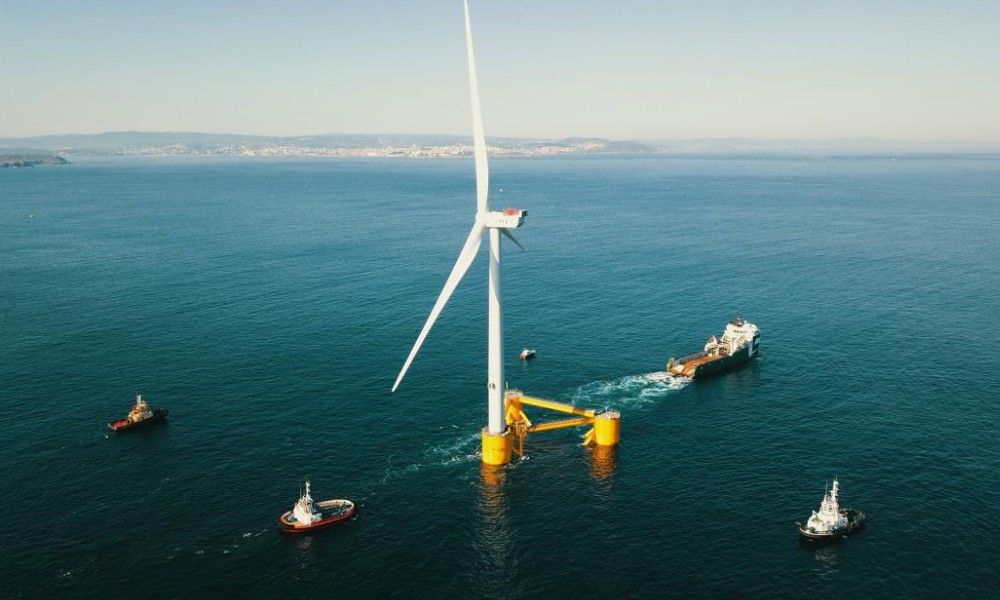
The Welsh Government has granted approval for Cierco Energy's Llŷr Wind Farm, clearing the Celtic Sea test project to advance toward construction.
The development is planned off the coast of Pembrokeshire in south-west Wales. It will trial floating offshore wind technologies designed for deployment in deeper waters and more demanding marine environments, where traditional fixed-bottom wind turbines are less technically suitable. First power generation from the project is targeted for 2031.
The consent enables Cierco to proceed into the next phase of project preparation. The approval comes as Wales pursues a target of meeting 70% of its electricity needs from renewable sources by 2030, with offshore wind expected to play a growing role alongside established onshore wind and solar capacity.
Economic and Industrial Impact
The Welsh Government said the project could support approximately 2,000 jobs during the construction phase, with additional skilled employment anticipated once the wind farm becomes operational. Officials also expect the development to strengthen the local supply chain, creating opportunities for Welsh companies, ports, and universities. Ports such as Milford Haven in Pembrokeshire have been positioning to support offshore wind activity, leveraging existing energy infrastructure and maritime workforces.
Scott Harper, chief executive of Cierco Energy, said the project could help establish south-west Wales as a hub for offshore wind innovation, advanced engineering, and renewable energy expertise.
Floating Wind Technology and the Celtic Sea
Floating offshore wind differs from conventional fixed-bottom offshore wind in that turbines are mounted on floating platforms anchored to the seabed, allowing installation in deeper waters farther from shore. The technology is considered critical for unlocking wind resources in areas where the seabed is too deep for fixed structures. While fixed-bottom offshore wind is well established commercially, floating wind remains at a demonstration and early commercial stage globally, with only a handful of operational projects worldwide.
The Celtic Sea, located between Wales and Ireland, has been identified as one of the most promising regions in Europe for floating wind development due to its favorable wind conditions and suitable water depths. The Crown Estate, which manages seabed leasing around the UK, has advanced plans for commercial-scale floating wind leasing rounds in the Celtic Sea, drawing interest from multiple developers.
Llŷr is intended to provide operational experience for floating wind systems in these conditions. The project is also expected to help build the industrial capabilities required for future commercial-scale floating wind developments in the Celtic Sea.
