Vulcan Warns of Potential Bankruptcy as $33.1M in Senior Notes Nears Oct. 31 Due Date
Key Takeaways
- •Vulcan said it may be forced into bankruptcy because financing tied to its senior notes has not closed before the debt matures.
- •About $33.1 million in senior notes is due on Oct. 31, creating an immediate repayment or refinancing deadline.
- •The bankruptcy risk was disclosed in the company’s SEC quarterly filing for the period ended June 30, 2026.
- •Vulcan also addressed its financial position in a second-quarter update released on Aug. 14, 2026.
- •Investors are watching whether the company can close financing, refinance the notes, or negotiate a restructuring before the maturity date.
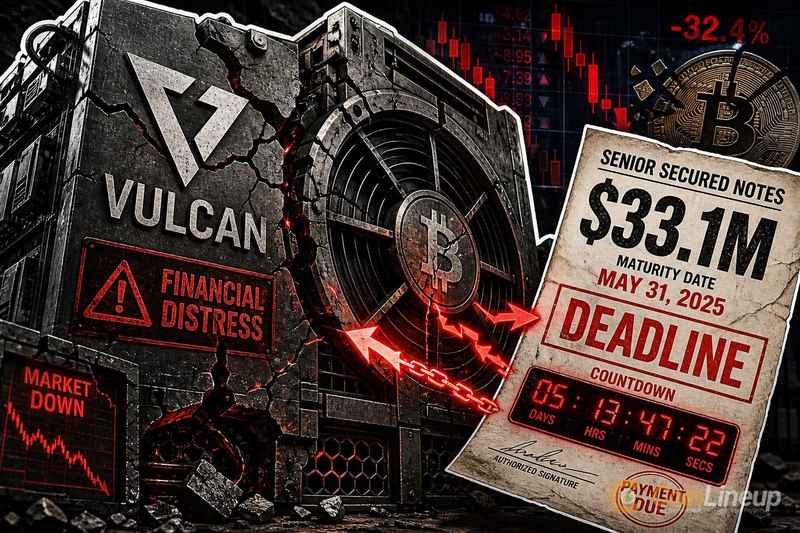
Crypto miner Vulcan has warned that it could face bankruptcy as roughly $33.1 million in senior notes approaches an Oct. 31 due date, putting the company's near-term solvency at the center of investor attention.
Why Vulcan says bankruptcy is now a real possibility
Vulcan disclosed that it may be forced into bankruptcy because a financing arrangement tied to its senior notes has not closed, leaving the debt exposed as it matures, according to reporting on the warning.
The company detailed the risk in its quarterly disclosures, which are filed with the U.S. Securities and Exchange Commission and cover the period ended June 30, 2026, in a filing with the regulator. For companies that report to the SEC, periodic filings are the standard channel for surfacing material risks of this kind, which is why the bankruptcy possibility was disclosed ahead of the maturity rather than after it.
Vulcan also addressed its financial position in its second-quarter update, released on Aug. 14, 2026 — roughly eleven weeks before the notes come due — published on Nasdaq under the title "Vulcan Infrastructure and Power Reports Second Quarter 2026 Results", the name under which the company publishes its results.
What the Oct. 31 senior notes deadline means for Vulcan
Senior notes are a defined debt obligation, and their holders sit ahead of other creditors for repayment. When that debt reaches maturity, the borrower must either repay it in full or refinance it.
The Oct. 31 date is the immediate pressure point. With the associated financing still unclosed, Vulcan faces repayment or refinancing risk on the full note balance as the deadline nears.
If neither repayment nor refinancing is in place when that date arrives, U.S. corporate bankruptcy generally proceeds as a court-supervised reorganization rather than an immediate shutdown, with creditor claims ranked by seniority and debt terms open to renegotiation.
That combination — a fixed maturity and an unresolved funding path — is what turns a routine debt payment into a potential bankruptcy trigger. Fixed compliance and payment deadlines have recently forced hard outcomes elsewhere in the crypto sector, from Bybit's verification cutoff in Brazil to Printr's planned shutdown.
What investors and the crypto mining sector may watch next
The clearest near-term milestone is the Oct. 31 maturity itself, which gives investors a concrete date to track. Attention now shifts to whether Vulcan can close its financing, refinance the notes, or negotiate a restructuring before the deadline arrives.
Any update on those options — disclosed through Vulcan's regulatory filings or its investor relations news page — would directly bear on whether the bankruptcy warning escalates or eases.
For the broader crypto mining sector, a solvency warning tied to maturing debt is a reminder of the balance-sheet stress that mining companies can carry, and of how fixed debt maturities can concentrate that pressure. Mining is a capital-intensive business — specialized hardware, facilities and power capacity require substantial upfront spending — and debt has been one way companies in the sector fund that buildout, which is what leaves maturities like Vulcan's as recurring pressure points across the industry.
Disclaimer: This article is for informational purposes only and does not constitute financial or investment advice. Cryptocurrency and digital asset markets carry significant risk. Always do your own research before making decisions.

