Poll Finds ‘Corrupt’ and ‘Dangerous’ Top Descriptions of Trump as Article Warns of Eroding Trust
Key Takeaways
- •An Economist/YouGov poll of registered voters found 'corrupt' (53%) and 'dangerous' (51%) were the descriptors most widely endorsed for Donald Trump.
- •A Gallup poll released this month recorded 89% of Americans saying government corruption is widespread, the highest level in the two decades the question has been asked.
- •The Pentagon's inspector general reported $3.7 billion in equipment and building losses and approximately 60 aircraft destroyed or severely damaged from Iranian drone and missile attacks, with 18 troops reported dead, contradicting Trump's claim of 'no damage.'
- •The article cites prosecutions in Argentina, South Korea, and Brazil, including Yoon Suk Yeol's life sentence and Jair Bolsonaro's 27-year prison term, as evidence that holding leaders accountable strengthens democracies.
- •The author calls on Democrats to publicly commit to prosecuting officials responsible for alleged wrongdoing, beginning subpoenas on the first day of a new administration and establishing an independent counsel with open trials.
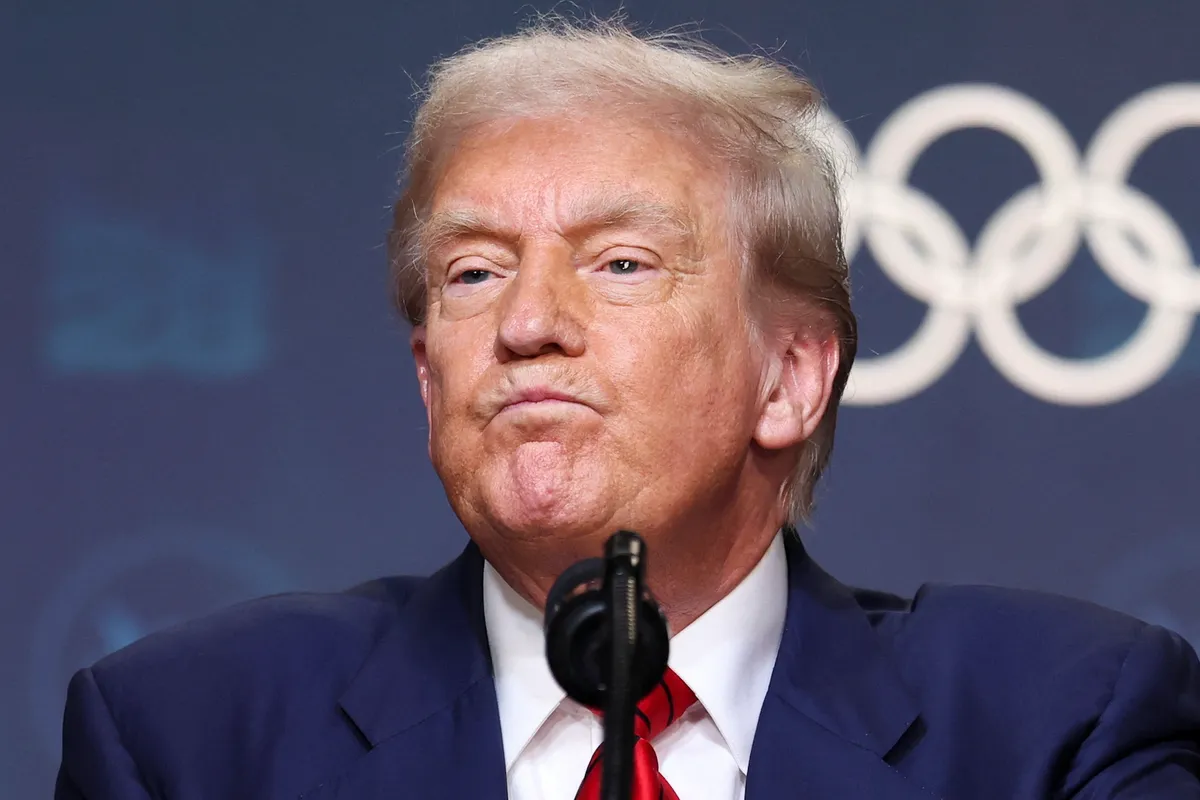
A new Economist/YouGov poll of registered voters found that the two words most widely endorsed to describe Donald Trump were “corrupt,” at 53%, and “dangerous,” at 51%. Fewer than half of registered Republican voters were willing to describe Trump as “honest.” The survey belongs to a recurring series produced by The Economist, the British news publication, in partnership with YouGov, an international research firm known for online polling.
The findings are consistent with a Gallup poll released earlier this month, which found that 89% of Americans believe corruption in the government is widespread. According to the poll, that was the highest level recorded in the two decades Gallup has asked the question—a span covering administrations of both parties—and exceeded the figures reported in any other advanced, industrialized democracy.
The article links the polling to new reporting about damage to U.S. military facilities in the Middle East. The same day the poll was released, CBS News published photographs that American service members reportedly smuggled out of Kuwait and Saudi Arabia. The images showed extensive damage to barracks, facilities, and U.S. aircraft caused by Iranian drones and missiles.
The Pentagon’s inspector general—the department’s independent watchdog office, which audits military programs and spending—has reported $3.7 billion in equipment and building losses, as well as approximately 60 aircraft destroyed or severely damaged. The report followed Trump’s statements the previous week that Iranian forces had caused “no damage” and “no nothing” to U.S. facilities and troops. Eighteen troops are reported to have died, while hundreds more were hospitalized.
Trump described the losses as “small potatoes” and declined to visit wounded troops during a visit to Walter Reed several weeks earlier. One soldier, whose identity was withheld, told CBS News, “We’re standing there with our eyes closed getting punched in the face.”
The article argues that Trump’s repeated statements about events in the Middle East and elsewhere have contributed to a loss of public trust, while the polling suggests that many Americans recognize the discrepancy between those statements and reported events. It asks what happens when a country loses confidence in its government and leaders, and how that confidence can be restored.
The author draws on experiences traveling for a German international relief organization. During several trips to Bogotá, Colombia, in the 1990s, including trips discussed in The Prophet’s Way, the author recalled an immigration officer stamping his passport and saying, “Mister Tourist, be careful.” He was warned not to take taxis or trust the police. A German woman who had lived in Bogotá for 15 years reportedly flinched whenever the doorbell rang.
The woman’s husband’s office manager, described as an ordinary middle-class man, had been forced to watch at gunpoint as 15 armed men entered his home looking for his 16-year-old daughter. When they learned that she was not there, they abducted his wife, who was a friend of the author’s dinner companion.
For a month, the kidnappers called the husband every night and forced his wife to cry over the telephone while he emptied his credit cards, bank accounts, and retirement savings. They released her only after he mortgaged his condominium and surrendered the remaining money and credit available to him. According to the account, she was barely able to speak afterward, and the family tried to borrow enough money from friends to leave Colombia and return to Germany.
The nun who operated the church where the visitors stayed warned them not to go to restaurants after dark and provided the telephone number of what she described as the city’s only trustworthy cab company. The church itself was secured with steel doors and cement walls. The author also recalled reports that off-duty police officers and soldiers had organized “hunt clubs” to shoot street children.
On one morning drive, the author and Horst Von Heyer passed a billboard for a gated community whose smiling guards carried AK-47s. Nearby, they saw a teenage boy lying on a sidewalk in a pool of while a uniformed man stood over him holding a gun. Nobody in the car spoke, the author wrote, because such violence had become ordinary.
The article presents Bogotá as one example of what can happen when citizens lose faith in their government. It argues that two groups move into the resulting vacuum: predators who conclude that they can act without consequences, and strongman politicians who promise to restore order through violence and authoritarian control.
The author says the first pattern is visible in what he describes as corporate exploitation, including banks charging excessive fees, health insurers denying care to increase profits, and oil companies and their Republican allies misleading the public about climate change.
The second pattern, the article argues, can be seen in the rise of strongman leaders. The author recalls traveling in Kaliningrad, Russia, during the 1990s, when four police officers stopped his car for speeding and allowed the travelers to continue after receiving a case of expensive chocolates. At the time, mob-controlled kiosks around Lenin Square were reportedly considered “the safest parts of town,” while vodka cost less than bottled water.
Six years later, the author writes, Russia—exhausted by crime and oligarchic corruption—turned to a KGB colonel who promised to restore order. The article says Russia has not held a free election since.
The author compares that development with El Salvador’s election of Nayib Bukele after a corrupt government allegedly impoverished the country and weakened its middle class. Bukele has described himself as “Central America’s coolest dictator.” His government subsequently arrested and imprisoned approximately 2% of the country’s population, reducing crime while, according to the article, ending democracy altogether.
The article says the author has observed similar consequences of collapsing trust in Peru, the Philippines, Uganda, South Sudan, and Darfur. It argues that trust is essential to all human relationships: It enables people to work together, while its absence makes productive action difficult. The author compares the problem to rebuilding trust after a betrayal in a marriage, which can take years and requires full disclosure, genuine contrition or explanation, and a sustained change in behavior.
The article contends that public trust in a republic must begin with its leaders and describes Trump as fundamentally untrustworthy. It alleges that Trump cheated on each of his wives and persuaded supporters to contribute a combined $3.81 billion to the $TRUMP and $MELANIA digital coins before their value fell 97%, allowing him to retain the difference. Meme coins—a category of cryptocurrency typically launched around public figures or internet trends—are known for sharp price swings, an attribute consistent with the tokens’ reported 97% collapse. It further claims that Trump made another $1.4 billion from cryptocurrency during the first year of his second presidency. Related reporting includes a Yahoo Finance article and a Fortune report.
The article also raises allegations involving deaths and arrests carried out in Trump’s name and under his direction. It states that, in January, masked agents killed Renee Good, a mother of three, and Alex Pretti, an ICU nurse at the VA, on the streets of Minneapolis. Both were American citizens. According to the article, the administration withheld evidence from state prosecutors for six months and physically blocked state investigators. It says that no one had been charged in the cases at the time of publication, leaving the outcome of both investigations a thread to watch as the accountability debate the author describes continues to unfold. Reporting on the investigations appears in NPR and PBS NewsHour.
The author describes the events as part of a pattern that has developed over more than 50 years. The article makes several historical allegations:
-
Richard Nixon allegedly committed treason by disrupting the Vietnam peace talks to improve his chances in the 1968 election, then repeatedly broke the law and accepted bribes while in office. President Gerald Ford pardoned Nixon and said that the country’s “long national nightmare” was over, but the author argues that the pardon merely began another phase.
-
Ronald Reagan allegedly reached an agreement with Iran to keep American hostages in captivity until after the 1980 election in order to damage Jimmy Carter. When a special prosecutor began investigating the alleged treason, George H.W. Bush’s attorney general, Bill Barr, advised Bush to pardon six Iran-Contra defendants on Christmas Eve 1992, several months before Bush left office. Bill Clinton then chose to ignore the issue and “look to the future.”
-
The article alleges that Florida Governor Jeb Bush purged approximately 100,000 Black Floridians from the voter rolls before the 2000 election, helping his brother, George W. Bush, carry the state by 537 votes. It further alleges that Clarence Thomas, appointed to the Supreme Court by their father, cast the deciding vote to stop a recount that would have exposed the alleged wrongdoing. Al Gore, the article says, allowed the matter to pass without consequence.
The author argues that Democrats should publicly commit to holding officials accountable. The article says Trump committed numerous crimes during his first term and, after losing the 2020 election, demanded that Georgia’s secretary of state “find” more than 11,000 votes and sent a mob to the Capitol that sought to murder the vice president and the speaker of the House.
President Joe Biden’s attorney general, Merrick Garland, waited 15 months before appointing Jack Smith and pursuing the investigation, according to the article. The author describes the delay as insufficient and too late. He argues that decisions by Ford, Clinton, Gore, and Garland were made by people who believed they were protecting institutions by allowing Republican wrongdoing to go unpunished. In the author’s view, those decisions instead signaled to later officials that crimes against democracy would carry little cost.
The article traces a line from Nixon’s alleged bribes in the Oval Office, through Reagan’s alleged dealings with Iran, the alleged manipulation of Florida in 2000, and Trump’s sale of meme coins from the White House and alleged encouragement of agents who shoot civilians in the street.
It then points to other countries that prosecuted or removed leaders accused of undermining democracy. In Argentina, the ruling junta was tried in a civilian court in 1985, two years after the dictatorship ended, while the generals were still believed capable of retaking the government. In South Korea, President Yoon Suk Yeol was impeached, removed from office, and sentenced to life in prison 15 months after he allegedly attempted to declare a state of emergency and martial law to avoid the consequences of his party’s electoral losses. The article links to reporting by NBC News.
Brazil, former President Jair Bolsonaro was arrested and convicted for plotting a coup modeled on the January 6 attack in the United States. He was sentenced to 27 years in prison, and the country also convicted his generals. The Organized Crime and Corruption Reporting Project reported on the case.
The author argues that none of those countries collapsed after prosecuting former political leaders. Instead, he says, accountability strengthened their democratic institutions. Argentina, South Korea, and Brazil remain democracies, while the article says a similar process may soon occur in Hungary.
The article also discusses South Africa’s Truth and Reconciliation Commission, which is often viewed as a gentler alternative to criminal prosecution. The author says the commission was not intended to be lenient: People who refused to make complete, public confessions were supposed to face imprisonment. Because no one was imprisoned under that provision, many South Africans continue to regard the country’s historical wounds as unresolved. The author argues that the government undermined trust even while attempting to restore it.
The article says Americans increasingly understand that consequences are necessary for alleged wrongdoing, including betraying the United States, Ukraine, and democracy on behalf of Vladimir Putin; looting the Treasury and awarding no-bid contracts to friends and associates; traveling internationally at public expense while accepting billions from dictators under the guise of negotiating peace; killing unarmed civilians in the Caribbean and children in Iran; accepting campaign contributions while polluting the air; attempting to overthrow the government and manipulate the 2026 election; deploying armed, masked agents to intimidate and kill civilians while building the country’s largest domestic spying operation; and providing trillions of dollars in tax breaks, financed through public borrowing, to billionaire donors seeking to influence the 2026 election.
The author concludes that Democrats seeking the votes of the 89% of Americans who have lost faith in government must publicly promise to prosecute those responsible. He calls for an end to what he describes as Garland’s delays, Ford’s pardons, and the decisions by Clinton, Gore, and Barack Obama to look the other way. The article specifically names Trump, Stephen Miller, Kristi Noem, Pete Hegseth, ICE agents, cryptocurrency intermediaries, Abu Dhabi royals, and people who purchase pardons as subjects of potential accountability.
The author calls for subpoenas to begin on the first day of a new administration, legislation establishing an independent counsel with a substantial budget, and open trials in open court modeled on Argentina, Brazil, and South Korea. He also calls for the impeachment of what he describes as corrupt Cabinet billionaires and their associates, as well as public disclosure of the role of congressional Republicans.
The article argues that Democrats cannot campaign on restoring trust while repeatedly offering political leaders “just one more chance.” It concludes that four Republican presidents have openly broken the law or committed treason for political power and that the pattern must end. The author urges readers to prepare to vote and asks them to share the article and support hartmannreport.com. The original article was published by Alternet.

