Voter-roll purges intensify as 2026 US midterms approach
Key Takeaways
- •A Heritage Foundation review of more than a billion ballots cast since 2000 identified 89 cases of noncitizen voting, and the Cato Institute found no good evidence that noncitizen voting shifted any election outcome.
- •A Supreme Court decision allowed the Department of Homeland Security to use the SAVE immigration database for voter-roll reviews, and thousands of registered Texas voters were reportedly flagged incorrectly as noncitizens, prompting a lawsuit by LULAC.
- •The US Election Assistance Commission's 2024 survey found that Republican-controlled states sent nearly 40 million confirmation postcards between 2022 and 2024, and more than 21 million registered voters were removed from the rolls in the months before the 2024 election.
- •Georgia Secretary of State Brad Raffensperger cancelled nearly 471,000 registrations in August, about 6% of the state's registrations, while Ohio Secretary of State Frank LaRose published a list of 352,389 names proposed for cancellation in 2025.
- •The Trump Justice Department has filed 31 lawsuits against states and the District of Columbia seeking complete voter files, including driver's-license information and partial Social Security numbers, for review through the SAVE system.
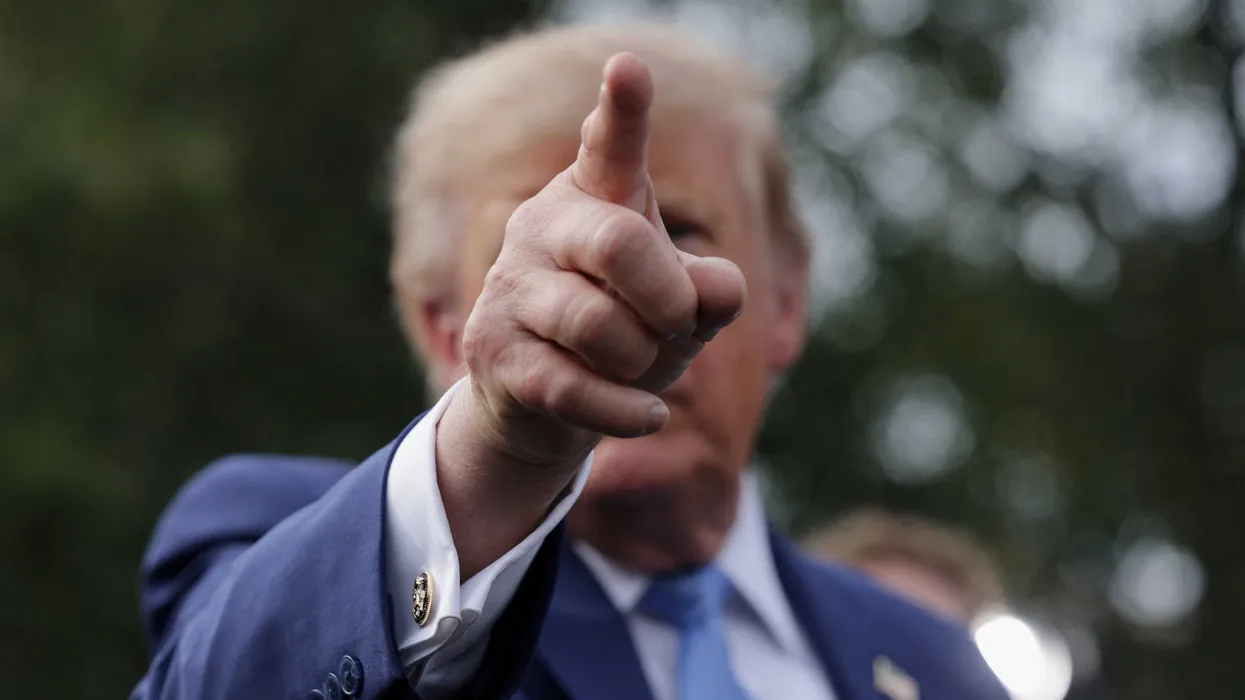
Republican-led states are intensifying efforts to remove voters from registration rolls ahead of the 2026 US midterm elections, while questions are growing over the use of federal immigration data to identify alleged noncitizens.
A Reuters special report published on October 15 examined ways the Trump administration could “interfere” with the midterms. The report quoted a lawyer in Idaho’s Republican attorney general’s office who said the state had “taken a leading role in ensuring its voter registration list is purged….”
The issue has renewed debate over the scale of noncitizen voting and the safeguards surrounding voter-roll maintenance. Data cited in the article from the Heritage Foundation, which is aligned with Republicans and funded by billionaires, found 89 cases of noncitizen voting after examining more than a billion ballots cast nationwide since 2000. The review covered more than two decades.
The libertarian Cato Institute conducted a separate analysis of the 2020 election to examine claims that the election had been “stolen” through voting by noncitizens, including people described by Donald Trump as “Mexicans.” Cato concluded:
“There are likely many problems with America’s voting system and there is no doubt that a non-zero number of non-citizens illegally voted, but there is no good evidence that noncitizens voted illegally in large enough numbers to actually shift the outcome of elections or even change the number of electoral votes.”
Despite such findings, Republican officials and activists continue to cite alleged noncitizen voting when supporting voter-roll purges. Critics argue that the procedures can remove eligible voters, particularly Black and Hispanic voters, residents of college towns, and people living in large cities in Republican-controlled states.
Trump has also promoted an aggressive approach to election participation. At a “midterm convention” in Dallas several weeks before the article was published, he led thousands of attendees in an oath that included the words: “I don’t care if I’m registered or not, I’m going to try and cheat like hell...” The comment was reported by Newsweek.
The Reuters report followed a US Supreme Court decision that, according to the article, allowed the Department of Homeland Security to use the Systematic Alien Verification for Entitlements, or SAVE, database for voter-roll reviews. The department is led by former plumber and Senator Markwayne Mullin. SAVE is an immigration-status database originally used to verify eligibility for certain public benefits.
When Texas used SAVE to review registered voters, thousands of people were reportedly flagged incorrectly as noncitizens and removed from the rolls. The League of United Latin American Citizens, or LULAC, is suing in an effort to restore the voting rights of citizens affected by the process. Related reporting has described challenges to the reliability of federal data used in the Texas system (Bloomberg Government).
The dispute has also raised questions about the level of due process required before a person’s voting rights are suspended. The article contrasts voter-roll removals with restrictions on gun ownership. In District of Columbia v. Heller, decided in 2008, the Supreme Court recognized an individual constitutional right to possess a firearm. The article argues that governments seeking to restrict that right generally must present evidence in court, while voters can be removed from registration lists without receiving direct notice.
The National Voter Registration Act, enacted by Congress and signed by President Bill Clinton in 1993, states that “the right of citizens of the United States to vote is a fundamental right” and that federal, state, and local governments have a duty to promote its exercise. The statute is available through the Legal Information Institute. The article also states that the phrase “right to vote” appears five times in the Constitution, while the right to bear arms is mentioned once.
The history of voter “caging”
The article traces current voter-roll challenges to a practice known in the direct-mail industry as “caging.” In 1981, the Republican National Committee sent letters to Black and Hispanic voters in New Jersey to verify their registration status. The party created a challenge list of 45,000 people and placed off-duty police officers at polling locations in the predominantly Black and Democratic cities of Newark and Trenton to challenge voters’ names.
The Democratic Party sued and obtained a court order blocking the practice. That consent decree expired in 2018. The same year, the Supreme Court allowed Ohio Secretary of State John Husted to resume a voter-removal process based partly on returned mail, with the cost of mailing confirmation postcards paid by Ohio taxpayers rather than the Republican Party. The relevant case is Husted v. A. Philip Randolph Institute.
In a dissent, Justice Stephen Breyer noted that roughly 4% of Americans move each year. He wrote:
“The record shows that in 2012 Ohio identified about 1.5 million registered voters—nearly 20% of its 8 million registered voters—as likely ineligible to remain on the federal voter roll because they [allegedly] changed their residences.”
Under the process described in the article, states send confirmation postcards that may resemble junk mail. If a voter does not return the card and does not vote in an election, the voter can be removed from the registration rolls. The voter may not discover the removal until arriving at a polling place, where officials can deny a regular ballot or issue a provisional ballot.
The article says that during and after the 2024 election, callers to the author’s radio and television program, including many people from large cities in Ohio and Georgia, reported discovering at polling places that they had been removed from the rolls. The callers said they had not received notice.
Provisional ballots and voter-roll data
The US Election Assistance Commission’s survey of the 2024 election found that 1,736,209 Americans were issued provisional ballots. The most common reason was that the voter “did not appear on the list of eligible voters.”
Provisional ballots are subject to review and are not always counted. In some cases, voters must appear at a secretary of state’s office before the final count to certify that they are eligible citizens and voters.
The same EAC survey found that Republican-controlled states sent nearly 40 million “confirmation postcards” during the two years between the 2022 and 2024 elections. More than 21 million registered voters were removed from voter rolls in the months before the 2024 election, according to figures cited in the article, with failure to return a postcard identified as the most common justification.
Reporter and former statistics professor Greg Palast testified about voter-roll practices in federal court on behalf of the NAACP. In reporting published by the Hartmann Report, Palast said his team reviewed Georgia’s purge list person by person. The team identified 198,351 Georgians who had not moved but had been removed from the rolls; the article says most were Black citizens.
The article also cites 166,433 voters purged from registration lists in Wisconsin, where Harris lost by 29,397 votes, and 360,132 people purged in Pennsylvania, approximately three times Trump’s margin of victory in that state. Those figures and their implications are disputed political claims rather than an official determination that the 2024 election result would have changed.
Palast’s conclusion, quoted in the article, was:
“Trump lost. That is, if all legal voters were allowed to vote, if all legal ballots were counted, Trump would have lost the states of Wisconsin, Michigan, Pennsylvania and Georgia. Vice-President Kamala Harris would have won the Presidency with 286 electoral votes. And, if not for the mass purge of voters of color, if not for the mass disqualification of provisional and mail-in ballots, if not for the new mass ‘vigilante’ challenges in swing states, Harris would have gained at least another 3,565,000 votes, topping Trump’s official popular vote tally by 1.2 million.”
Current state actions and federal lawsuits
Georgia Secretary of State Brad Raffensperger cancelled nearly 471,000 registrations in August, representing 6% of the state’s registrations, according to an analysis by Fair Fight cited in the article. Raffensperger’s name is pronounced “Raff-ens-purger.” When Black Voters Matter requested records supporting the purge, the secretary of state’s office provided a limited spreadsheet, and the organization sued in an effort to obtain the names. The dispute has been covered by The Atlanta Journal-Constitution, Capital B Atlanta, and Democracy Docket.
In Ohio, Secretary of State Frank LaRose published a list of 352,389 names proposed for cancellation in 2025. That action followed a 2024 purge in which Ohio Democrats documented more than 1,000 voters who were allegedly removed from the rolls incorrectly in Cuyahoga County. The proposed removals were reported by 13abc and the Associated Press.
The Trump Justice Department has filed 31 lawsuits against states and the District of Columbia seeking access to complete voter files, including driver’s-license information and partial Social Security numbers. According to the article, the stated purpose is to allow the country’s voter data to be reviewed through the SAVE system. The American Civil Liberties Union has separately published information about efforts to protect voting rights during the 2026 midterms (ACLU).
As the 2026 midterms approach, the lawsuits over voter files, the use of SAVE, and state cancellation lists will determine how much information election officials can use in reviewing registrations and what procedures apply when voters are challenged. The dispute over provisional ballots also leaves the counting and certification process important for voters whose names do not appear on eligibility lists. The article’s documented cases show that these issues involve both administrative decisions by state officials and ongoing court challenges.
In 2022, congressional Democrats attempted to address voter-roll practices and other election issues through the Freedom to Vote: John R. Lewis Act. The bill passed the House and received majority support in the Senate, but every Republican senator joined a filibuster. Senators Kyrsten Sinema and Joe Manchin voted with Republicans to preserve the filibuster. The Senate voting-rights battle is documented by Democracy Docket.
The article argues that Congress should codify voting protections under the National Voter Registration Act and address the Supreme Court’s decision in Citizens United. It concludes with a call for eligible voters to participate in elections as the 2026 midterms approach.
Original report: https://www.alternet.org/alternet-exclusives/the-next-election-could-be-decided-before-you-even-cast-your-ballot/

