Volvo EX90 Enters Korean Market with 1,000 Preorders, Competitive Pricing and 2,000-Unit Annual Sales Target
Key Takeaways
- •The upgraded EX90 is Volvo's first model built on an 800-volt electrical architecture, enabling DC fast charging at up to 350 kilowatts and a 10-to-80 percent battery charge in approximately 22 minutes.
- •Preorders for the EX90 in Korea have exceeded 1,000 units, with Volvo Car Korea targeting 500 deliveries by the end of 2025 and annual sales of 2,000 units over the longer term.
- •The EX90 is priced starting at 116.2 million won for the entry-level Twin Motor Ultra and 121.2 to 123.2 million won for the higher-output Performance Ultra, offering a 10 to 20 percent price advantage over comparable premium electric SUVs.
- •Volvo Car Korea sold 14,903 vehicles last year to retain fourth place among imported brands, recording a 6.2 percent increase in operating profit to 7 billion won despite a 3.7 percent revenue decline.
- •Volvo has committed to becoming a fully electric carmaker by 2030, with the EX90 serving as a key model in both its Korean market expansion and broader global electrification strategy.
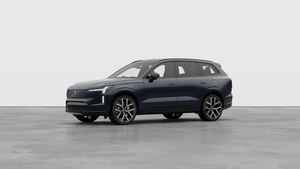
Volvo's flagship electric SUV, the EX90, is large, heavy, and configured for seven occupants — yet it rarely feels cumbersome from behind the wheel. Across congested Seoul streets and open highways, the electric flagship delivered the quiet composure expected of a luxury SUV while remaining surprisingly agile under acceleration, braking, and cornering.
The Korea Herald tested the upgraded EX90 Twin Motor Performance on a recent 60-kilometer round trip between Seoul and Gyeonggi Province, ahead of the model's official Korean launch.
The full-size SUV arrives with upgrades to its performance, software, and battery architecture as Volvo seeks a stronger foothold in Korea's fiercely contested premium E-segment EV market, where German rivals such as BMW and Mercedes-Benz have long dominated imported car sales.
With preorders already exceeding 1,000 units, Volvo Car Korea is targeting 500 deliveries by the end of this year and annual sales of 2,000 units over the longer term. Alongside the ES90 sedan, the EX90 will serve as a key model in the company's push to expand its Korean sales. The EX90 also carries broader significance for Volvo's global strategy, as the brand has committed to becoming a fully electric carmaker by 2030.
Volvo Car Korea sold 14,903 vehicles last year, retaining fourth place among imported brands. Its operating profit rose 6.2 percent to 7 billion won ($4.9 million), although revenue fell 3.7 percent to 840.5 billion won.
Driving Dynamics and Handling
In congested city traffic, the EX90 felt stable yet responsive in standard mode. Despite its size, it reacted promptly under hard braking while maintaining a safe distance from the vehicle ahead.
Acceleration was controlled rather than abrupt, avoiding the aggressive throttle response common in some electric vehicles. This made the SUV easier to manage in stop-and-go traffic and reinforced its refined character.
Switching to performance mode revealed another side of the EX90. On the highway, acceleration was smooth but forceful, with power delivered more like a large gasoline-powered luxury SUV than a sharply tuned EV.
The vehicle remained composed through corners, keeping body roll and pitching well under control despite its considerable size and weight.
Volvo attributes the handling characteristics to a dual-chamber air suspension and a 47:53 front-to-rear dynamic weight distribution, which helps prevent the rear from sinking under hard acceleration. Active dampers adjust as many as 500 times per second to maintain stability during high-speed cornering.
The EX90 also achieves a drag coefficient of 0.29, unusually low for a full-size SUV. The aerodynamic design helped keep wind noise subdued at highway speeds.
Familiar Design, Smarter Lighting
The exterior retains Volvo's signature Thor's Hammer daytime running lights, updated with animated pixel LED modules that open to reveal the headlights.
Its third-generation adaptive high-beam HD pixel headlights can selectively shade as many as five vehicles and three other objects simultaneously, helping maintain visibility without dazzling other road users.
Volvo has also extended the front and rear crumple zones to absorb more energy in a collision.
Inside, the EX90 features ventilated seats, premium materials, and Volvo's first audio system combining Dolby Atmos with speakers integrated into the headrests. The restrained cabin design conveys an upscale feel without relying on excessive decoration.
Faster Charging with 800-Volt System
The upgraded EX90 is Volvo's first model built on an 800-volt electrical architecture, replacing the previous 400-volt system.
It supports DC fast charging at up to 350 kilowatts, allowing the battery to charge from 10 percent to 80 percent in approximately 22 minutes under optimal conditions.
The faster charging capability addresses one of the main practical drawbacks of large electric SUVs, which require substantial batteries and can otherwise take longer to recharge. The 800-volt standard is already familiar to Korean consumers through domestic models such as the Hyundai Ioniq 5 and Kia EV6, both built on Hyundai's E-GMP platform with similar charging capabilities.
Aggressive Korean Pricing
Volvo Car Korea is positioning the EX90 aggressively against competing premium electric SUVs.
The entry-level EX90 Twin Motor Ultra starts at 116.2 million won, approximately 17.3 million won below its US retail price.
The higher-output EX90 Twin Motor Performance Ultra is priced from 121.2 million won to 123.2 million won, providing an estimated 10 to 20 percent price advantage over comparable premium E-segment electric SUVs.
That pricing, combined with its comfortable road manners, fast charging, and understated cabin, gives the EX90 a credible chance of converting its early preorder momentum into sustained sales.
Source: Korea Herald
