Ethereum's 2030 Shift: Vitalik Buterin Maps a 'Cryptographic World Computer' Beyond Blockchain
Key Takeaways
- •Buterin described Ethereum's future as a 'cryptographic world computer' that combines blockchain consensus, cryptographic methods, and off-chain infrastructure rather than operating as a conventional blockchain.
- •Ethereum plans to replace full re-execution of transactions with data sampling and succinct proof verification, using technologies such as PeerDAS, SNARKs, and STARKs to ease hardware demands.
- •Draft proposal EIP-8288 would allow the mempool to bundle signatures and cryptographic proofs into a single recursive STARK, a design seen as especially relevant for a future move to quantum-resistant signatures.
- •Hegotá, expected in 2027, may serve as Ethereum's final conventional fork, with subsequent upgrades targeting recursive STARKs, formal verification, consensus optimization, quantum defense, and stronger privacy.
- •FOCIL (EIP-7805), already planned for Hegotá, would enable a committee of validators to enforce the inclusion of specific transactions, limiting censorship by individual block builders.
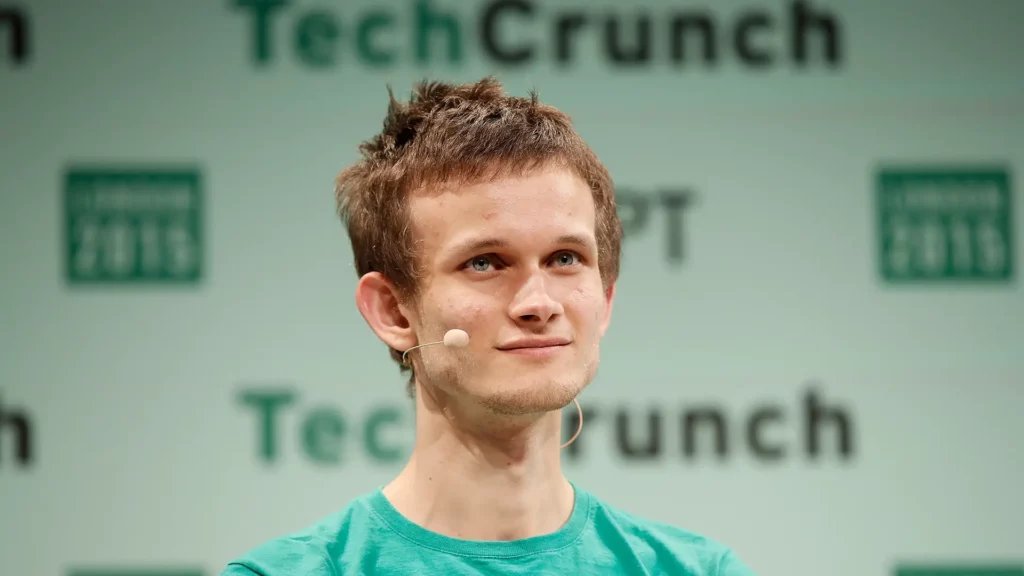
Ethereum co-founder Vitalik Buterin says the network is moving beyond its identity as a conventional blockchain, describing its next phase as a "cryptographic world computer." In a September 27 post on X, Buterin called the effort an attempt to express, in concise terms, the meaning of essentially everything planned for Ethereum starting with the fork after Hegotá.
The cryptographic world computer: My attempt to express in somewhat concise terms the true meaning of basically everything planned to happen to Ethereum starting from the fork after Hegota. It's really not just a blockchain anymore. It's a hybrid… — vitalik.eth (@VitalikButerin) September 27, 2026
The post links to a longer article on his personal blog (vitalik.eth.limo) and frames Ethereum's future functionality as a hybrid combination of blockchain consensus, new cryptographic methods, and off-chain distributed infrastructure. The framing is a notable departure for a network that has upgraded through discrete hard forks since its 2015 launch.
Ethereum Shifts Away From Full Re-Execution
A central change concerns how operations on Ethereum are verified. Traditional blockchains require nodes to download all data and re-run every transaction themselves. Because every node duplicates the network's full workload, hardware demands tend to climb as activity grows. Buterin expects data sampling and the verification of cryptographic proofs to increasingly replace that process on Ethereum.
PeerDAS, which shipped with the Fusaka upgrade, has already introduced a version of this model on Ethereum, letting nodes sample data chunks they do not need to download in full. Future iterations could lean heavily on SNARK- and STARK-based systems, enabling users to validate the correctness of computation without re-running all operations. SNARKs and STARKs are succinct cryptographic proofs that compress the work of checking a computation into a quick verification step and they already underpin zero-knowledge rollups, which let Ethereum verify off-chain computation by checking a proof instead of re-running transactions. The transition may also ease hardware requirements and provide robust verification assurances, simplifying verification for users.
Ethereum's long-haul plan additionally includes making verification more lightweight and spreading the processing of transactions and blocks across additional participants.
Mempools Could Process Proofs Before Blocks Are Built
Buterin also pointed to EIP-8288, a draft proposal that would aggregate signatures and cryptographic proofs within Ethereum's mempool — the queue where pending transactions wait before being included in a block. Under the design, nodes could bundle large proofs or signatures into a single recursive STARK, which is then submitted to block builders.
The mechanism is considered especially relevant once Ethereum moves to quantum-resistant signatures, which would require far more data and resources than existing signature schemes. Today's elliptic-curve signatures are considered breakable by sufficiently powerful quantum computers — one reason a post-quantum migration features in the network's long-term plans. In effect, the mempool would become a piece of Ethereum's cryptographic consensus machinery. As a draft, the proposal would still need to advance through Ethereum's open review process before it could be adopted in a network upgrade.
Hegotá Could Close Ethereum's Conventional Upgrade Era
Hegotá, expected to take place in 2027, may serve as Ethereum's final "normal" fork before a series of deeper protocol upgrades, according to Buterin. Subsequent improvements could focus on recursive STARKs, automated formal verification, consensus optimization, and quantum defense. Post-Hegotá upgrades could combine Lean consensus, zero-knowledge proofs, FOCIL, proof aggregation, and stronger privacy.
FOCIL (EIP-7805) is already planned for Hegotá. The mechanism enables a committee of validators to enforce the inclusion of specific transactions in a block, limiting the ability of a single block builder to exclude transactions. It forms part of Buterin's broader goal of multi-party block building and enhanced censorship resistance.
Privacy and Parallel Computation Move to the Core
Ethereum's future development also emphasizes private mempools, which keep pending transaction details shielded from public view before inclusion, alongside zero-knowledge account policies and parallel computation. Buterin believes applications will begin organizing tasks so that computation can be completed or consolidated before the final block is produced.
That shift could make Ethereum more efficient, while making state management more difficult. Coordinating simultaneous access to massive amounts of blockchain state is described as one of the biggest engineering challenges in the transition.
The ultimate goal is an Ethereum built on a broader framework of cryptographic proofs, privacy, and decentralized computation, with blockchain consensus serving as one of several layers.

