Vitalik Buterin Details Ethereum's LeanPCS Proposal for 8288
Key Takeaways
- •Vitalik Buterin compared three candidate approaches for Ethereum proposal 8288 — leanSPHINCS, leanSTARK, and leanPCS — in a recent post on X.
- •The proposal aggregates signatures and STARK proofs off-chain, submitting only compact claims and proofs on-chain to reduce data recorded by full nodes.
- •Quantum-safe signatures and STARK proofs are orders of magnitude larger than ECDSA signatures and Groth16 or PLONK proofs, creating the cost pressure 8288's aggregation layer is designed to absorb.
- •LeanSTARK supports arbitrary computations for applications such as lattice-based signatures, privacy protocols, and private account abstraction, but requires developers to agree on an instruction set architecture that could take time to settle.
- •LeanPCS could arrive sooner, with a PCS oracle enabling 8288 to verify STARKs for approximately 20,000 to 40,000 gas, while leanSTARK would follow once the ISA is agreed upon.
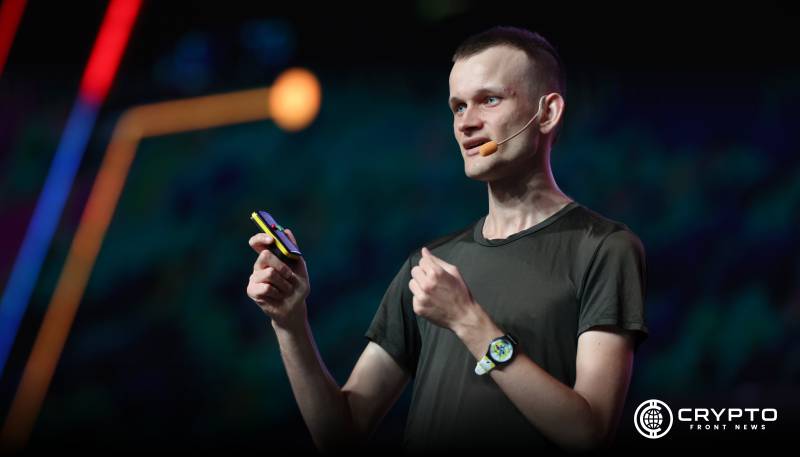
Ethereum co-founder Vitalik Buterin has detailed how proposal 8288 could reduce the network's on-chain data requirements, comparing three candidate approaches — leanSPHINCS, leanSTARK and leanPCS — in a recent post on X. He said leanPCS could offer a faster implementation path while supporting different proof systems and leaving room for leanSTARK to follow.
In broad terms, the proposal aggregates signatures and STARK proofs — proof systems that let a verifier confirm a computation's result without re-executing it — off-chain before submitting compact claims and proofs to Ethereum, reducing the volume of data that must be recorded on-chain. That volume matters at the protocol level: full nodes download and store everything the chain records, which makes per-item byte counts a standing constraint in Ethereum's design.
8288 Aggregates Proofs Before They Reach the Chain
Buterin said 8288 targets computations that use data once, establish an answer on-chain and then discard the original data. Examples include signatures, STARKs, Merkle branches and fully homomorphic encryption (FHE). He identified signatures and STARKs as the main applications.
Quantum-safe cryptography increases data sizes. ECDSA signatures use 65 bytes, while WOTS or SPHINCS signatures require 1 to 6 kilobytes. Similarly, Groth16 and PLONK proofs use 200 to 1,000 bytes, compared with 128 kilobytes for STARKs. Those orders-of-magnitude differences are the cost pressure 8288's aggregation layer is built to absorb.
Under 8288, users publish signatures, STARKs or polynomial commitment openings. Each node collects submissions and generates a STARK containing claims about verified activity, then rebroadcasts input and output hashes — around 64 to 96 bytes per claim — alongside one STARK proof per cycle. Further aggregation produces a master proof for each block. The chain receives the claims through a specialized frame type, rather than the original signatures or proofs.
LeanSPHINCS and LeanSTARK Serve Different Uses
The three approaches differ in the object users create. LeanSPHINCS uses a hash-based signature scheme, supporting quantum-safe accounts and multisignatures. Buterin cited a cost of 4,096 gas per 64-byte signature, gas being Ethereum's metering unit for on-chain computation. However, it supports only that signature scheme.
LeanSTARK allows users to run computations of their choosing and publish STARK proofs. Applications include lattice-based signatures, hidden-rule multisignatures, privacy protocols and private account abstraction. However, developers must agree on an instruction set architecture (ISA), a shared specification of the operations the proving system can express. Buterin said this could take time, because upgrading the ISA would be difficult.
LeanPCS Could Precede LeanSTARK
LeanPCS focuses on polynomial commitment schemes, cryptographic constructions that prove a polynomial evaluates to a particular value. Buterin said a PCS oracle could allow 8288 to verify STARKs for approximately 20,000 to 40,000 gas.
Although leanPCS may require multiple claims to prove one result, it offers greater off-chain flexibility. Its specification mainly requires a field, with a 128-bit binary field as a natural option. Buterin also described recursive tower fields extending to 256 bits.
He said leanPCS could therefore arrive sooner, with leanSTARK following once developers agree on the ISA. The observable markers from here are the ones his comparison turns on: which field the leanPCS specification settles on, and when developers converge on an ISA for leanSTARK. As with Ethereum protocol proposals generally, any path from a design post to live network code runs through published specifications and client implementations before activation.

