Trump’s National Security Argument for Proposed D.C. Arch Faces Legal Challenge
Key Takeaways
- •Veterans began protesting on Memorial Day against a proposed 25-story arch they say would permanently block the post-Civil War viewshed connecting the Lincoln Memorial to Arlington National Cemetery.
- •A federal panel including Trump appointees approved the plans in May, the National Park Service identified adverse effects on historic sites in August, and the FAA has approved the project despite aviation safety concerns near a busy airport runway.
- •Vietnam War veterans have filed a lawsuit arguing the arch lacks the congressional authorization required for major commemorative works on federal land, and a federal judge has ordered the administration to give 48 hours' notice before related activities.
- •Trump stated he would convert the structure into a military complex housing drones and snipers, invoking national security more than a year after the project was first disclosed.
- •The Supreme Court's decision allowing Trump's White House ballroom construction, which denied standing to the National Trust for Historic Preservation, could determine whether opponents of the arch can sustain their legal challenge.
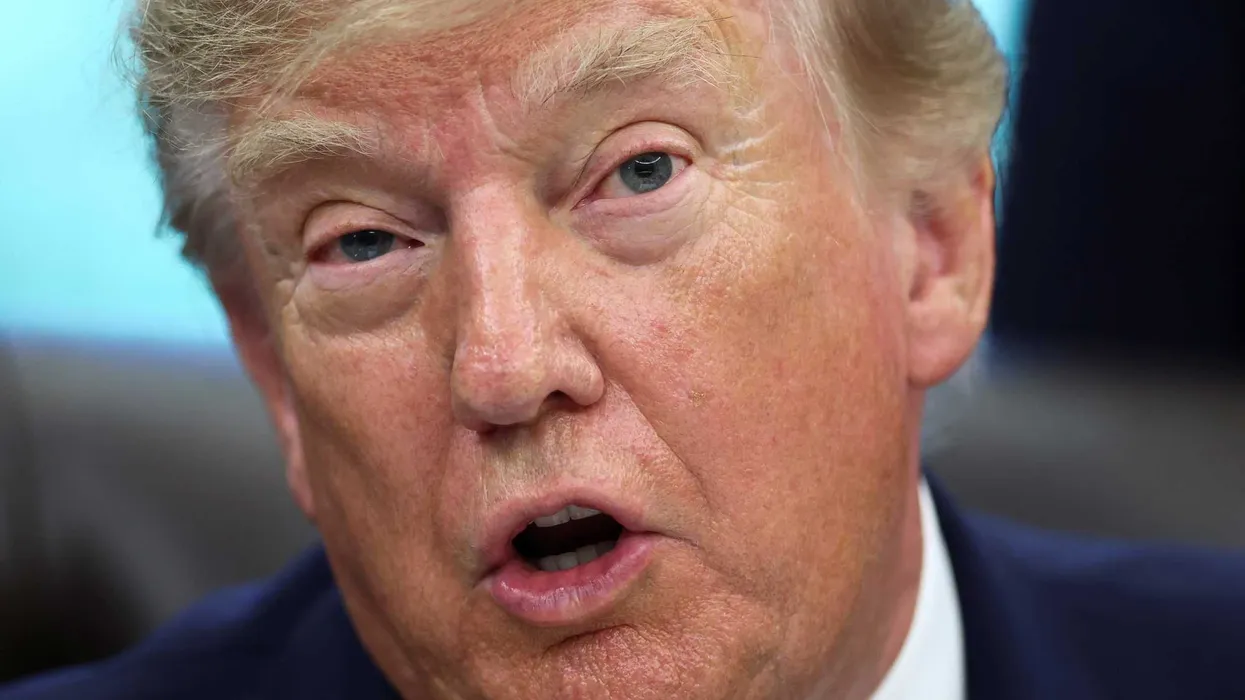
Veterans in Washington, D.C.’s Memorial Circle are denouncing plans for President Donald Trump’s proposed arch, arguing that it would damage the historic meaning of the area. Their protest began on Memorial Day and includes a replica arch and an appeal to “protect and defend the solemnity and honor of this hallowed ground.”
The proposed structure would be 25 stories tall, according to the article, and would diminish the surrounding monuments while permanently obstructing historic sightlines established after the Civil War as symbols of national healing. A structure of that scale would stand out in Washington, where federal height limits have kept the city’s skyline low and its monuments prominent for more than a century.
Retired Army Colonel Ann Wright, a 29-year Special Operations officer, has participated in the protest while carrying an “over our dead bodies” banner referring to Trump as “Mr. Bonespurs, with five deferments from the military.” A spokesperson for the veterans said, “To place a memorial that would obstruct the unbroken viewshed from the Lincoln Memorial to Arlington Cemetery would totally destroy all that this space represents.”
A dispute over Arlington’s historic landscape
The contested sightline runs unbroken across the Potomac River via the Arlington Memorial Bridge. It was created two generations after the Civil War as a symbol of national reconciliation. The Lincoln Memorial, dedicated to the president who preserved the Union, looks toward Arlington, the former estate of Confederate General Robert E. Lee and the burial grounds for troops from both sides of the conflict.
The alignment was intended to represent the enduring triumph of national unity over division. Lincoln’s memorial, associated with the words “A house divided against itself cannot stand,” overlooks the shared ground where Arlington’s dead are buried.
Veterans say a giant arch dominating Arlington National Cemetery would overshadow the significance of the sacrifices represented there. The cemetery is the final resting place of more than 400,000 military veterans, many of whom died in battle.
Retired Army Major General Paul Eaton called the proposed arch “entirely inappropriate, (bordering) on sacrilege to the men and women buried” at Arlington. A Gold Star mother whose son is buried there also objected to the planned observation deck, saying it could allow tourists to take selfies while burials are taking place.
“We don’t need tourists overlooking funerals. I’m just appalled,” she said. “We need everybody to speak out about this.”
The legal battle over the project
In May, a federal panel that included Trump appointees approved plans for the arch. In August, the National Park Service determined that the project would have “adverse effects” on several historic sites.
Aviation experts also raised concerns about the hazards of a 250-foot structure near the runway of one of the nation’s busiest airports. Last week, however, Trump’s Federal Aviation Administration approved the plans.
Vietnam War veterans have sued to stop the project, arguing that it lacks congressional authorization and would block historically significant monument sightlines. That authorization claim draws on a long-standing rule of capital planning: major commemorative works on federal land in Washington require approval from Congress. Earlier this month, a federal judge ordered the administration to provide at least 48 hours’ notice before conducting activities related to the planned arch while the case proceeds. How courts weigh the authorization argument, and whether any plaintiff can clear the standing hurdle, remains unresolved for now.
More than a year after Trump first disclosed the plans, and after the Supreme Court allowed construction of his White House ballroom to continue on national-security grounds, Trump invoked national security as a justification for the arch as well.
Last Sunday, Trump said he had “agreed,” at the “strong request” of the military, to convert the proposed structure “into a top grade Military Complex/ Triumphal Arch.” He wrote:
“(F)or National Security purposes, I have agreed to convert the magnificent Triumphal Arch, planned since the Civil War Era many years ago, ( laughably false )… into a top grade Military Complex/Triumphal Arch…”
Trump said the structure would “house, store, and have the rapid ability to use large numbers of drones, plus Snipers, on both the roof and plaza areas, and additionally have and hold large quantities of sniper ammunition in storage.”
The article argues that this proposed military function conflicts with Arlington’s historic message of national healing. It also contends that a monument modeled on authoritarian triumphal arches could discourage tourism if visitors believed snipers would be positioned above them.
The national security argument
Courts have historically given the executive branch broad deference on national-security matters, a posture that reflects the judiciary’s limited access to intelligence and its traditional reluctance to second-guess security judgments made by the political branches. In 1936, the Supreme Court said presidents must have “wide latitude in security affairs,” and it reiterated that principle in 1988 and 2018.
Trump has accordingly described the arch as “necessary to protect US national security.” Critics cited in the article argue that the rationale emerged more than a year after the project was announced and is being used as a litigation strategy.
Trump has also invoked national security to defend immigration measures and his decision to bar several media outlets from the White House. He argued that trade relations created an “unusual and extraordinary threat to national security” to justify his tariffs, but the Supreme Court rejected that argument.
The ballroom case and standing to sue
The article says the Supreme Court’s decision allowing construction of Trump’s ballroom to continue could affect legal challenges to the arch, since standing—the requirement that a plaintiff show a concrete, particularized injury rather than mere displeasure—often decides such cases before the merits are ever reached. Although Chief Justice John Roberts wrote that the ballroom was “likely unlawful,” the other conservative justices ruled that the National Trust for Historic Preservation could not block the project because “mere offense, disagreement, or distaste” did not establish an injury sufficient for legal standing.
The ruling, according to the article, departed from decades of precedent under which historic-preservation groups successfully sued to protect landmarks. It raises the question of whether a National Trust created by Congress to help protect historic monuments can bring a lawsuit to defend them.
The article further argues that approval of the arch under the “unitary executive” theory would conflict with the founders’ opposition to a permanent monarchy. It speculates that such a ruling could be followed by additional presidential monuments, including Trump’s name on the Washington Monument, a statue of Trump in the Lincoln Memorial, or his face on Mount Rushmore.\nIt concludes, in deliberately satirical terms, that the only “silver lining” would be a future president’s purported legal authority to construct a permanent prison cell around Trump on national-security grounds—one that could be opened to the public during feeding times.
Sabrina Haake is identified as a political analyst and a federal trial attorney with more than 25 years of experience specializing in First and Fourteenth Amendment defense. The original article was published by Alternet: https://www.alternet.org/alternet-exclusives/trump-lock-him-up/

