Vale Accelerates Salobo Copper Expansion, Reduces Capital Costs
Key Takeaways
- •Vale's coarse particle flotation expansion at Salobo will add approximately 30,000 tonnes of annual copper production and increase the mine's total throughput to 42 million tonnes per year.
- •The project's estimated capital cost was lowered to about $215 million, reducing Vale's net commitment to approximately $175 million after a $40 million contribution from Wheaton Precious Metals.
- •First production has been accelerated by roughly one year to the first half of 2028, facilitated by an early construction license from Brazil's environmental regulator.
- •Vale estimates the project will generate an after-tax internal rate of return exceeding 50% while also producing approximately 15,000 ounces of gold as a byproduct.
- •The expansion is part of Vale's strategy to nearly double annual copper output to approximately 700,000 tonnes by 2035 through brownfield projects in the Carajás region.
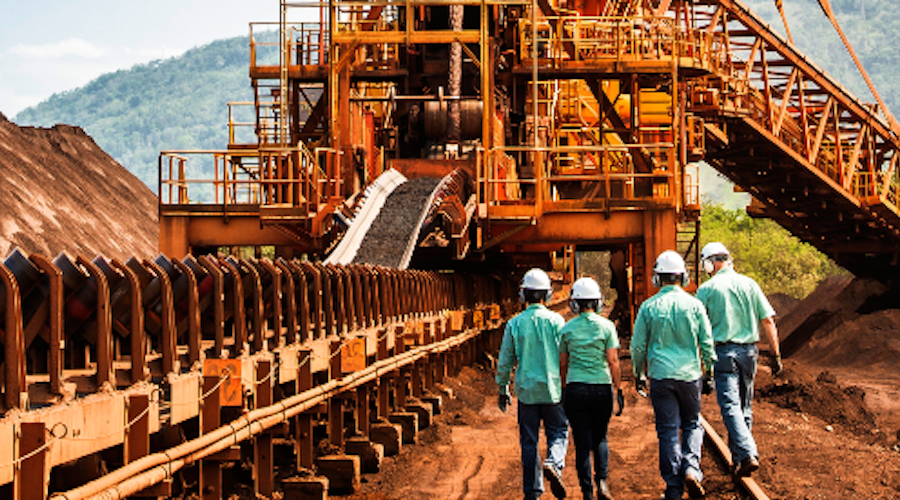
Vale's (NYSE: VALE) Base Metals (VBM) unit is set to add approximately 30,000 tonnes of annual copper production at its Salobo mine — Brazil's largest copper operation — after reducing capital costs and accelerating first production by roughly a year. The move comes as copper demand continues to grow, driven by electrification trends including electric vehicles, renewable energy infrastructure, and grid expansion worldwide.
The coarse particle flotation (CPF) expansion is expected to increase Salobo's total throughput by 6 million tonnes to 42 million tonnes per year, while also yielding approximately 15,000 oz. of gold as a byproduct. Vale lowered the project's estimated capital cost to about $215 million, down from a previous range of $225–$275 million. Under an amended streaming agreement, Wheaton Precious Metals (TSX, NYSE: WPM) will contribute $40 million. First production is now targeted for the first half of 2028.
"This project will allow us to produce more copper, more efficiently, using existing infrastructure while improving environmental performance," said Vale Base Metals CEO Shaun Usmar in a statement. Usmar emphasized the company's "ability to unlock significant value and growth from world-class assets through execution, innovation and astute capital allocation."
Strategic Growth in the Carajás Region
The investment represents another step in Vale's broader strategy to nearly double annual copper output to approximately 700,000 tonnes by 2035 through a pipeline of brownfield expansions in Brazil's Carajás region, one of the world's most significant copper provinces. Salobo, which achieved record output in both 2024 and 2025, is the second project in this pipeline to be accelerated in recent weeks. Vale previously brought forward first production at the nearby Bacaba project by about six months to the third quarter of 2027.
The expansion comes at a time when mining companies face mounting challenges in bringing new copper mines into production, including rising costs, permitting delays, and increasingly complex ore deposits. Industry analysts have projected a widening gap between copper supply and demand over the coming decade, intensifying pressure on producers to expand existing operations. Rather than pursuing greenfield developments, which typically require longer timelines and higher capital, Vale is positioning brownfield expansions around its existing Carajás operations as a pathway to faster, lower-risk production growth. CEO Gustavo Pimenta noted in March that the company already controls the resource base and infrastructure needed to expand existing operations rather than building costly new mines.
Coarse Particle Flotation Technology
The CPF system is designed to remove waste rock earlier in the processing stream through an additional flotation circuit, reducing grinding requirements while increasing both metallurgical recoveries and plant throughput. Vale stated that the process is also expected to lower average energy and water consumption compared with conventional processing methods.
Brazil's environmental regulator issued the construction licence for the project ahead of schedule, enabling construction to begin earlier than originally planned. Vale estimates the project will generate an after-tax internal rate of return exceeding 50%, with the company's net capital commitment reduced to approximately $175 million after Wheaton's contribution.
The accelerated timeline stands in contrast to the challenges that have historically affected Vale's base-metals business. Following years of inconsistent copper output, the company posted its highest production since 2018 in 2025, driven by record performance at Salobo and improved reliability across its Brazilian operations.
Wheaton Precious Metals Partnership
The project's funding agreement replaces potential future milestone payments under the existing Salobo precious-metals streaming agreement. Wheaton will make two $20-million payments tied to project milestones and, in return, will benefit from the additional gold byproduct generated by the expansion.
"Salobo has been a cornerstone asset for Wheaton for many years, and we are pleased to support the advancement of the CPF project," said Wheaton president and CEO Haytham Hodaly in the same release. "It reflects our commitment to investing alongside high-quality partners in opportunities that generate long-term value for both parties."
Market Reaction
Vale shares declined 0.4% on Thursday morning in New York to $13.96 apiece, valuing the company at $62.5 billion. Wheaton Precious Metals stock fell 1.4% to C$185.29 per share in Toronto, for a market capitalization of approximately C$84 billion (US$60 billion). Vale's next key milestones include delivery of additional brownfield projects in the Carajás pipeline and maintenance of the 2035 production target.

