Record Vaca Muerta Output Fails to Lift Argentina's Broader Economy
Key Takeaways
- •Vaca Muerta's crude oil production hit a record 887,227 barrels per day in May 2026, representing a 19% increase from the same month a year earlier.
- •The shale boom has elevated Argentina to Latin America's fourth-largest oil producer and significantly reduced the country's energy import costs.
- •Oil and gas workers in Neuquén province earn average monthly salaries of approximately $5,600, roughly three times the $1,800 average salary in Buenos Aires.
- •Beyond the energy sector, Argentina faces declining consumption, falling investment, rising business closures, and increasing job losses across the broader economy.
- •Analysts caution that it remains uncertain whether Vaca Muerta's growth can generate sufficient economic spillovers nationwide before national elections scheduled for next year.
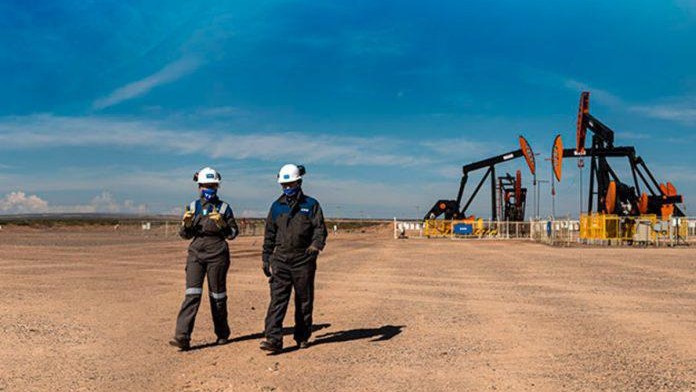
Argentina's Vaca Muerta shale formation continues to set production records, cementing its status as the most significant shale province outside the United States. Yet the economic benefits of this energy boom remain largely concentrated in the province of Neuquén, in western Patagonia, while the rest of the country grapples with sluggish growth, high inflation, weak consumer spending, and rising business and mortgage defaults.
South America's second-largest economy is also continuing to service substantial external debts accumulated over the years, further constraining fiscal flexibility.
The success of Vaca Muerta has undeniably strengthened Argentina's energy sector, which now stands alongside agriculture as a primary driver of GDP growth. The surge in domestic production has also helped Argentina sharply reduce its energy import bill and move closer to energy self-sufficiency, easing pressure on the trade balance that has historically been a source of vulnerability for the peso. However, outside the shale patch, both total public consumption and investment have declined year to date, and consumer spending has also contracted.
President Javier Milei's administration anticipates that the broader economy will eventually catch up with the Vaca Muerta boom. To date, however, little tangible progress has materialized. Job creation and economic growth tell a story of two diverging Argentinas.
Shale exploration and production—once a predominantly American enterprise—has been steadily gaining traction outside North America. Among global oil and gas companies, including major U.S. shale operators, Argentina's Vaca Muerta ranks as a top-tier destination: a de-risked basin with proven geology that is far removed from dependence on the Strait of Hormuz or other Middle Eastern shipping corridors.
After a slow start earlier this decade, Vaca Muerta's output is now surging. The latest production data shows crude oil output reached an all-time high of 887,227 barrels per day (bpd) in May, representing a 19% increase from a year earlier. Natural gas production also climbed to 5.5 billion cubic feet per day, just short of the record 5.7 billion cubic feet per day reported in July 2025. On a month-over-month basis, natural gas output rose 5.4% in May 2026 compared to April, and was up 11% year over year.
Vaca Muerta has already elevated Argentina to the position of Latin America's fourth-largest oil producer. That ranking could improve further as the government prioritizes domestic energy industry development and supports infrastructure projects designed to expand the formation's offtake capacity. Key among these is the Néstor Kirchner gas pipeline, which has been adding transport capacity to move Vaca Muerta gas to domestic demand centers, though additional infrastructure—particularly LNG export terminals—remains necessary to fully monetize the formation's gas reserves on a global scale.
The shale boom has transformed Neuquén into what some describe as a Texas-like economic engine. Workers who relocated to the province told Reuters reporter Leila Miller that they earn the highest private-sector salaries in the country. The average monthly salary in Neuquén's oil and gas sector is approximately $5,600—roughly three times the average $1,800 monthly salary in the capital, Buenos Aires.
Beyond the shale patch, conditions tell a starkly different story. The government is betting on Vaca Muerta and the mining sector to support the broader economy, but companies continue to close and jobs are being lost outside the energy hub. Weak demand, declining investment, and intensified manufacturing competition resulting from Milei's import liberalization policies are compounding the pressure.
"Today we have two Argentinas, one Argentina that grows and another that falls," Guido Zack, an economist at the Fundar think-tank in Buenos Aires, told Reuters.
Analysts caution that the shale boom's trickle-down effect remains uncertain. "The challenge is whether the new export sectors can generate enough spillovers for the rest of the economy, and whether they can do so quickly enough," Fernando Garcia and Lucila Venturi wrote in an article in Economics Observatory.
"Growth is real. The question is whether it can become fast enough, broad enough and visible enough before the political clock runs out next year when elections take place," they added.
By Tsvetana Paraskova for Oilprice.com

