Suriname's Offshore Oil Industry Gains Momentum as GranMorgu Project Advances
Key Takeaways
- •TotalEnergies approved the GranMorgu deepwater project in Suriname's Block 58, with first oil expected in 2028 and an FPSO capacity of 220,000 barrels per day.
- •The GranMorgu project is projected to generate up to $26 billion in fiscal income for Suriname over its lifetime, representing a transformative boost for a country with roughly $4 billion in GDP.
- •Staatsolie acquired a 20% working interest in GranMorgu through a $1.6 billion loan and bond issue, with ownership split equally between TotalEnergies and APA Corporation at 40% each.
- •Petronas has made eight discoveries in offshore Block 52 within a geological zone called the Golden Lane and plans a final investment decision before the end of 2026.
- •Suriname's crude is light and sweet with API gravity between 34 and 37 degrees and sulfur content below 1%, sharing similar qualities with Guyana's commercially successful petroleum output.
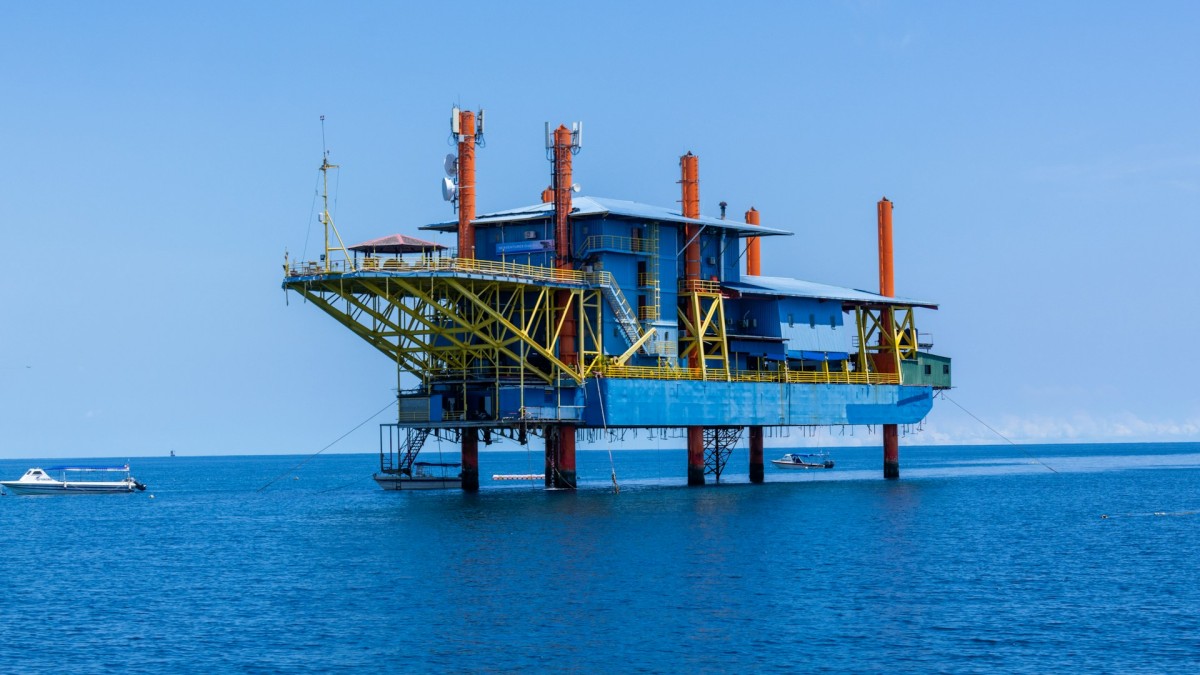
Global energy markets are reeling from Middle East turmoil, driven by the U.S. conflict with Iran and a persistent dispute over access to the Strait of Hormuz, through which roughly a fifth of the world's oil and natural gas supply is shipped. The resulting surge in prices has created favorable conditions for South America's emerging oil producers—none more so than Suriname, whose long-delayed petroleum boom now appears to be materializing.
The former Dutch colony is poised to become South America's next major oil-producing nation. Since 2019, Suriname's government in Paramaribo has watched neighboring Guyana reap enormous economic benefits from its booming petroleum sector, where ExxonMobil-led consortiums have discovered more than 11 billion barrels of recoverable resources in the Stabroek Block. Five major discoveries in Suriname's offshore Block 58, beginning with the Maka Central-1 exploration well in 2020, confirmed the presence of commercially viable hydrocarbons in the country's portion of the Guyana-Suriname Basin—one of the world's most significant emerging hydrocarbon provinces.
Following delays starting in 2022—caused by mismatched drilling results, conflicting seismic data, and an elevated gas-to-oil ratio—operator TotalEnergies reached a final investment decision (FID) for Block 58. TotalEnergies, one of the world's largest publicly traded energy companies, which held a 50% working interest alongside 50% partner APA Corporation, approved development of the deepwater GranMorgu project. The ownership structure was subsequently reorganized: TotalEnergies and APA each retained 40%, while the remaining 20% was granted to Staatsolie, Suriname's state-controlled energy company.
Staatsolie's acquisition was exercised in accordance with its rights under the production-sharing contract (PSC) for Block 52. The company financed the acquisition through a $1.6 billion loan from a banking consortium and a bond issue in March 2025. Staatsolie's stake in GranMorgu is expected to substantially increase the revenue flowing to Paramaribo, which has grappled with a severe economic crisis since 2021 that included currency collapse and an IMF-supported stabilization program. The situation deteriorated to the point where rioting engulfed parts of the capital and protesters stormed parliament in 2023.
GranMorgu, slated to begin production in 2028, represents a transformative development for Suriname's economy, which currently has a GDP of roughly $4 billion. The project's floating production, storage, and offloading (FPSO) vessel will have a capacity of 220,000 barrels per day. The FPSO will target the Sapakara and Krabdagu discoveries, which together contain estimated recoverable resources of 760 million barrels of crude oil. GranMorgu is projected to generate up to $26 billion in fiscal income for Suriname over the project's life.
TotalEnergies is implementing measures to extend the FPSO's operational lifespan, including capabilities to connect to satellite fields for oil extraction once the Sapakara and Krabdagu reservoirs are depleted. The GranMorgu project is engineered for low carbon impact, featuring an all-electric FPSO with energy optimization and strict emission monitoring systems. TotalEnergies estimates that carbon emissions will remain below 16 kilograms per barrel of crude produced—lower than the global upstream average of 17 to 18 kilograms. However, this figure exceeds the emissions profiles of neighboring producers: Brazil's offshore pre-salt operations emit approximately 10 to 12 kilograms per barrel, while Guyana's output generates as little as 9 kilograms per barrel.
Crude from offshore Suriname is believed to share similar qualities with Guyana's petroleum—light and sweet. Petroleum encountered at the Sapakara South-1 well registered an API gravity of 34 degrees, while crude collected during a 2022 flow test at the Krabdagu well measured between 35 and 37 degrees API. According to APA Corporation's media releases and reports, the petroleum is sweet with a sulfur content below 1% and minimal impurities. These characteristics make the oil less complex and less costly to refine into high-grade, low-carbon fuels. Guyana's comparable crude has attracted significant interest from international drillers and refiners, driving strong demand for its petroleum cargoes. Paramaribo expects GranMorgu to achieve similar commercial success.
Suriname's oil potential extends beyond Block 58. Offshore Block 52 has demonstrated considerable hydrocarbon promise under the operatorship of Malaysia's national oil company Petronas, which holds an 80% working interest. Staatsolie exercised its contractual rights to acquire the remaining 20%. In November 2025, the partners reached a major milestone with the Declaration of Commerciality (DOC) for the Sloanea field.
The Sloanea field centers on the Sloanea-1 discovery, made by Petronas in 2020 when ExxonMobil still held a 50% stake in Block 52. ExxonMobil divested its interest in November 2024, reassessing its South American portfolio to concentrate on the prolific Stabroek Block in neighboring Guyana. The supermajor assigned its 50% share to Petronas, after which Staatsolie acquired its 20% stake and signed a PSC with the Malaysian company.
Petronas has achieved notable drilling success in Suriname's offshore waters. In late June 2026, the company announced it had made eight discoveries in Block 52, all within a geological zone drillers have dubbed the Golden Lane, believed to be an extension of the prolific petroleum fairway identified in Guyana's offshore Stabroek Block. The most recent discoveries were made at the Caiman-1 and Swartzia Aspasia Complex-1 (SAC-1) wildcat wells. Petronas also successfully completed the Roystonea-2 appraisal well in Block 52.
These results confirm the viability and substantial oil potential of Block 52, positioning the acreage as the likely site of Suriname's next major hydrocarbon development. Petronas' Chief Operating Officer and Executive Vice President & Chief Executive Officer of Upstream, Mohd Jukris Abdul Wahab, stated that a final investment decision for Block 52 is being planned before the end of 2026.
With GranMorgu advancing toward first oil and Block 52 moving toward its own development decision, Suriname is on track to join Guyana as the second new deepwater oil province brought onstream in the Guyana-Suriname Basin this decade—a rare expansion of non-OPEC supply at a time when global spare capacity remains concentrated in the Middle East.
Source: OilPrice.com

