Gasoline Price Spike Failed to Shift Consumers Toward Used EVs
Key Takeaways
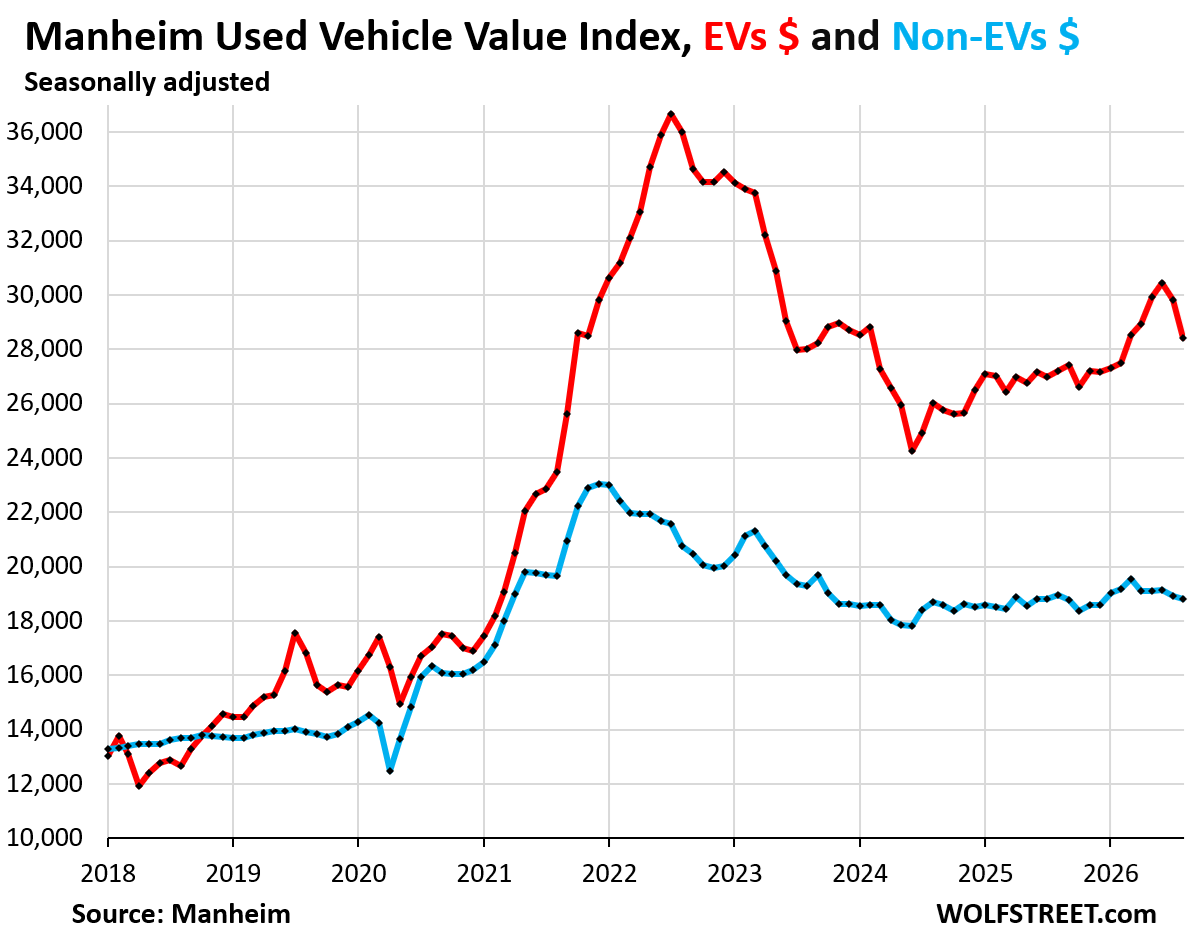
- •Used-EV prices at wholesale auctions rose 11.5% on a seasonally adjusted basis from February through June 2026, the largest increase since the market turmoil of 2021 and 2022, while non-EV prices declined 0.3% over the same period.
- •In July and August 2026, used-EV auction prices fell 6.6% seasonally adjusted, reversing all but the February portion of the five-month gain, as dealers became more cautious and non-EV prices slipped just 1.7%.
- •Dealers bid up used EVs after the February-to-mid-May gasoline price spike because they expected consumers to switch, but the divergent price movements suggested they had overestimated the effect of fuel costs on vehicle-buying decisions.
- •Gasoline and other energy goods accounted for only 2% of total consumer spending in the six months through January 2026, rising to nearly 2.5% in April before easing to 2.2% in July, far below the roughly 4% share of 1972 and the above-6% share of 1980.
- •Per-capita gasoline consumption has fallen from a peak of 42 gallons per month in 1978 to 33 gallons per month in 2025, reflecting more fuel-efficient vehicles and fewer miles driven, which has reduced gasoline's weight in household spending.
A spike in gasoline prices from February through mid-May 2026 prompted auto dealers to buy aggressively at wholesale auctions, as they anticipated strong consumer demand for used electric vehicles (EVs). That expectation quickly weakened, however, as gasoline prices became less significant relative to overall household spending and dealers pulled back from the EV market.
Prices for used EVs at wholesale auctions rose 11.5% on a seasonally adjusted basis from February through June, the largest increase since the market turmoil of 2021 and 2022. Prices for non-EVs declined 0.3% over the same period. EVs in this comparison are battery-electric vehicles and exclude hybrids; hybrids are included with non-EVs alongside all other internal-combustion-engine vehicles.
The reversal came in July and August. Used-EV auction prices fell 6.6% on a seasonally adjusted basis over those two months, giving back all but the February portion of the five-month increase as dealers became more cautious. Prices of non-EVs declined by just 1.7% during the same period, according to the Manheim Used Value Index published on September 8.
Manheim, a subsidiary of Cox Automotive, is the largest auto-auction company in the United States. Dealers use its auctions to replenish their used-vehicle inventories. Vehicles supplied through such auctions include cars removed from rental fleets, off-lease vehicles and repossessions sold by finance companies, and vehicles from corporate and government fleets.
The divergent price movements suggested that dealers had overestimated the effect of gasoline prices on vehicle-buying decisions. They bid up used EVs while prices for non-EVs remained comparatively subdued, apparently responding to widespread complaints about higher fuel costs. Because auction prices reflect transactions used to stock dealer inventories, the subsequent decline also showed how quickly dealers adjusted their purchasing when expected EV demand did not materialize as anticipated.
Gasoline’s smaller share of household spending
In 1972, shortly before the 1974 Oil Crisis, gasoline and other energy goods—including utility natural gas and heating oil—accounted for about 4% of total consumer spending. By 1980, that share had risen above 6%.
Since then, several changes have reduced gasoline’s relative importance in the consumer spending basket. More fuel-efficient vehicles and fewer miles driven per person contributed to a decline in gasoline consumption per capita, from a peak of 42 gallons per month in 1978 to 33 gallons per month in 2025. Meanwhile, spending on categories such as housing, healthcare, and other services increased substantially.
During the six-month period through January 2026, before the gasoline price spike, gasoline and other energy goods represented only 2% of total consumer spending. As gasoline prices rose, the share reached nearly 2.5% in April 2026. It then began to decline, falling to 2.2% in July.
Higher gasoline prices remain highly visible to consumers, who encounter them whenever they refuel or pass a gas station. However, gasoline and other energy spending is now much smaller than household expenditures on housing, health insurance, other insurance, services, food, and durable goods.
As a result, gasoline price spikes can impose a noticeable burden without carrying the same economic weight they once did. They may therefore have less influence on long-term spending decisions, including vehicle purchases. Large, powerful pickups with relatively poor fuel economy continue to be popular regardless of gasoline prices.
Auto dealers, who earn significant revenue selling those vehicles, nevertheless expected consumers to switch in large numbers to used EVs after gasoline prices increased. Overall demand for EVs, like demand for pickups, is not determined solely by fuel prices. It also reflects consumers’ preferences for the vehicles they want to drive.
Source: Wolf Street
