US Treasury Blacklists Iranian Maritime Scheme Over Alleged Bitcoin Toll Payments
Key Takeaways
- •The US Treasury Department blacklisted an Iranian maritime network for allegedly forcing commercial ships to pay Bitcoin tolls to secure safe passage through key shipping routes.
- •The sanctioned entities face frozen assets under US jurisdiction and a prohibition on transactions involving American individuals or businesses.
- •The enforcement action targets maritime extortion and Iranian revenue networks rather than constituting a regulatory ruling on Bitcoin or the broader cryptocurrency market.
- •Cryptocurrency businesses are expected to treat any addresses or counterparties linked to the designation as sanctioned exposure and update their OFAC screening accordingly.
- •OFAC has been expanding its sanctions toolkit to cover digital currency activity since 2018, reinforcing that blockchain-based payments fall under the same compliance obligations as traditional financial transactions.
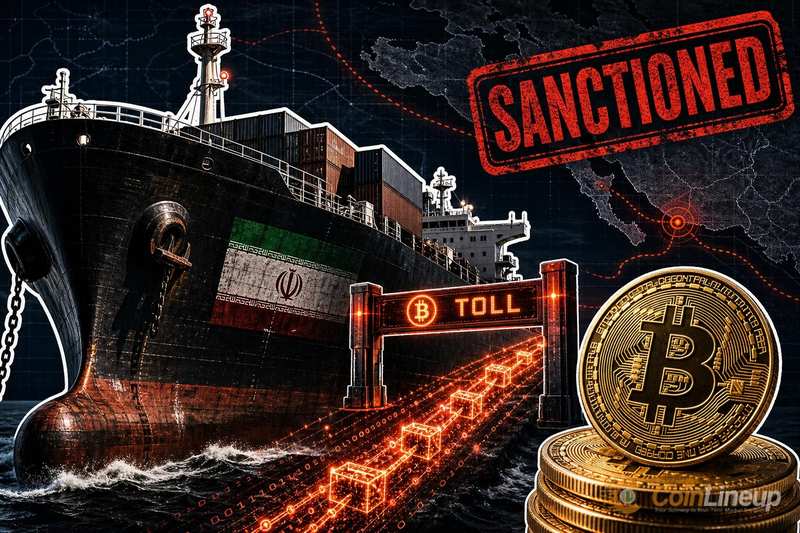
The US Treasury Department has added an Iranian maritime network to its sanctions list, alleging that commercial vessels were compelled to pay tolls in Bitcoin in exchange for safe passage through the region's shipping lanes. The action comes against a backdrop of long-standing international concerns about Iranian interference with commercial shipping in the Persian Gulf and the nearby Strait of Hormuz, a chokepoint through which roughly a fifth of global oil consumption transits.
Details of the Sanctions Designation
The blacklisting was formally announced by the US Treasury Department, which identified the Iranian maritime scheme and its associated firms in a Treasury press release. The designation places the targeted entities on the US sanctions list, effectively freezing any assets tied to US jurisdictions and prohibiting American persons or businesses from engaging in transactions with them.
The Treasury described the operation as maritime-related, focused on commercial shipping and vessel transit rather than functioning as a cryptocurrency business or exchange. The formal entries appear in the Treasury's OFAC designation records, which codify the sanctioned parties.
Officials framed the action as part of a broader effort to disrupt Iranian revenue networks. Iran has been subject to extensive US and international sanctions for years, covering oil exports, banking, and defense sectors. The enforcement measure is a sanctions action and does not constitute a regulatory ruling on Bitcoin itself or the wider cryptocurrency market.
The Role of Bitcoin in the Alleged Scheme
The central cryptocurrency detail is the alleged use of Bitcoin as a transit toll. According to reporting on the case, commercial ships were forced to pay Bitcoin tolls to secure safe passage.
A "Bitcoin toll payment" in this context refers to a fee demanded in Bitcoin in exchange for permitting a vessel to transit through a particular route. Bitcoin's ability to transfer value across borders without intermediaries or traditional banking infrastructure is one reason a sanctioned or informal operation might prefer it over conventional bank transfers, which can be blocked or traced through the correspondent banking system that enforces sanctions.
The specific operational mechanics of how the tolls were collected — including wallet addresses, transaction amounts, and intermediaries — are not established in the publicly available evidence.
Compliance Implications for the Crypto Industry
For cryptocurrency businesses, the designation carries a clear compliance message. A US sanctions action identifying Bitcoin as a payment mechanism means that exchanges, brokers, and payment platforms should treat any associated addresses or counterparties as sanctioned exposure. Additional coverage of the Treasury's measure against the Iranian firms has also surfaced in mainstream financial reporting.
OFAC has steadily expanded its sanctions toolkit to address cryptocurrency since it first designated digital currency addresses in 2018, signalling that blockchain-based payment activity falls within the same compliance framework as traditional financial transactions. The case highlights the dual role Bitcoin occupies in regulatory discussions: a regulated investment product attracting institutional interest through instruments such as spot Bitcoin ETFs, while simultaneously appearing as a payment tool in sanctions-evasion narratives.
For compliance teams, the practical takeaway is procedural. Treasury designations are increasingly reaching cryptocurrency-linked payment activity, and screening against the updated OFAC list remains the concrete operational step that follows any such enforcement action.

