US Stocks Slip as Tech Selloff Deepens; Treasury Yields Hit Multiyear Peaks as Iran Peace Hopes Fade
Key Takeaways
- •The 10-year Treasury yield rose to 4.744% and the 30-year yield increased to 5.323%, its highest level since 2007.
- •Brent crude climbed to a three-week high after US-Iran peace talks stalled and hopes for a deal faded.
- •Semiconductor stocks led technology declines, with Micron and SanDisk falling sharply during the session.
- •Decliners outnumbered advancers on both the NYSE and Nasdaq, showing weak market breadth across Wall Street.
- •The S&P 500 healthcare sector hit a record high and finished as the day’s main outlier.
US Stocks Slip as Tech Selloff Deepens; Treasury Yields Hit Multiyear Peaks as Iran Peace Hopes Fade
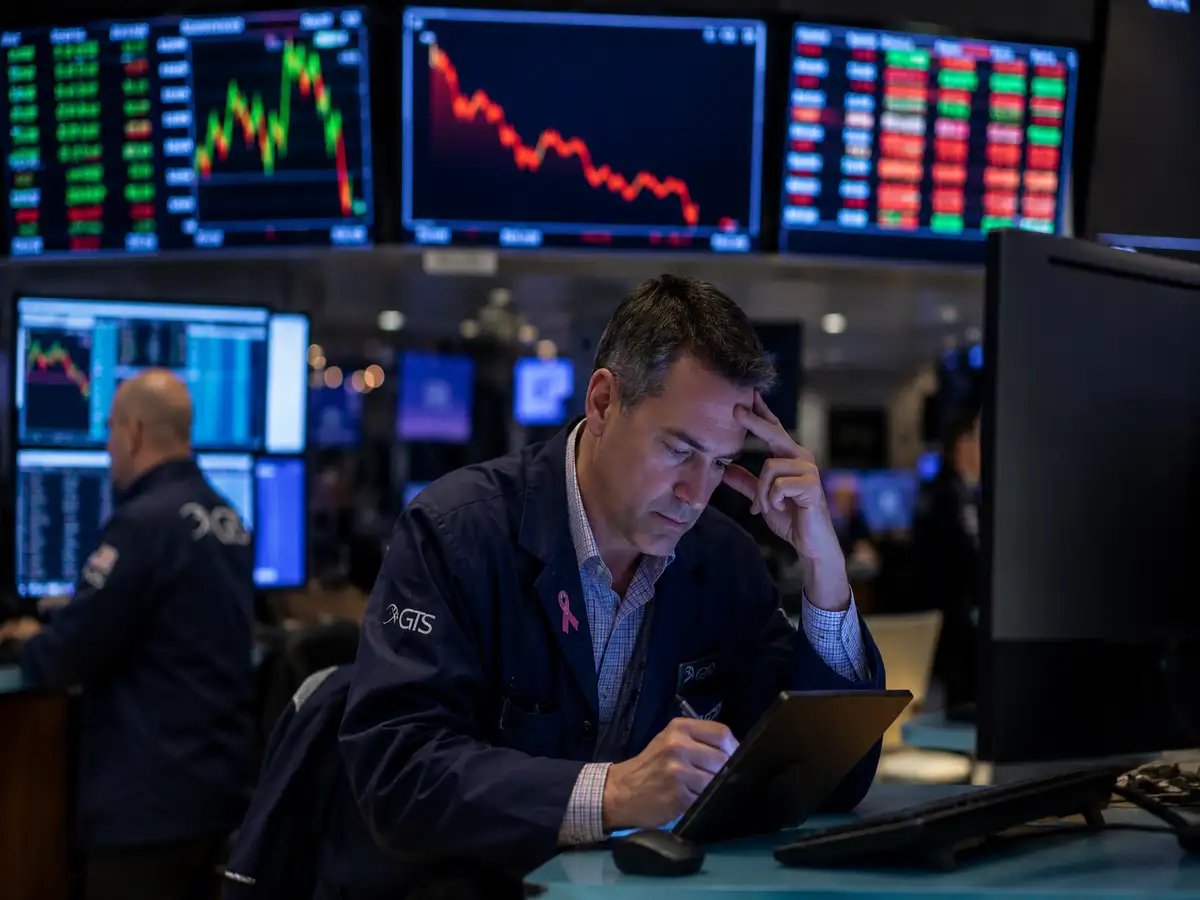
Wall Street closed lower on Tuesday, with semiconductor stocks leading broad technology declines as Middle East uncertainty pushed government bond yields to multiyear peaks, feeding concerns about borrowing costs and inflation.
The day's weakness was telegraphed well before the opening bell. S&P 500 and Nasdaq futures declined as oil held near recent highs and government bond yields reached multi-year peaks, reviving inflation concerns as prospects for a US-Iran peace deal diminished. At 6:40 a.m. ET, Dow E-minis rose 18 points, or 0.03%, while S&P 500 E-minis fell 36.75 points, or 0.47%, and Nasdaq 100 E-minis dropped 362.75 points, or 1.21%. The selling carried through the cash session: the Nasdaq dropped more than 1% at the open as fading Iran peace hopes lifted oil prices and yields, and technology stocks slid as elevated Treasury yields pressured valuations. Because growth-oriented technology stocks carry valuations that rest heavily on earnings expected years into the future, rising yields — which increase the discount rate applied to those future cash flows — tend to weigh on the sector more than on the broader market. The tech selloff ultimately weighed down Wall Street as bond yields climbed, as detailed in Economic Times' market report (Tech selloff weighs down Wall Street as bond yields climb).
Treasury Yields Surge to Multiyear Highs
US yields rose amid Iran worries and the broader market selloff. The yield on the benchmark 10-year Treasury note was last up 2 basis points at 4.744%, nearing its January 2025 peak, while the 30-year bond yield climbed 1.3 basis points to 5.323%, its highest level since 2007. The two-year Treasury yield, which typically moves in step with interest-rate expectations for the Federal Reserve, rose 1.6 basis points to 4.198%. A closely watched part of the US Treasury yield curve, measuring the gap between two- and 10-year note yields and seen as an indicator of economic expectations, stood at a positive 54.4 basis points. Yields at the long end of the curve feed into borrowing costs across the economy, from corporate debt issuance to mortgage rates, which is why moves of this magnitude draw attention well beyond the bond market.
Attention now turns to the Federal Reserve, with the release of the Fed minutes in focus as expectations for a September rate hike ease. Traders will scan the accounts of the Fed's latest meeting for any shift in how officials view the inflation outlook.
Oil Rallies as US-Iran Talks Hit Deadlock
Brent crude jumped more than $1 after US-Iran peace talks hit a deadlock, and oil closed at a three-week high as hopes of a US-Iran peace deal faded, with prices inching up further in subsequent dealings. President Donald Trump said no talks with Iran are planned, while Tehran said the Strait of Hormuz remains shut. The strait, the narrow mouth of the Persian Gulf, is one of the world's most important oil shipping chokepoints, and its status has long been a key variable for global crude prices.
On the trade-policy front, the United States and Canada held last-minute talks in an effort to stop Trump's 50% tariffs.
Weak Market Breadth on NYSE and Nasdaq
Decliners outpaced advancers on both major exchanges. Declining issues outnumbered advancers by a 1.74-to-1 ratio on the NYSE and a 1.64-to-1 ratio on the Nasdaq. The Nasdaq Composite recorded 65 new highs and 106 new lows, while the S&P 500 posted 10 new 52-week highs and four new lows.
The S&P 500 healthcare sector was an outlier, hitting a record high and last trading up 1.8%.
Chipmakers Lead Technology Declines
Memory-focused semiconductor stocks bore the brunt of the selling. Micron shares plunged more than 7% in intraday trade, and SanDisk slumped 9% on tech profit-taking and concerns about a mixed outlook. In Asia, SK Hynix tumbled more than 8% on profit-taking and memory demand concerns. Memory is among the most cyclical corners of the chip industry, with prices and profits swinging sharply on shifts in supply and demand, which is why the group often moves harder than the wider tech sector during selloffs.
Nvidia's results next week will provide the next major test for the volatile AI trade after the S&P 500 retreated from record territory. The company's data-center business has become a widely watched gauge of AI infrastructure spending across the industry. Strong earnings, including from AI hyperscalers, had pushed the S&P 500 and Dow to record highs earlier this month, but concerns over returns from heavy AI spending continue to fuel volatility in technology stocks. Rising oil prices revived inflation concerns and pulled the S&P 500 lower in the previous session.
Elsewhere in the chip sector, AI chip startup Etched doubled its valuation to $21 billion in under a month.
Gold, Corporate News and Other Headlines
Gold retreated as bond yields surged to their highest levels in decades, with higher rates increasing the opportunity cost of holding the metal, which pays no interest.
In corporate news, Anthropic's pre-IPO credit facility is set to exceed $10 billion, Bloomberg News reported. KKR has made a $9 billion takeover bid for energy distributor UGI, the Wall Street Journal reported. Klarna trimmed its full-year revenue and volume outlook as German retail weakens.
The Texas Stock Exchange landed its first primary listings in a bid to carve out market turf.
In healthcare, an Amylyx drug cut low blood sugar episodes in bariatric surgery patients in a key trial.
ESPN founder Bill Rasmussen died at 93.
The live blog also tracked NYSE American's most active stocks, alongside the day's top gainers on the Dow and S&P 500 and the top losers on the Nasdaq.

