Top 3 US Stock Market Stories From This Week
Key Takeaways
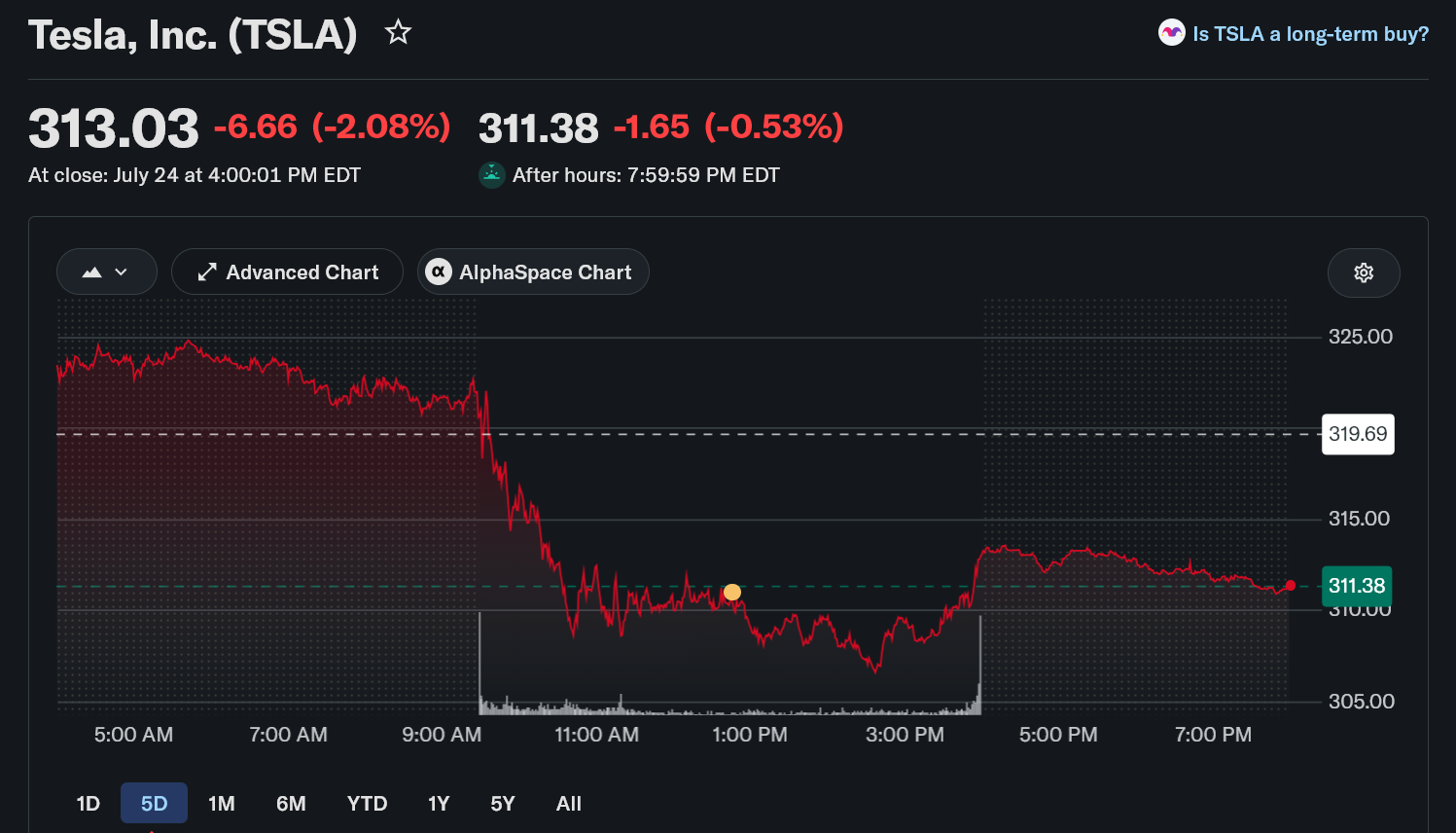
- •Tesla shares dropped 14.5% after the electric vehicle maker reported negative free cash flow for the first time in more than two years, compounded by concerns over softening demand and rising product development costs.
- •Alphabet's stock declined 7% after the company raised its projected 2026 capital expenditure to approximately $200 billion, a figure that eclipsed its otherwise strong cloud revenue performance.
- •Brent crude oil climbed above $100 per barrel following heightened tensions between the United States and Iran, pushing Treasury yields higher as traders reassessed the risk of persistent inflation.
- •The Philadelphia Semiconductor Index surged over 5% on Tuesday before falling 4.5% on Friday, reflecting volatile swings driven by alternating optimism and anxiety around AI-related spending.
- •Super Micro Computer shares soared nearly 20% after the company disclosed more than $60 billion in new orders, signaling continued robust demand for AI server and data-centre equipment.
US equities declined this week as investors weighed underwhelming Big Tech earnings, crude oil surging past $100 a barrel, and sharp volatility in semiconductor shares.
Between July 19 and July 25, the Nasdaq dropped approximately 2%. The S&P 500 declined 0.6%, while the Dow Jones Industrial Average slipped 0.4%. Technology stocks bore the brunt of the selling pressure.
The three storylines converging this week—AI capital spending, energy-driven inflation risk, and semiconductor turbulence—are closely interconnected. Chipmakers sit upstream of the AI buildout, energy costs shape the inflation outlook that determines borrowing costs, and tech megacaps are simultaneously the largest AI investors and major semiconductor customers.
Below are the three most significant US stock market developments for retail traders this week.
Big Tech's AI Spending Shakes Wall Street
Tesla and Alphabet sparked a broad technology sell-off after their quarterly earnings reports intensified concerns over the mounting cost of artificial intelligence investment.
Tesla shares plunged 14.5% after the electric vehicle maker reported negative free cash flow for the first time in over two years. Investors also flagged worries about softening vehicle demand and the financial burden of developing new products.
Alphabet fell 7% after raising its projected 2026 capital expenditure to approximately $200 billion. Although the company posted robust cloud revenue growth, the elevated spending outlook overshadowed those results. The revised figure is extraordinary even by the standards of the largest technology companies, where annual capital expenditures have typically ranged in the tens of billions rather than the hundreds.
The Nasdaq subsequently dropped more than 2% on Thursday. The sell-off also intensified scrutiny on Microsoft, Amazon, and Meta as they prepared to release their own earnings reports. Collectively, these companies have committed hundreds of billions of dollars to AI infrastructure, making this earnings season a key test of whether the investment cycle is generating proportional returns.
Markets have historically rewarded companies that commit heavily to AI infrastructure. However, investors are now demanding clearer evidence that such expenditures will translate into stronger profitability.
$100 Oil Reignites Inflation Concerns
Brent crude climbed above $100 a barrel after escalating tensions between the United States and Iran stoked fears of potential disruptions to global oil supplies.
The price surge rippled quickly across financial markets. Treasury yields rose as traders assessed whether elevated energy costs could keep inflation persistently above target levels. The concerns are particularly acute because the Federal Reserve has repeatedly flagged energy prices as a variable it monitors when assessing whether inflation is sustainably returning to its 2% goal.
Rising yields typically pressure growth-oriented equities. They reduce the present value of future corporate earnings and make government bonds more attractive relative to pricey stocks.
The oil rally also weighed on companies reliant on fuel or transportation. Airlines, logistics firms, and consumer-facing businesses could face higher operating costs if crude prices remain at elevated levels.
US crude oil price 1st of July: $68 Now: $90 pic.twitter.com/sKJs8MATN4 — The Spectator Index (@spectatorindex) July 25, 2026
US crude oil price 1st of July: $68 Now: $90 pic.twitter.com/sKJs8MATN4
Energy and defense stocks, by contrast, found support. Investors rotated toward sectors positioned to benefit from higher oil prices and heightened geopolitical risk.
Cryptocurrency markets also came under pressure amid the broader risk-off shift. Bitcoin frequently behaves like a high-growth asset when bond yields climb and investors dial back exposure to speculative instruments.
Chip Stocks Waver Between Optimism and Anxiety
Semiconductor equities posted some of the week's most dramatic swings as traders alternated between optimism over AI-driven demand and apprehension about excessive capital outlays. As the upstream suppliers of the AI ecosystem—manufacturing the GPUs and processors that power data centres—chipmakers are positioned as both primary beneficiaries of and a bellwether for the broader AI investment cycle.
The Philadelphia Semiconductor Index surged more than 5% on Tuesday. Micron, Western Digital, and Sandisk each recorded double-digit gains as investors re-entered the sector following a prior sell-off.
Super Micro Computer also soared nearly 20% after disclosing more than $60 billion in new orders, signaling that demand for AI servers and data-centre equipment remained robust.
The rebound, however, proved short-lived. The semiconductor index retreated 4.5% on Friday as broader concerns about AI spending resurfaced.
Semiconductor Stocks are on the brink of entering a bear market after falling 19% from June's all-time high 📉 🐻 pic.twitter.com/VfQLLmMnXS — Barchart (@Barchart) July 17, 2026
Semiconductor Stocks are on the brink of entering a bear market after falling 19% from June's all-time high 📉 🐻 pic.twitter.com/VfQLLmMnXS
Intel slid nearly 8% despite issuing stronger-than-expected forward guidance. Investors zeroed in on the company's ramped-up investment commitments and the costs associated with competing in advanced chip manufacturing. Intel's experience highlights a broader tension across the sector: even companies raising their outlooks face selling pressure when capital requirements expand.
The price action underscored the heightened sensitivity of semiconductor stocks. While robust demand can still underpin the sector, elevated valuations leave minimal margin for disappointing earnings or rising input costs.
For retail traders, the principal risk remains volatility. AI-related equities can move sharply even when companies deliver solid quarterly results.

