US Stocks End Lower as Oil Tops $102 and Treasury Yields Climb
Key Takeaways
- •Major US equity indexes gave up early gains on Friday, with the Dow losing about 200 points or 0.4%, the S&P 500 falling 0.2%, and the Nasdaq easing 0.1% amid rising yields and oil prices.
- •The 10-year Treasury yield climbed back above 5% and the 2-year rose to 4.75%, while WTI crude advanced 0.9% to roughly $102.82 a barrel as Strait of Hormuz disruptions continued during the seventh month of the Iran conflict.
- •Saudi Arabia informed European refiners they would receive no crude allocations next month due to the East-West pipeline shutdown, according to a post on X citing Bloomberg.
- •Following the Federal Reserve's 25-basis-point increase, its first hike in three years, traders lifted the implied probability of an additional half-point of tightening this year to 44.3% from 41.7%.
- •The Bank of Japan raised rates to their highest level in 31 years, and chip stocks largely steadied after a mid-week sell-off linked to Anthropic and OpenAI calling for a slowdown in AI development.
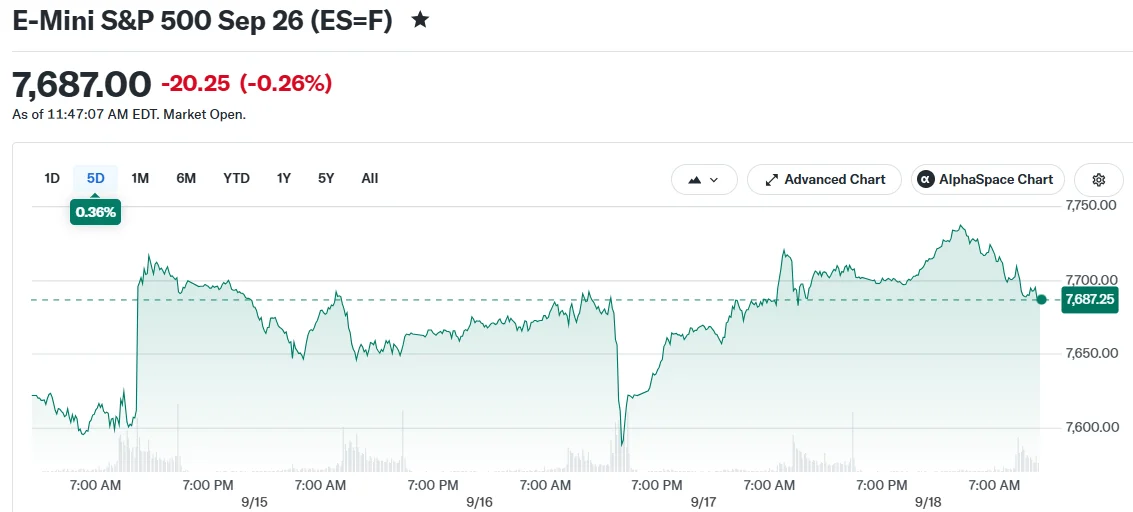
US equities ended lower on Friday, with the Dow Jones Industrial Average, S&P 500, and Nasdaq Composite surrendering their early morning gains as a fresh climb in bond yields and another rise in oil prices weighed on the market. The Dow fell around 200 points, or 0.4%, while the S&P 500 dropped 0.2% and the Nasdaq slipped 0.1%.
The session coincided with a “triple witching” day, when stock index futures, stock index options, and stock options all expire on the same day across various traded products. Such expiry sessions are often among the heaviest of the year by trading volume, as traders close or roll positions before the new quarter. Joe Mazzola, head trading strategist at Charles Schwab, cautioned that volatility could pick up again next week as quarter-end position shifts get underway.
Treasury yields moved higher, adding a headwind for equities. The 10-year Treasury yield climbed back above the 5% mark, while the 2-year yield rose to 4.75%. Higher yields tend to weigh on stocks by making borrowing more expensive, while also making bonds a relatively more attractive option for investors. The rise in yields came as traders continued to reassess the interest-rate outlook.
Oil Adds to the Pressure
WTI crude oil futures rose 0.9% to around $102.82 a barrel after briefly trading lower in the morning, though the dip proved short-lived. Oil has remained elevated as disruptions in the Strait of Hormuz, tied to the ongoing conflict in Iran now in its seventh month, continue to push energy prices higher. The strait, the narrow passage linking the Persian Gulf to global shipping lanes, is one of the world’s most important energy chokepoints, with roughly a fifth of globally traded oil normally passing through it — one reason disruptions there feed quickly into prices paid by consumers and businesses worldwide.
Supply concerns were underscored by a post shared on X by The Kobeissi Letter on September 18, 2026, which read:
BREAKING: Saudi Arabia has informed European refiners that they will be allocated no crude oil next month amid the East-West pipeline shutdown, per Bloomberg. European customers normally receive Saudi Arabian crude oil shipments on "term contracts," which are meant to ensure a…
— The Kobeissi Letter (@KobeissiLetter) September 18, 2026
Analysts say the energy shock is complicating the inflation picture for central banks around the world.
The Federal Reserve raised interest rates by 25 basis points this week, its first hike in three years. The move had been widely anticipated, and stocks initially climbed after the decision. However, confidence that a single increase will be enough to tame inflation is limited. JPMorgan Chase CEO Jamie Dimon told Yahoo Finance this week: “It’s not clear to me we’ve slayed inflation.” A quarter-point hike filters into the economy through higher borrowing costs on everything from business loans to mortgages — the channel through which tighter policy is meant to cool demand and price growth.
Rate Hike Bets Rise
Traders are now pricing in additional tightening ahead. According to the CME FedWatch Tool, which converts pricing in federal funds futures into implied policy odds, the probability of an additional half-point in rate hikes this year rose to 44.3% on Friday, up from 41.7% on Thursday. Odds that rates are held steady fell to 9.8% from 11%.
Oil prices dipping below $100 a barrel earlier in the week had offered some brief relief, but prices have since climbed back up, keeping pressure on inflation.
Chip stocks mostly held up this week after a mid-week sell-off. The PHLX Semiconductor index was down only slightly on the. The sell-off had been partly tied to Anthropic and OpenAI calling for a slowdown in AI development. Chipmakers sit at the center of the AI buildout as suppliers of the computing hardware behind large AI models, which is why sentiment around AI development plans can move the group.
The Bank of Japan also raised interest rates to their highest level in 31 years this week, adding another layer of complexity to global markets — and, coming in the same week as the Fed’s move, underscoring that tighter policy is now a shared direction across major economies.
With no major earnings reports or economic data on the calendar for Friday, investors were left to focus on how much further the Federal Reserve might go with tightening if inflation remains elevated. Heading into the close, the Dow was on pace for a weekly decline. From here, the main variables to watch are whether the Strait of Hormuz disruptions ease or intensify, how Saudi supply allocations to European refiners evolve, and what upcoming Fed communications signal about the pace of further hikes, with quarter-end repositioning likely to add noise to early-week trading.

