US Stock Futures Fall as US-Iran Tensions Send Oil Prices and Bond Yields Higher
Key Takeaways
- •Nasdaq 100 futures fell about 1.1% in premarket trading, while S&P 500 and Dow futures also moved lower.
- •Trump’s remarks about the Strait of Hormuz sent Brent crude to $91 a barrel and West Texas Intermediate to about $85 a barrel.
- •The US Strategic Petroleum Reserve has dropped to its lowest level since 1982, reducing the buffer against supply shocks.
- •The 10-year Treasury yield rose to 4.72%, and the 30-year yield climbed to around 5.31% to 5.33%.
- •Semiconductor and memory stocks were among the weakest premarket names, while Home Depot gained about 1% after reporting improved second-quarter sales.
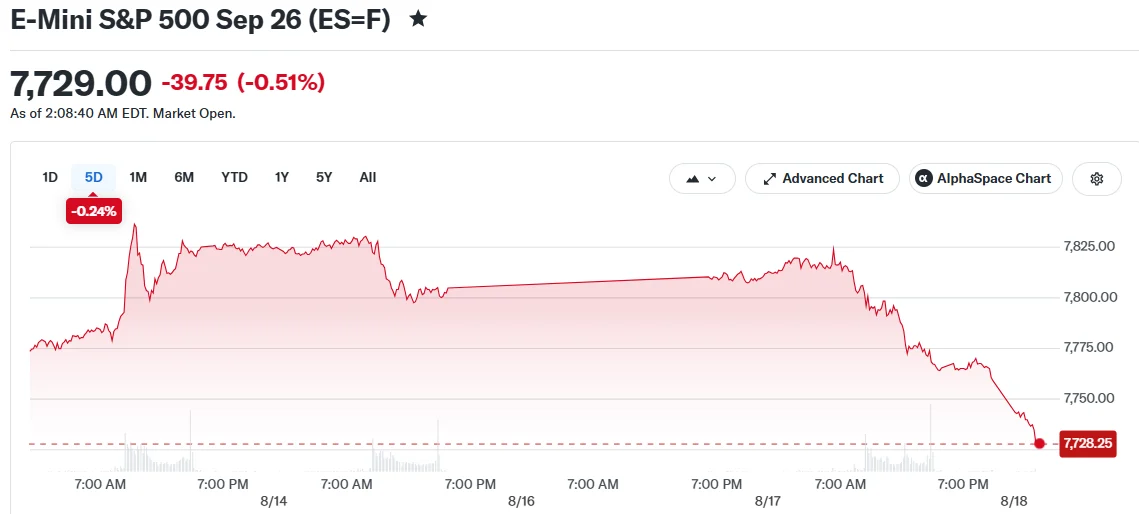
US stock futures pointed lower across the board on Tuesday morning as rising tensions between the United States and Iran pushed oil prices higher and Treasury yields continued their climb.
Nasdaq 100 futures dropped around 1.1%. S&P 500 futures fell between 0.4% and 0.6%, and Dow Jones futures slid by roughly 22 to 58 points, leaving the contract hovering near flat.
The losses followed a rough Monday session in which all three major indexes closed in the red, after President Donald Trump threatened military action against Oman if it interfered with US efforts near the Strait of Hormuz. Because the narrow waterway between Oman and Iran carries roughly a fifth of the world's oil, threats to it tend to move prices far beyond the region.
Oil Prices and Bond Yields Rise
President Trump said he intends to inflict more economic pain on Iran and would consider bombing Oman if it blocked access to the Strait, comments that sent oil prices sharply higher early on Tuesday.
Brent crude futures rose to $91 per barrel, while West Texas Intermediate futures climbed to around $85 per barrel, up about 1% on the day. Both benchmarks reached their highest levels in more than two weeks on the back of the escalation.
The US Strategic Petroleum Reserve, meanwhile, has fallen to its lowest level since 1982, a level that is adding further pressure to oil markets. The reserve is the emergency stockpile Washington has historically tapped to cushion supply shocks, and its depleted state leaves a thinner buffer at a moment when the Hormuz standoff is already pushing prices up.
In the bond market, yields also moved higher. The 10-year Treasury yield hit 4.72%, while the 30-year yield climbed to between 5.31% and 5.33%, a level near its highest point in about 19 years. The rise matters beyond the bond market: higher yields lift borrowing costs for companies and households and tend to pressure the valuations of growth stocks, whose worth rests heavily on future earnings.
Deutsche Bank macro strategist Henry Allen said investors have grown pessimistic that the Strait of Hormuz will reopen any time soon, a view that is putting pressure on longer-dated sovereign bonds.
Chip Stocks Pull Back
Semiconductor and memory stocks, which had helped cushion losses on Monday, were among the hardest-hit names in premarket trading on Tuesday. Sandisk, Coherent, Western Digital, and Seagate — companies whose drives, flash, and optical components sit inside the world's data centers — all ranked among the worst performers in the S&P 500 premarket session.
Investors had piled into chip names over recent weeks, a rally tied to the broader boom in AI infrastructure spending, but those gains were showing signs of strain under the combined weight of rising yields and geopolitical uncertainty. That makes the group a key pressure point for the wider market, since its recent run has made it a significant driver of index-level moves.
On a brighter note, Home Depot — the largest US home-improvement retailer and a widely watched gauge of housing-related consumer spending — saw shares rise about 1% before the bell after the company reported improved second-quarter sales. Customers leaned toward smaller home projects over the summer months, a shift that helped lift results.
Toll Brothers and Klarna are among the companies scheduled to report their earnings later in the trading day, adding a stream of corporate news to a session already dominated by geopolitics and rates.
Bond yields have been rising around the world, driven by a combination of elevated oil prices, an AI-related borrowing spree, and concerns about government debt levels. Crude is an input cost across the economy, which is one reason energy price shocks tend to ripple from commodity markets into bonds and equities alike.
Markets remain on edge as talks between the United States and Iran show little sign of progress, keeping pressure on equities, oil, and bonds heading into Tuesday's opening bell. The immediate watch points are any movement in the standoff around the Strait of Hormuz and whether oil prices and long-dated yields extend their recent climb.

