Analyst Warns Trump's Saudi Nuclear Deal Opens a 'Pathway to the Bomb' and Could Complicate the Iran War
Key Takeaways
- •The proposed 30-year agreement would give U.S. firms the lead role in Saudi Arabia's civilian nuclear program and could permit enrichment at a U.S.-operated plant after a two-year study.
- •The deal does not require Saudi Arabia to accept the IAEA's Additional Protocol, the UN watchdog's most intrusive inspection regime.
- •Critics including Sens. Ed Markey and Chris Murphy accuse the administration of hypocrisy and warn the pact could trigger a regional nuclear arms race.
- •Trump stated there would be no enrichment of material and linked the agreement to Saudi normalization with Israel via the Abraham Accords.
- •Blocking the deal would require a two-thirds vote in both chambers of Congress, a threshold critics concede is difficult to reach.
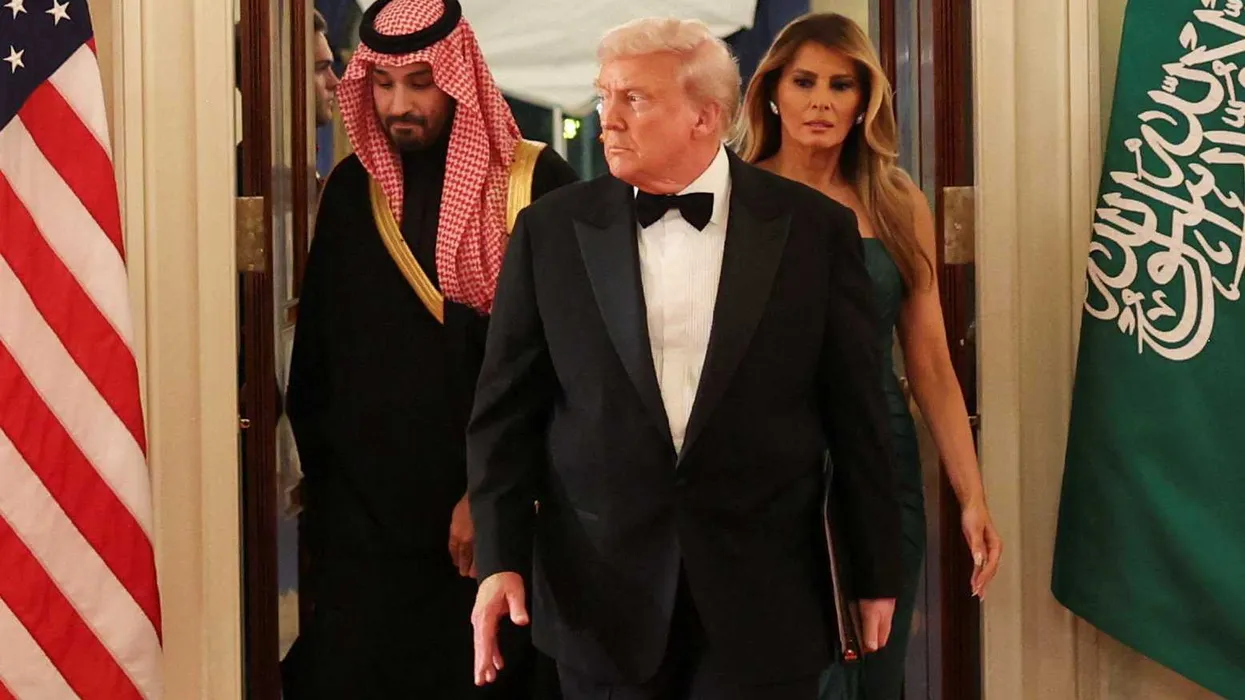
A new nuclear agreement between the United States and Saudi Arabia could make it even harder for President Donald Trump to end his war with Iran, foreign policy analyst Trita Parsi warned Wednesday, because the deal opens the door for Tehran's regional rival to enrich uranium — the very capability U.S. bombs are intended to strip from Iran.
The 30-year agreement, which has been sent to Congress for review, would give U.S. firms the lead role in building the kingdom's civilian nuclear program and, following a two-year study, could permit enrichment at a plant on Saudi soil operated by the United States. Critics note that the deal does not require Riyadh to accept the Additional Protocol, the most intrusive inspection regime maintained by the U.N. nuclear watchdog. The pact is the latest chapter in a long-running U.S. effort to broker Saudi-Israeli normalization, with Riyadh reportedly having sought American security guarantees and nuclear cooperation as conditions for recognizing Israel.
Enrichment is a dual-use process: the same technology that fuels a power reactor can, if pushed further, yield the core of a nuclear bomb.
Critics have seized on what they see as a contradiction — Washington is at war to force zero enrichment on Iran, which insists its program is peaceful, while simultaneously smoothing the path for the Saudis. Parsi delivered a blunt assessment: "Washington is providing Riyadh a pathway to the bomb," even as it demands that Iran give up enrichment entirely.
Sen. Ed Markey (D-MA) said the administration's "hypocrisy is matched only by their recklessness," accusing it of allowing Saudi Arabia to pursue nuclear weapons technology "under the guise of preventing an Iranian nuclear bomb." Sen. Chris Murphy (D-CT) warned the deal would "set off a nuclear race in the region." That concern echoes long-standing warnings from nonproliferation experts that any Saudi enrichment capability could prompt other regional states to seek similar technology.
The move also cuts against decades of U.S. policy aimed at denying Iran the very technology now being offered to Riyadh. Secretary of State Marco Rubio, while serving as a senator, even co-sponsored a 2019 bill that would have required Saudi Arabia to forgo enrichment. The 123 Agreement framework governs U.S. civilian nuclear cooperation with foreign countries, but deals permitting enrichment are rare — the United States has historically conditioned such pacts on partners forgoing indigenous enrichment and reprocessing.
Trump has insisted the alarm is overblown, declaring on Truth Social: "There will be no enrichment of material!" He added that the pact hinges on Riyadh normalizing ties with Israel through the Abraham Accords. Rubio, for his part, has maintained that the deal has "safeguards in place."
The clash comes as the U.S. and Israeli war on Iran, launched in late February, grinds on. Parsi and other analysts say the double standard hands Tehran a fresh grievance and a reason to walk away from negotiations, raising the odds that the fighting drags on. Under U.S. law, Congress has a fixed review period for nuclear cooperation agreements, and blocking the Saudi deal would require a two-thirds vote in both chambers — a bar that even critics concede is steep.
Source: Raw Story

