U.S. Sanctions Two Crypto Exchanges Over Alleged Iran-Linked Funds
Key Takeaways
- •The U.S. Treasury Department and OFAC have formally sanctioned two cryptocurrency exchanges with alleged ties to Iran-linked funds.
- •Placement on OFAC's SDN list requires U.S. persons and businesses to freeze the sanctioned entities' assets and bars them from providing services to those platforms.
- •The specific names of the exchanges, detailed fund flow descriptions, and official government quotations had not been publicly disclosed at the time of reporting.
- •This enforcement action follows prior Iran-related crypto sanctions cases, including the freezing of $131 million in Iran-linked crypto tied to the Central Bank.
- •The development is a regulatory compliance event rather than a market-moving one, underscoring the need for crypto businesses to maintain rigorous sanctions screening of counterparties and geographies.
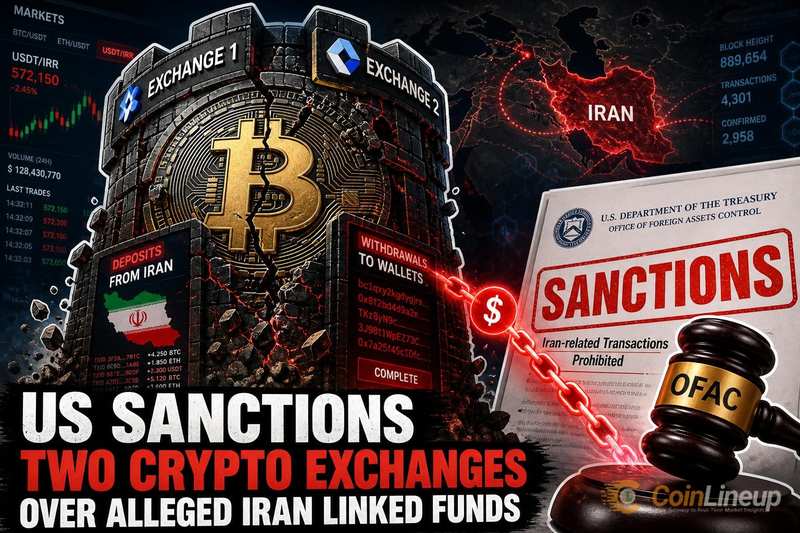
U.S. authorities have taken sanctions action against two cryptocurrency exchanges with alleged ties to Iran-linked funds, according to materials published by the U.S. Treasury Department and the Office of Foreign Assets Control (OFAC).
The action is documented in a Treasury press release available at home.treasury.gov and a corresponding update on the OFAC sanctions list updates page. A separate report by CoinDesk describes the sanctions as targeting two exchanges as part of a broader U.S. crackdown on Iran-connected crypto activity. Designations on OFAC's Specially Designated Nationals (SDN) list require U.S. persons and businesses to freeze any assets of the listed entities and prohibit transactions with them, making it a criminal offense for U.S.-connected firms to provide services to the sanctioned exchanges.
At the time of publication, the specific names of the sanctioned exchanges, detailed descriptions of the alleged money flows, and official quotations from U.S. authorities had not been extracted from the referenced government pages. Targeting exchanges specifically — rather than individual wallets or addresses — represents a focus on infrastructure chokepoints, since exchanges function as the primary on-off ramps between fiat currencies and crypto assets. Sanctions at the exchange level can effectively sever a platform's access to the U.S. financial system and to correspondent banking relationships worldwide.
What the Official Sources Confirm
The Treasury press release and the OFAC sanctions list updates page collectively confirm that a formal sanctions action has been taken. These are official U.S. government sources, placing the development squarely within the sanctions and regulatory compliance domain.
However, the publicly available materials do not include extracted details such as dollar values, wallet addresses, transaction routes, or market impact data.
CoinDesk Reporting
The CoinDesk report, which aligns with the headline regarding alleged Iran-linked funds, serves as the primary narrative source for this story. It describes U.S. authorities widening an Iran-focused crypto crackdown through sanctions imposed on two exchanges.
Context From Prior Enforcement Actions
Iran-related crypto enforcement is a familiar theme for U.S. sanctions authorities. Previous reporting has covered the U.S. freezing of $131 million in Iran-linked crypto tied to the Central Bank and the Treasury's expansion of Iran crypto sanctions to procurement networks. These prior cases underscore that the Iran sanctions angle represents an ongoing enforcement priority. The pattern of designating exchange infrastructure has precedent in actions against entities such as Russia-linked Garantex and the mixer Tornado Cash, where OFAC sought to disrupt the service layer rather than individual illicit actors.
Similar exchange-facing regulatory pressure has emerged in other jurisdictions as well, including EU sanctions targeting 14 crypto operators and 94 banks linked to Russia.
Compliance Focus, Not Market Analysis
Because no token price, trading volume, or market sentiment data accompanies this sanctions action, the development should be understood primarily as a compliance and regulatory matter rather than a market-moving event. For other crypto businesses, the designation reinforces the need for sanctions screening of counter-parties and geographies, as OFAC enforcement can extend to entities that transact with sanctioned firms even inadvertently.
Claims regarding the size of the alleged fund flows, exact transaction routes, or direct effects on exchange customers remain unconfirmed until fuller details are extracted from the cited Treasury press release or OFAC posting.
For additional regulatory developments, see related coverage on Nigeria's 1% crypto tax withholding for exchanges and P2P platforms and Russia's crypto exchange law signed by Putin.

