OFAC Sanctions Tehran Crypto Exchange BitBank Over Alleged IRGC Bitcoin Transfers; BTC Holds $80,000
Key Takeaways
- •OFAC placed BitBank on the Specially Designated Nationals List on Sept. 17, freezing the exchange's property under U.S. jurisdiction and barring Americans from transacting with it, while also designating Pishtaz Simorgh Electronic Trade Company, the software developer that built BitBank's platform.
- •Treasury alleges that since June, BitBank has moved hundreds of millions of dollars in bitcoin to the IRGC and processed fees collected by the Hormuz Safe Marine Services Authority, which charged tankers between $1 million and $2 million for passage through the Strait of Hormuz.
- •The designation carries secondary-sanctions exposure, meaning foreign banks or exchanges that process BitBank-tied transactions risk losing access to the U.S. financial system even without any American counterparty involved.
- •OFAC did not publish specific wallet addresses in this action, which may blunt the designation's immediate utility for blockchain-screening systems and leave compliance teams relying on relationships and off-chain identifiers.
- •Bitcoin held near $80,000 after the announcement with no clearly attributable negative move, because sanctions bind institutions such as banks, exchanges, and custodians rather than Bitcoin's underlying protocol.
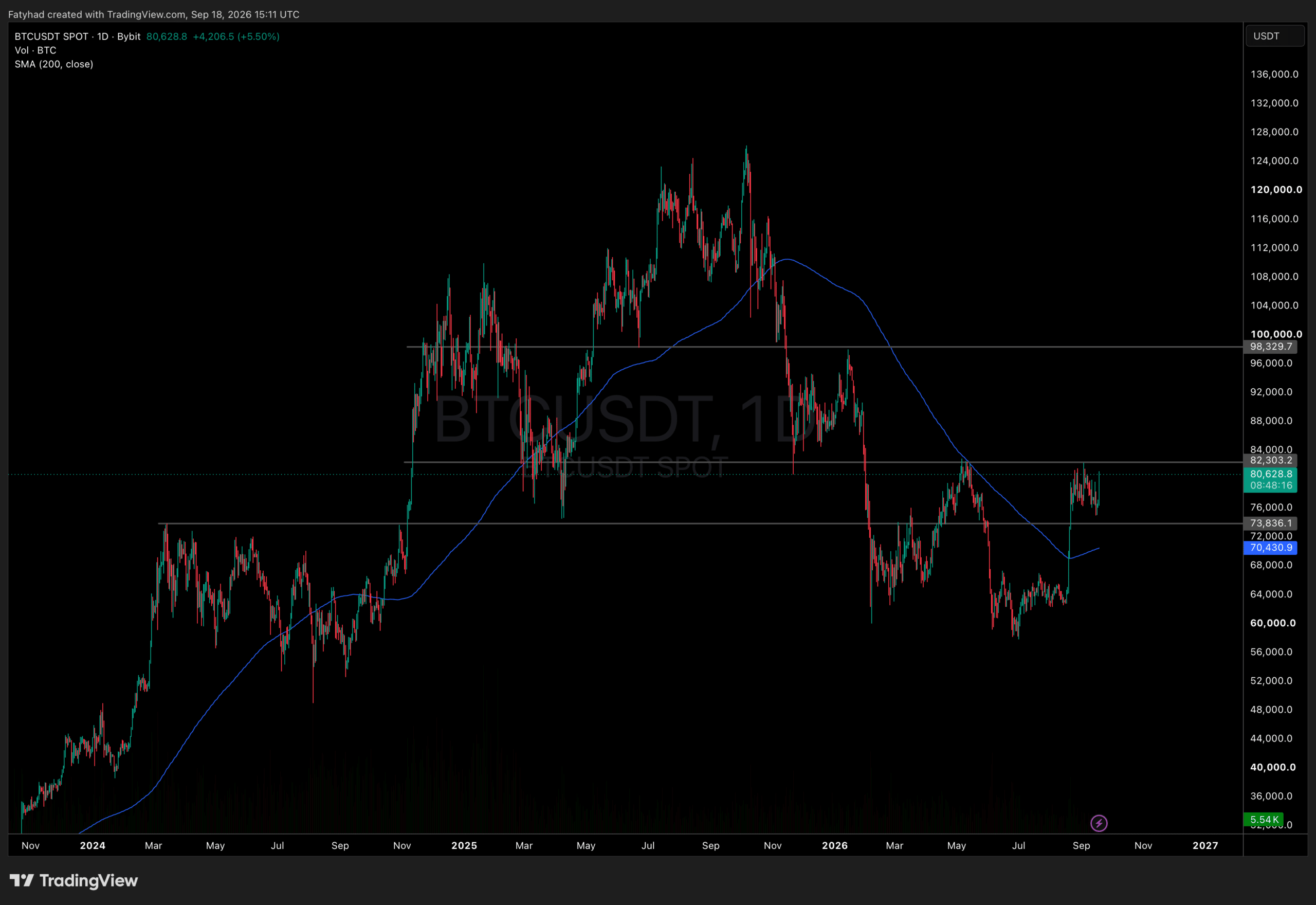
Bitcoin is trading at $80,000 following the U.S. Treasury Department's announcement that Office of Foreign Assets Control (OFAC) sanctioned Tehran-based cryptocurrency exchange BitBank on Sept. 17. Treasury alleges the platform moved hundreds of millions of dollars in bitcoin to Iran's Islamic Revolutionary Guard Corps (IRGC). The muted but recovering price action around BTC USD raises the central question this article addresses: how does a sanctions action tied to a major geopolitical flashpoint and a U.S.-designated terrorist organization square with an apparently limited Bitcoin market reaction?
Treasury also said BitBank processed payments collected from ships buying passage through the Strait of Hormuz, one of the world's most heavily trafficked oil chokepoints.
JUST IN: US sanctions BitBank crypto exchange for supporting the Iranian government — Kalshi Crypto (@Kalshi_Crypto) September 17, 2026
https://x.com/Kalshi_Crypto/status/2100650643987779999?ref_src=twsrc%5Etfw
BitBank Sanctions: What Does the Designation Actually Do?
The freeze BitBank's property under U.S. jurisdiction and bar Americans from transacting with the exchange, according to CoinDesk's reporting on the Treasury action. Those effects flow from placement on OFAC's Specially Designated Nationals List, and under the agency's 50 Percent Rule they extend automatically to any entity the named parties own 50 percent or more of, even if that entity is never named. Treasury designated BitBank alongside Pishtaz Simorgh Electronic Trade Company, the software developer that built the exchange's platform, in a Sept. 17 press release.
The more consequential piece is the secondary-sanctions exposure attached to the designation. A bank in Istanbul or an exchange in Dubai risks losing access to the U.S. financial system if it processes transactions tied to BitBank — even without any American counterparty ever touching the trade. The mechanism is built to make de-risking — cutting a designated entity off wholesale rather than screening it transaction by transaction — the path of least resistance for financial institutions worldwide. Notably, OFAC did not publish any specific wallet addresses in this action, unlike some past crypto-related designations that included bitcoin or tron address strings compliance teams can load directly into screening software.
Why the Strait of Hormuz Raises the Stakes for BitBank and HormuzSafe
BREAKING: Iran is again launching anti-ship missiles toward vessels around the Strait of Hormuz, with reports that four anti-ship cruise missiles were fired at ships accused of violating Iran's navigation regulations. Iranian officials are also claiming the vessels violated… — The Hormuz Report (@HormuzReport) September 18, 2026
https://x.com/HormuzReport/status/2100965248157299020?ref_src=twsrc%5Etfw
BitBank was established in Tehran in 2024. Treasury alleges that since June, the exchange has moved hundreds of millions of dollars in bitcoin to the IRGC. The IRGC is a branch of Iran's armed forces that the U.S. designates as a terrorist organization and that controls large parts of the Iranian economy.
The exchange's alleged role connects to the Hormuz Safe Marine Services Authority, an entity Iran has used to charge tankers between $1 million and $2 million for what it calls safe passage through the Strait of Hormuz. HormuzSafe was sanctioned separately on July 29, and Treasury says it began routing collected fees to regime entities through BitBank starting in June. That is a different platform from Japan's licensed bitbank, inc., which SBI Holdings acquired earlier this year.
That dispute predates the crypto angle — 99Bitcoins covered earlier U.S. action against Iran-linked crypto activity back in July, when Treasury first moved against exchanges tied to this sanctions-evasion network.
The strait's significance is why this designation carries weight beyond typical crypto-compliance news. HormuzSafe offered insurance, traffic control and emergency response services to vessels willing to pay for passage through the world's most important oil chokepoint — a corridor the U.S. Energy Information Administration estimates carries roughly a fifth of global petroleum liquids consumption.
The designation has drawn attention because Treasury says the Tehran-based exchange handled payments linked to passage through the strait. This alleged connection situates the enforcement action at the crossroads of cryptocurrency, sanctions compliance and a significant maritime route. Notably, the sanctioned entity is a niche Tehran exchange rather than a major global financial hub.
Why the BitBank Designation Didn't Touch BTC USD
Bitcoin is holding around $80,000 in the wake of the designation. That is worth sitting with: a Treasury action explicitly linking a crypto exchange to an oil-shipping extortion scheme has so far produced no clearly attributable negative break in BTC USD price action. Instead, the market has continued to recover.
One read is that traders treated the BitBank designation as a continuation of an existing enforcement pattern rather than a new shock. Treasury has targeted Iran-linked crypto exchanges multiple times already in 2026. Without a documented technical setup or a verified 24-hour move tied specifically to this event, it is more accurate to describe the market's response as absent rather than muted in any measurable sense.
The BitBank designation is consequential exactly where it is aimed: the exchange's U.S.-jurisdiction property is frozen, Americans are barred from dealing with it, and any foreign intermediary that touches its flows risks its own access to U.S. dollars. Sanctions bind institutions — banks, exchanges, custodians — rather than Bitcoin's protocol itself, so their bite lands in access, banking and compliance obligations. What it isn't, based on the available evidence, is a market-moving event for Bitcoin itself.
The absence of published wallet addresses may blunt the designation's immediate utility for blockchain-screening systems, leaving compliance teams to work off relationships and off-chain identifiers rather than on-chain flags. Whether OFAC follows up with more specific technical detail remains unclear, but for now, this story sits squarely in the sanctions-enforcement lane rather than the price-action one. The observable markers from here are updates to screening databases as vendors incorporate the new names, and any subsequent Treasury action touching the network it has described.

