U.S. offers $25 million reward for U.S. citizen reportedly leading Mexican cartel
Key Takeaways
- •The U.S. raised the reward for Juan Carlos González to $25 million from $5 million.
- •Washington announced a total of $100 million in rewards for various CJNG leaders and restricted visas for family members and business associates of cartel members.
- •U.S. officials unsealed charges against five high-ranking CJNG leaders in actions meant to weaken the cartel’s leadership.
- •CJNG is designated as one of eight Mexican foreign terrorist organizations and is described as the largest cartel in Mexico.
- •Authorities said the cartel operates in 21 of Mexico’s 32 states and has expanded into the United States and other countries.
MEXICO CITY — The U.S. government on Wednesday offered a $25 million reward for information leading to the capture of Juan Carlos González, also known as “Pelón,” increasing pressure on a U.S. citizen who has emerged as the figurehead of Mexico’s most powerful cartel.
The reward was raised from $5 million. The Trump administration also announced a total of $100 million in rewards for various leaders of the Jalisco New Generation Cartel, or CJNG, and restricted visas for family members and business associates of cartel members.
U.S. officials said the rewards, along with newly unsealed charges against five other high-ranking leaders, were intended to weaken the organization’s leadership as President Donald Trump has intensified pressure on Mexico and other Latin American nations to advance his security agenda. The actions also show how Washington is combining financial penalties, criminal charges and immigration restrictions in an effort to squeeze cartel networks that operate across borders and rely on people, money and logistics beyond the drug trade.
“These sophisticated organizations use violence and fear to maintain control over the importation of deadly narcotics in the United States, including fentanyl, cocaine, meth, and other illegal drugs. Their actions spread violence and death to our communities,” acting Attorney General Todd Blanche told reporters in Washington.
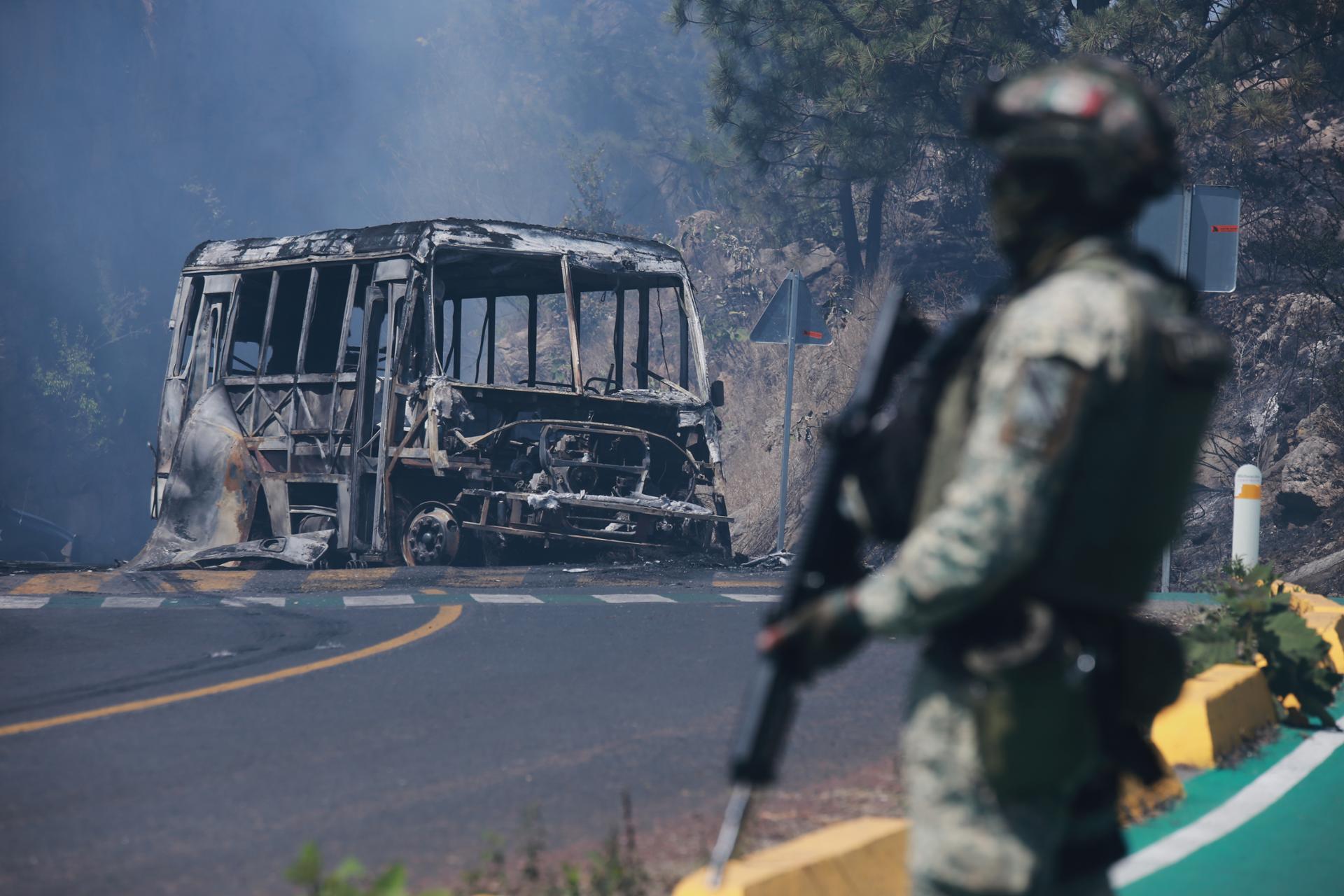
CJNG is one of eight Mexican cartels designated as foreign terrorist organizations. The group suffered a setback in February when its leader, Nemesio Rubén Oseguera Cervantes, also known as “El Mencho,” was killed by the Mexican military. The United States provided intelligence for the operation, which was followed by an increase in violence in the state of Jalisco.
González, Oseguera Cervantes’s stepson and a dual Mexican and U.S. citizen, is reported to have taken control of the cartel, which is involved in activities ranging from avocado production to drug smuggling. That mix of legitimate business fronts and illicit trafficking has made CJNG a central focus of U.S. and Mexican enforcement efforts.
Wednesday’s action came weeks after the United States imposed sanctions on 50 people and companies linked to the cartel, including González. The sanctions froze assets and blocked U.S. financial transactions with the individuals and entities named.
The cartel is regarded as the largest in Mexico, with a presence in 21 of the country’s 32 states. Its operations have also extended to several countries, including the United States.
The Trump administration has increased pressure on the government of Mexican President Claudia Sheinbaum to crack down more aggressively on cartels, and has even threatened military action against the groups.
Among those charged in the newly unsealed indictments are Oseguera Cervantes’ former son-in-law, Julio Alberto Castillo Rodriguez, and Hugo Gonzalo Mendoza Gaytan, whom authorities described as the former leader’s godson. All of the defendants are charged with drug trafficking and firearms offenses, officials said.
“This is a fight against CJNG that we are just beginning, and we will not back down,” Terrance Cole, head of the U.S. Drug Enforcement Administration, told reporters.
