U.S. Rail Freight Gains Driven by Steelmaking and Energy Sectors, AAR Data Shows
Key Takeaways
- •U.S. rail traffic totaled 543,212 carloads and intermodal units for the week ending August 29, a 4.1% increase from a year earlier.
- •Intermodal volume rose 5.7% to 303,191 containers and trailers, aided by a truck-rail rate spread of approximately 34%.
- •Metallic ores and metals led carload gains at 11%, while chemicals fell 3.8% and motor vehicles and parts dropped 6%.
- •Coal volumes increased 1.9%, reflecting seasonal winter stocking and higher power-generator demand.
- •Combined U.S. traffic for the first 34 weeks of 2026 reached 17,357,108 units, up 3.3%, while North American volume rose 3% to 23,812,940 units.
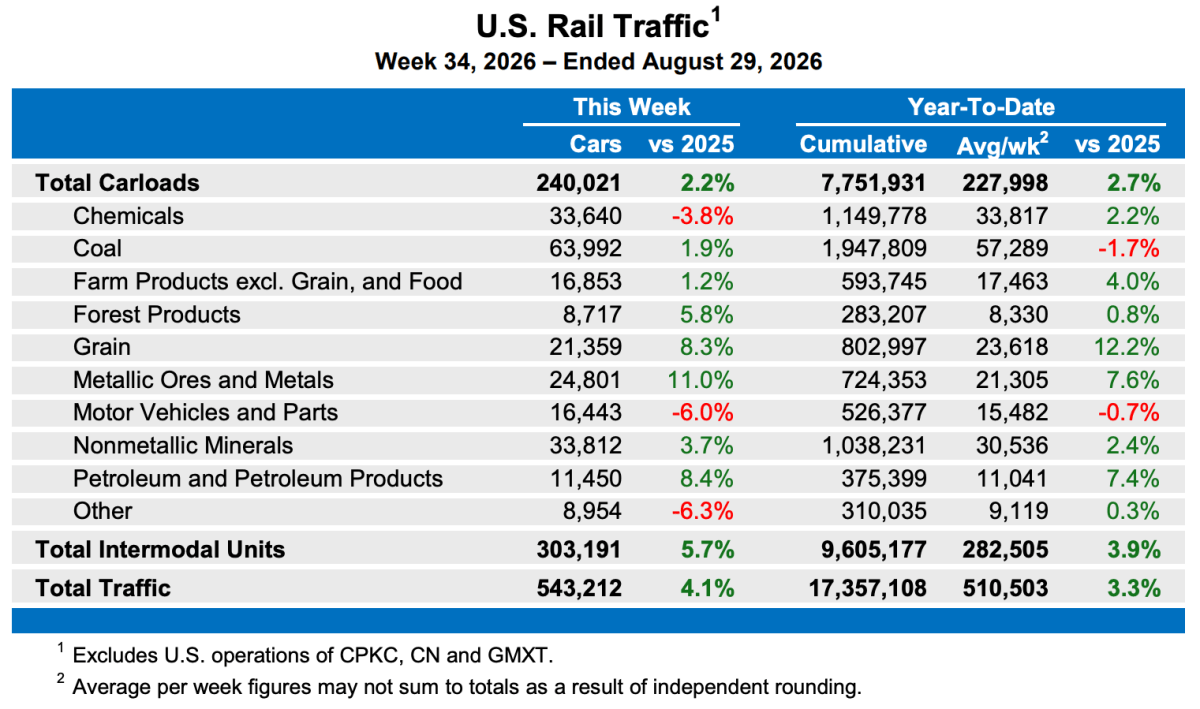
U.S. railroads handled 543,212 carloads and intermodal units in the latest reporting week, a 4.1% increase from the same week a year ago, according to the Association of American Railroads. Weekly rail traffic is closely watched as a barometer of freight demand across manufacturing, energy, and consumer supply chains, since rail carries a broad cross-section of bulk commodities and containerized goods.
For the week ending August 29, commodity freight totaled 240,021 carloads, up 2.2%, while intermodal volume reached 303,191 containers and trailers, a 5.7% year-over-year gain. Intermodal, which moves consumer goods largely imported through ports and transferred to rail, is often treated as a proxy for retail and e-commerce activity.
Seven of the 10 carload commodity groups tracked by AAR posted increases compared with the same week in 2025. Leading the advances were metallic ores and metals typically used in steelmaking, up 11%; petroleum and related products, up 8.4%; and grain, up 8.3%. Declines were recorded in chemicals, down 3.8%, and motor vehicles and parts, down 6%.
Analysts have speculated that steel production for data center construction is likely boosting metallic ore shipments, while uneven manufacturing output has produced off-and-on results in chemicals.
Intermodal traffic continues to benefit from the wide gap between truck and rail rates, now at approximately 34%, according to SONAR data. A pause in rising truck rates appears to have ended, as tender acceptance rates are climbing again amid continued federal enforcement actions that have removed capacity from the market. When truckload rates rise, shippers tend to shift more container volume to rail, making the rate spread a key driver of intermodal share.
Coal volumes rose 1.9% year over year, reflecting both the seasonal runup to winter and increased use by power generators amid greater electricity demand and pro-coal support from the Trump administration. Coal remains one of the largest single commodities moved by U.S. railroads, so shifts in power-sector demand have an outsized effect on total carload figures.
For the first 34 weeks of 2026, U.S. railroads reported cumulative volume of 7,751,931 carloads, up 2.7%, and 9,605,177 intermodal units, up 3.9%, from the same period in 2025. Total combined traffic came to 17,357,108 carloads and intermodal units, a 3.3% gain.
North American rail volume for the week, covering nine U.S., Canadian and Mexican railroads, improved 1.7% to 346,191 carloads, while intermodal units rose 6% to 395,417. Total combined North American traffic was 741,608 carloads and intermodal units, an increase of 3.9%. For the first 34 weeks of 2026, North American volume stood at 23,812,940 carloads and intermodal units, up 3% from 2025.
Source: FreightWaves

