US Federal Prosecutors Investigate Binance Over Potential Iran Sanctions Violations
Key Takeaways
- •The U.S. Attorney's Office for the Southern District of New York, with the Justice Department's Criminal Division, is reviewing Binance's compliance controls and whether the exchange knowingly allowed Iran-linked trading to continue.
- •Prosecutors have not announced charges, and the Justice Department has not disclosed the specific transactions or dates under review.
- •A separate $61 million civil forfeiture complaint links cryptocurrency allegedly moved through Binance accounts used by Chinese firms Blessed Trust and Hexa Whale to black-market sales of sanctioned Iranian crude oil.
- •In November 2023, Binance pleaded guilty to Bank Secrecy Act, money-transmission, and sanctions-related offenses, paying more than $4.3 billion and accepting a three-year independent compliance monitor.
- •Any new criminal case would hinge on whether investigators identify conduct outside the scope of the 2023 plea agreement, which bars additional charges for the conduct it addresses.
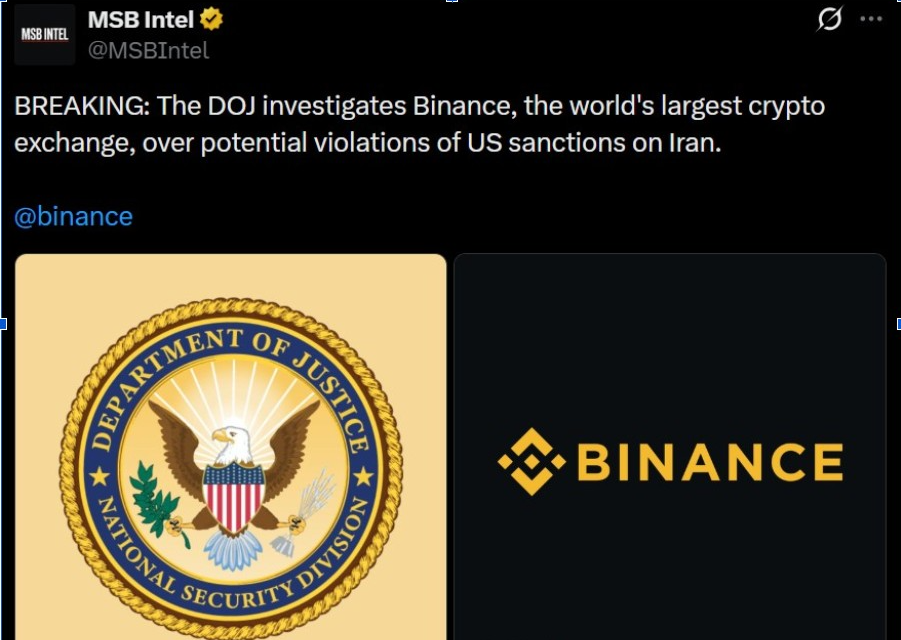
U.S. federal prosecutors are investigating Binance, one of the world's largest cryptocurrency exchanges, over possible violations of American sanctions against Iran, according to a Sept. 22 report citing people familiar with the matter.
The U.S. Attorney's Office for the Southern District of New York is leading the investigation into the exchange's compliance controls, with the Justice Department's Criminal Division also taking part. Authorities are examining whether Binance knowingly allowed certain Iran-linked trading activity to continue, Bloomberg Law reported. Prosecutors have not announced any charges against the company in connection with the reported probe.
Prosecutors Focus on Binance's Compliance Controls
The September 22 report says prosecutors are reviewing Binance's controls for transactions that may fall under U.S. sanctions rules. Investigators are also assessing whether the exchange knew about the activity in question and permitted it to continue.
In response, Binance said it maintains "zero tolerance" for sanctions violations and fully cooperates with law enforcement. The company added that it works to identify and shut down bad actors operating on its platform.
The report follows earlier coverage in March of Justice Department review involving Iran-linked activity on Binance. At that stage, reporting did not clearly establish whether authorities were examining the exchange itself, its users, or both.
$61 Million Iran Oil Case Adds Recent Context
The new report comes one week after Manhattan prosecutors filed a separate civil forfeiture complaint involving roughly $61 million in cryptocurrency. Prosecutors linked those funds to black-market sales of sanctioned Iranian crude oil and petroleum products. Civil forfeiture actions target property that prosecutors allege is tied to criminal activity, rather than bringing criminal charges against a company or individual.
According to the Justice Department, Chinese companies Blessed Trust and Hexa Whale used Binance trading accounts in the alleged scheme. Prosecutors said related addresses moved more than $1.5 billion in proceeds from Iranian oil sales.
That civil case targets cryptocurrency assets rather than Binance itself. On September 15, Binance co-CEO Richard Teng said the complaint did not accuse the exchange of wrongdoing. He also said the platform does not permit transactions with sanctioned individuals.
Teng said Binance investigates accounts when it identifies sanctions or illicit-finance risks. He added that the exchange may restrict, freeze, or close such accounts and report cases to authorities.
Can Binance Face Another U.S. Criminal Case?
The reported probe has raised questions about whether Binance can face another U.S. criminal case after its 2023 settlement. Any new case would depend on the conduct prosecutors examine, the evidence they collect, and the terms of the earlier plea agreement.
In November 2023, Binance pleaded guilty to Bank Secrecy Act, money-transmission, and sanctions-related offenses. The company agreed to pay more than $4.3 billion — a resolution U.S. authorities described at the time as one of the largest corporate penalties in American history — and accepted a three-year independent compliance monitor, meaning the exchange remains under independent oversight while the new probe proceeds. The 2023 case also underscored that U.S. sanctions and anti-money-laundering rules can reach offshore exchanges serving American customers.
The Justice Department said at the time that Binance knowingly failed to block prohibited trades between U.S. users and customers in sanctioned jurisdictions. Court records cite more than $898 million in trades involving U.S. users and Iran-based users from 2018 through May 2022.
The plea agreement states that prosecutors would not bring additional charges arising from conduct the 2023 deal addresses — a scope provision common to corporate resolutions, which typically cover only the conduct a deal explicitly defines. A separate case would therefore hinge on whether investigators identify different conduct outside that scope.
DOJ Probe Has Not Produced Charges
The latest reporting does not establish that Binance violated sanctions after the 2023 resolution. Federal investigations can conclude without criminal charges, and prosecutors have not announced a charging decision in the current matter.
The DOJ has also not publicly detailed the transactions under review or identified their dates. Those specifics could prove decisive in determining how the reported investigation relates to Binance's earlier sanctions case and plea agreement. Without them, it remains unclear whether any conduct under review falls outside the scope of the earlier deal.
Binance continues to reject claims that it tolerates sanctions breaches. Teng has said the company will cooperate with authorities and take action against accounts that create sanctions risks.
This article is for informational purposes only. An investigation does not establish wrongdoing, and allegations in civil or criminal proceedings remain unproven unless established in court.

