U.S. Petroleum Trade Balance: Dollar Flows vs. Physical Crude Oil Volumes
Key Takeaways
- •The Econbrowser post analyzes the U.S. petroleum trade balance using both nominal dollar-value flows from BEA NIPA data and physical-unit crude oil volumes from the EIA.
- •Because the BEA dollar figures are nominal, movements in the petroleum trade balance can reflect price changes rather than shifts in physical volumes.
- •In recent years the United States has been a net exporter of refined petroleum products while remaining a net importer of crude oil.
- •U.S. crude oil exports became a regular feature of the petroleum trade accounts after restrictions dating from the 1970s were lifted in December 2015.
- •EIA monthly data on U.S. net crude oil imports are available through May, and readers can reproduce the charts using the public FRED and EIA databases.
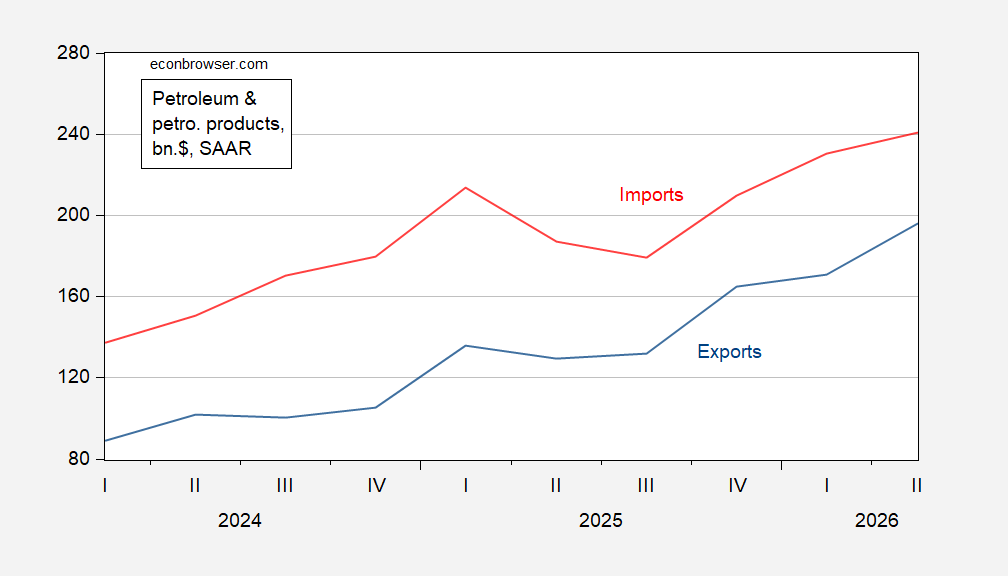
A recent Econbrowser post examines the U.S. petroleum trade balance from two complementary angles: dollar-value trade flows and physical-unit crude oil volumes. The distinction matters to readers of monthly trade reports, since petroleum has historically been among the larger components of the U.S. goods trade balance.
From the NIPA accounts, the post presents Figure 1: petroleum and petroleum product exports (blue) and imports (red), both in billions of dollars, at a seasonally adjusted annual rate (SAAR). The data come from the Bureau of Economic Analysis (BEA), the U.S. Commerce Department agency whose National Income and Product Accounts record U.S. economic activity, including international transactions, in nominal dollar terms. Because the figures are nominal, they combine price and volume effects: the dollar balance can widen or narrow even when physical flows are little changed.
For the balance in physical units of crude oil, the post turns to data from the U.S. Energy Information Administration (EIA), the statistical agency within the Department of Energy. The linked series reports U.S. net imports of crude oil in thousands of barrels per day on a monthly basis: EIA data. The post notes that EIA data are available through May; subsequent monthly releases will extend the series.
The two yardsticks measure different things: in recent years the United States has been a net exporter of refined petroleum products while remaining a net importer of crude oil. Crude exports are themselves a comparatively recent feature of the trade picture: restrictions on crude oil exports dating from the 1970s were lifted in December 2015, after which crude shipments abroad became a regular line in the petroleum accounts.
Readers wishing to reproduce the charts can draw on publicly accessible databases, including FRED (Federal Reserve Economic Data), maintained by the Federal Reserve Bank of St. Louis, and the EIA's own data portal. When comparing the two measures, a useful check is whether movements in the dollar balance reflect changes in physical volumes or in prices.
The post closes with a pointed memo to Bruce Hall: "For Pete's sake, figure out how to use FRED and EIA databases."

