America's $4 Billion Offshore Wind Retreat Channels Capital Into Fossil Fuels
Key Takeaways
- •The Department of the Interior reached approximately $3.9 billion in agreements between March and August with six companies that surrender offshore wind leases and redirect capital into natural gas, LNG, or oil in exchange for federal reimbursement.
- •RWE's latest settlement grants $1.22 billion to resolve claims, while the company commits $900 million to Louisiana LNG infrastructure and $300 million toward gas turbines for 15 peaking plants.
- •The same companies exiting U.S. offshore wind continue investing abroad, with RWE securing U.K. contracts for up to 6.9 GW of offshore wind capacity.
- •China invested over $625 billion in clean energy in 2024 and now controls roughly 85% of global solar manufacturing and 80% of lithium-ion battery production capacity.
- •The EIA projects a record 86 GW of new U.S. utility-scale capacity in 2026, with solar, batteries, and wind together representing more than 90% of planned additions.
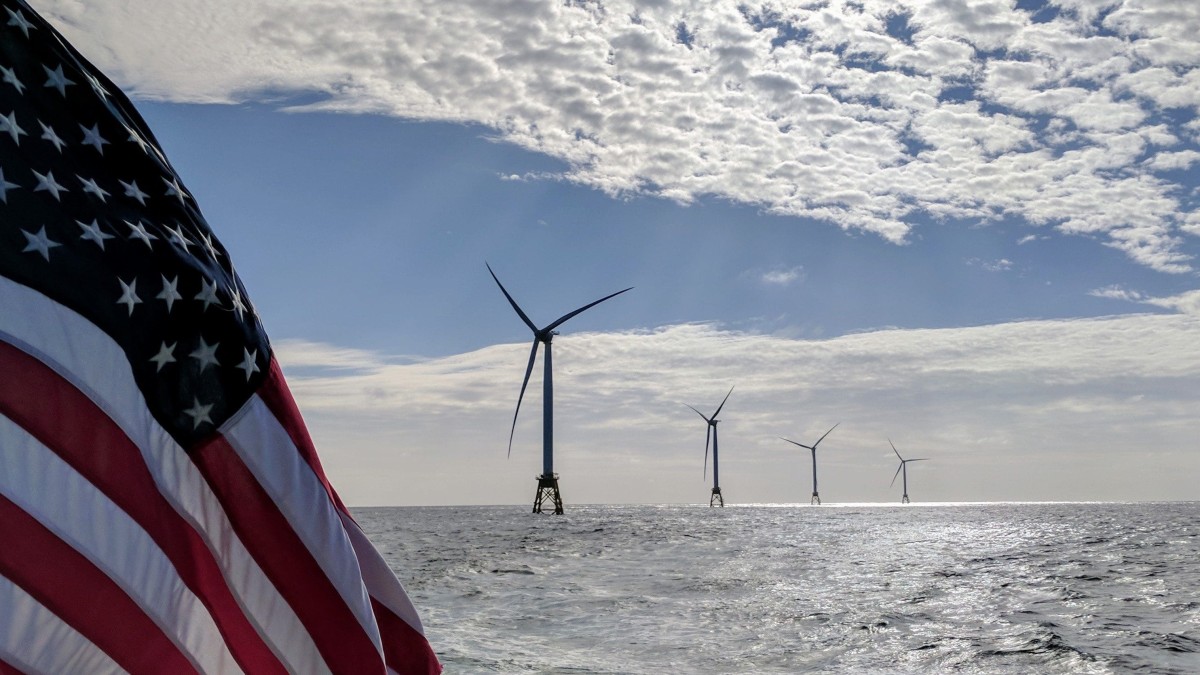
The most striking aspect of America's latest offshore wind retreat is not the cancellation of several projects. Some were early-stage, costly, and increasingly difficult to permit—and underperforming projects should be allowed to fail. What stands out is that the U.S. government is paying companies to abandon one energy technology while steering their capital toward another.
Between March and August, the Department of the Interior reached a series of agreements totaling approximately $3.9 billion with TotalEnergies, Bluepoint Wind, Golden State Wind, Invenergy, Duke Energy, and RWE. The arrangements vary in structure, and some reimbursements remain contingent on matching investments. However, the core mechanism is consistent across all of them: companies relinquish offshore wind leases, commit comparable sums primarily to natural gas, LNG, or oil, and then recover their lease payments from the federal government.
The most recent agreement grants RWE $1.22 billion to resolve claims and surrender leases off the coasts of New York, California, and Louisiana. In return, RWE is directing $900 million into Louisiana LNG infrastructure and has earmarked $300 million for gas turbines to support a pipeline of 15 peaking plants.
This is being framed as a strategy for energy dominance. In practice, it represents an exceptionally costly wager that America's future competitiveness can be sustained primarily by expanding reliance on the fuel it already consumes the most.
Industrial Policy Pointed Backwards
The administration contends that the original leases were sold under unrealistic assumptions regarding subsidies, costs, and permitting timelines. There is merit to that critique. U.S. offshore wind has been battered by inflation, rising interest rates, supply-chain bottlenecks, and a permitting process that can consume the better part of a decade. These leases were auctioned during a period when the prior administration had set a target of deploying 30 GW of offshore wind by 2030—a goal that assumed sustained federal support and a steadily improving cost curve that neither materialized as projected.
Yet these settlements do not reflect the market independently favoring gas over wind. They are government-engineered agreements that socialize the cost of withdrawal while making reimbursement conditional on investment in politically preferred technologies.
TotalEnergies, for instance, committed $928 million to LNG, oil, and gas investments before qualifying for dollar-for-dollar reimbursement of its surrendered leases. The company also agreed not to develop new U.S. offshore wind projects. Bluepoint Wind made a comparable commitment while redirecting up to $765 million into LNG. Invenergy's $765 million is being directed mainly toward gas-fired plants across five states, with some allocation to geothermal investment.
This is not project selection. It is technology selection.
The most telling evidence emerges from what these same companies are doing outside the United States. RWE has not concluded that offshore wind lacks a future. In the United Kingdom, it recently secured contracts for projects representing up to 6.9 GW of offshore wind capacity. What RWE determined is that U.S. offshore wind offers no foreseeable permitting pathway.
The technology did not abandon the market. The market abandoned the United States.
Gas as Partner, Not Complete Strategy
The strongest case for the policy is straightforward: America possesses abundant natural gas, electricity demand is accelerating, and gas turbines can deliver power when wind and solar cannot. Data centres, manufacturers, and households require reliable electricity now—not after another decade of litigation. U.S. electricity demand, flat for nearly two decades, is now projected to rise sharply as data centre buildout, manufacturing reshoring, and electrification of transport and heating converge on the grid simultaneously.
That argument warrants serious consideration. Natural gas will remain indispensable to the U.S. electricity system, especially for flexibility and near-term capacity. However, a valuable balancing resource transforms into a strategic vulnerability when permitted to dominate the energy mix.
Natural gas already supplied approximately 41% of U.S. utility-scale electricity in 2025. Expanding gas generation while deliberately eliminating wind options increases the share of electricity whose price is tied to a traded fuel. The fact that American gas is currently affordable does not guarantee it will remain so permanently.
U.S. wholesale gas-price volatility reached 171% in February 2022. It subsided afterward but climbed back above 100% in early 2025. Expanding LNG exports also forge an increasingly direct link between domestic gas markets and geopolitical events in Europe, Asia, and the Middle East.
Wind and solar carry intermittency costs but entail zero fuel-price risk. Once constructed, their marginal fuel cost is zero. Storage, transmission, flexible demand, nuclear, geothermal, and gas can all complement them. This is why the economically rational approach is a diversified portfolio—not an ideological contest between molecules and electrons.
Swapping wind leases for gas assets may enhance near-term dispatchability. It also eliminates part of the hedge against the next gas price shock.
China Competes on Learning Curves, Not Rhetoric
The greater cost will not surface on an electricity bill next year. It will manifest through eroded industrial capability.
China invested more than $625 billion in clean energy in 2024, nearly double its 2015 level. It now controls roughly 85% of global solar manufacturing capacity and 80% of lithium-ion battery production capacity. These positions were not established because every early factory or project turned a profit. They were built through scale, repetition, supply-chain integration, and relentless cost reduction.
That is how emerging industries are won.
Europe remains slower, more expensive, and heavily bureaucratic. It is not comfortably ahead in the clean-technology race. Yet the European Union increasingly treats the energy transition as a question of industrial competitiveness, resilience, and strategic autonomy rather than environmental philanthropy. Its goal is to reduce dependence on imported fossil fuels while retaining more of the technologies that replace them.
The distinction matters. China is constructing dominant supply chains. Europe is working to rebuild strategic capacity. The United States is reimbursing companies for exiting a future market and labeling the outcome as dominance.
Offshore wind carries particular significance because the U.S. is not simply forfeiting electricity generation. It risks losing expertise in marine engineering, specialized vessels, subsea cables, floating platforms, ports, and turbine components. Between 2022 and 2024, the domestic offshore wind industry had already invested more than $6.8 billion in manufacturing facilities, ports, vessels, and transmission infrastructure.
Supply chains do not wait indefinitely for political certainty. They relocate.
The U.S. Power Market Is Already Voting Differently
There is a final contradiction. American developers themselves are not abandoning clean electricity. The EIA expects a record 86 GW of new utility-scale generating capacity in 2026. Solar accounts for 51% of planned additions, batteries for 28%, and wind for 14%. Together, those technologies constitute more than nine-tenths of the project pipeline.
That does not render gas obsolete. It indicates that the market sees value in rapid construction, modularity, and freedom from fuel costs. Current policy is pushing against the direction in which much of the investment pipeline is already flowing.
A pragmatic administration could acknowledge that several offshore leases were uneconomic, negotiate orderly exits, reform permitting, and reauction viable areas under improved terms. It could support gas, nuclear, and geothermal capacity without barring companies from reentering wind. It could evaluate technologies based on delivery, system value, and cost.
Instead, Washington is deploying public funds to narrow its own future options.
Four billion dollars is modest relative to the scale of America's energy system. The signal it transmits is far larger. Companies investing in long-lived factories, skills, and supply chains now understand that an American energy market can reverse course with an election—and may even pay them to dismantle the previous direction.
Energy dominance built on yesterday's fuels is not dominance. It is dependence with superior marketing.
By Leon Stiller for Oilprice.com

