More Than 10,800 U.S. K-12 Schools Now Powered by Solar, Generation180 Report Finds
Key Takeaways
- •More than 10,800 U.S. K-12 schools serving over 7 million students now use solar, hosting more than 2.4 GW of capacity that has more than tripled since 2016.
- •School solar adoption has nearly doubled in a decade, from 5,450 schools in 2016 to more than 10,800 today, with California leading at 2,921 solar-powered schools.
- •The report's first national census of school battery storage identified 155 schools with systems installed since 2016, with California accounting for 109 of them.
- •Roanoke City Public Schools is expected to save an estimated $46.5 million in energy costs over 35 years through its solar adoption.
- •Recent growth is spreading beyond the Sun Belt to states such as Virginia, Illinois, and New Jersey, indicating school solar is viable across varied climates and electricity markets.
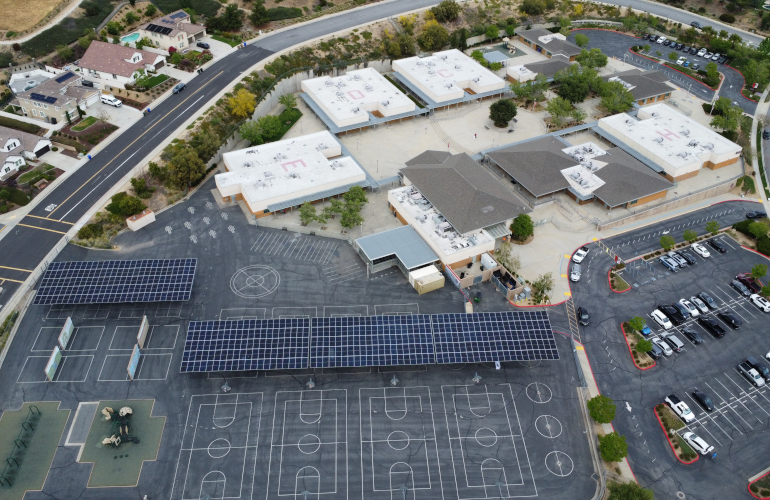
More than 10,800 K-12 schools serving more than 7 million students across the United States now use solar energy, according to a new report from the clean energy nonprofit Generation180. The report finds that solar power is helping schools lower electricity costs, invest more resources in students, and strengthen their communities. The adoption figure carries weight given the scale of the sector: there are roughly 98,000 public K-12 schools in the U.S., so while adoption has grown quickly, only a small share of schools overall have gone solar — a gap the report frames as a major remaining opportunity.
The sixth edition of "Brighter Future: The State of Solar & Battery Storage in U.S. K-12 Schools" finds that total solar capacity on K-12 schools has more than tripled since 2016. Together, these schools host more than 2.4 GW of solar — enough to power more than 450,000 homes. The report ranks the top states for K-12 solar and battery storage, tracks national and state-level growth, examines financing and ownership models, highlights school case studies and cost savings, and provides the first national census of battery storage at U.S. schools. Financing models matter for schools because, as public entities, they generally cannot claim federal tax credits directly, so many districts have historically used third-party ownership structures such as power purchase agreements to go solar without upfront capital costs.
School districts operating on tight budgets are saving millions of dollars in avoided electricity costs with solar power — funds that can be reinvested into classrooms, teacher pay, key programs, and other essentials. Energy is typically one of a school district's largest operating expenses after personnel, which is why avoided utility costs translate so directly into classroom resources. Roanoke City Public Schools, for example, is expected to save an estimated $46.5 million on energy costs over 35 years by choosing solar.
"This report shows that school solar is no longer concentrated in just a few places," said Tish Tablan, lead report author and senior director of Generation180's Electrify Our Schools program. "Urban, suburban and rural school districts across the country are using clean energy to reduce costs, improve facilities and prepare students for the economy of the future."
First National Census of School Battery Storage
The report also includes Generation180's first national census of battery energy storage systems at K-12 schools. It identifies 155 schools with battery storage systems installed since 2016, including 94 schools that pair batteries with solar and 61 schools with battery storage alone. While the number of school battery storage systems has grown sevenfold over the last 10 years, less than 0.1% of the nation's K-12 schools have adopted the technology.
Battery storage can help schools lower peak electricity costs and provide backup power during outages. About one-third of U.S. public K-12 schools are FEMA-designated emergency shelters, making reliable backup power especially important — outages that cut power to a designated shelter affect not just students but the surrounding community relying on it during storms, wildfires, and other emergencies. Pairing solar with storage can allow schools to serve as resilient community hubs during emergencies while reducing everyday energy costs. California leads with 109 schools equipped with battery storage — about 70% of identified systems nationwide — followed by Massachusetts, Oregon, Hawaii, and Arkansas.
Additional Key Findings
Solar adoption has expanded nationwide. The number of solar-powered K-12 schools has nearly doubled over the past decade, rising from 5,450 in 2016 to more than 10,800 today. California leads with 2,921 solar-powered schools, followed by New Jersey and New York, with Illinois and Arizona rounding out the Top 5 by number of schools.
Recent growth is spreading to more states: Virginia, Connecticut, Pennsylvania, New Jersey, and New York rank among the leaders in new school solar capacity from 2021 to 2025. Illinois, Minnesota, Wisconsin, Virginia, and Massachusetts are also among the states adding the most new solar-powered schools in the last five years. Notably, several of these states — such as Virginia, Illinois, and New Jersey — sit well outside the Sun Belt, indicating that school solar has become viable across a broad range of climates and electricity markets.
Battery storage offers a major opportunity for school resilience. Battery systems can reduce peak electricity costs and provide backup power during outages, and combined solar-plus-storage can support schools' role as community resilience hubs.
"Schools are at the heart of our communities," said Stuart Gardner, Executive Director of Generation180. "Every community has a school and today more than 10,000 schools have already shown what is possible, but the vast majority of America's schools are still missing out. Every school should have the opportunity to benefit from affordable clean energy and greater resilience. We hope this report gives school leaders and their communities the information and inspiration they need to take the next step."
Source: Solar Power World (news item from Generation180).

