US Weekly Jobless Claims Fall to 187,000, Lowest Since 1969, Reshaping Fed Rate Expectations
Key Takeaways
- •US initial jobless claims dropped by 22,000 to 187,000 for the week ending July 18, the lowest level since September 1969 and well below the Reuters consensus forecast of 212,000.
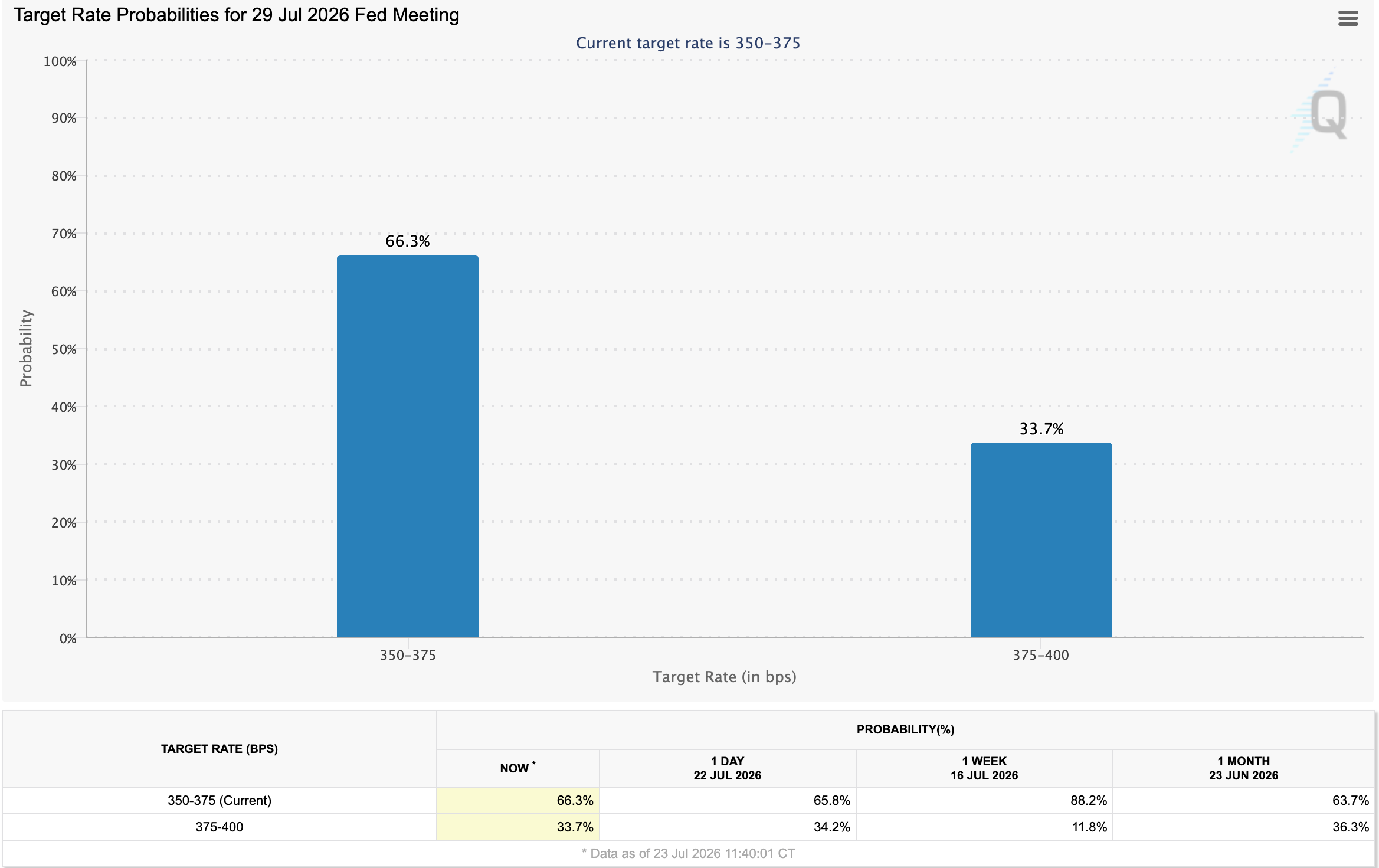
- •The CME FedWatch tool raised the probability of a Federal Reserve rate hike at the July 29 meeting to 33.7%, up from 11.8% one week earlier, while odds of a hold stood at 66.3%.
- •Continuing claims fell to 1.796 million in the week ending July 11, a six-week low, indicating limited layoffs and resilient hiring conditions.
- •Economists cautioned that seasonal auto plant shutdowns may have artificially depressed the claims figure, and a rebound toward the low 200,000s is possible in the following week.
- •The shift in rate expectations reverses the rate-cut optimism that had lifted cryptocurrency prices in early July, as higher interest rates reduce the appeal of non-yielding assets such as Bitcoin.
US initial claims for state jobless benefits dropped by 22,000 to 187,000 for the week ending July 18, marking the lowest level since September 1969. With the federal funds rate already at a two-decade high of 5.25%–5.50%, the decline hardened expectations that the Federal Reserve could raise interest rates further at its upcoming meeting.
The CME FedWatch tool now places the odds of a rate hike at 33.7%, up sharply from 11.8% a week earlier. This shift reverses the rate-cut hopes that had lifted cryptocurrency markets earlier in July.
Strong Labor Data Constrains the Fed
Jobless claims are among the most timely indicators of labor market health, released weekly with minimal lag, making them closely watched for early signals of economic shifts. The 22,000 drop represented the largest weekly decline in three months. Economists surveyed by Reuters had anticipated claims would rise to 212,000.
Continuing claims — the number of people collecting benefits for more than one week, a rough gauge of hiring — fell to 1.796 million in the week ending July 11, a six-week low.
Under the Federal Reserve's dual mandate of maximum employment and price stability, a persistently tight labor market can complicate efforts to bring inflation back to the central bank's 2% target, as wage pressures from worker shortages can feed through to consumer prices. The data arrives as the US-Iran conflict lifts oil prices and intensifies inflation concerns. These combined pressures prompted traders to reprice the Fed's July 29 meeting. As of July 23, CME FedWatch showed hike odds at 33.7%, up from 11.8% the prior week, with the probability of a hold at 66.3%.
Matthew Martin, senior US economist at Oxford Economics, noted that the low level of claims is difficult to dismiss.
"There may be some seasonal noise in the data, given summer months tend to be noisy, but the extremely low level of claims is hard to ignore, and the trend in continued claims remains encouraging," he said.
Martin added that limited layoffs and stronger hiring should cap unemployment in the coming months. A thin labor supply could even pull the unemployment rate below its current 4.2%.
However, economists cautioned that seasonal auto plant shutdowns may have artificially depressed the figure. Claims could rebound toward the low 200,000s next week.
Implications for Crypto Markets
While initial jobless claims may rebound in the coming weeks, the latest drop to a multi-decade low reinforces the view that the US labor market remains resilient. This resilience could reduce the Federal Reserve's urgency to lower interest rates.
Higher interest rates increase the appeal of cash and bonds while raising the opportunity cost of holding non-yielding assets such as cryptocurrencies.
The current mood marks a sharp reversal from early July, when weak payrolls data revived rate-cut bets and lifted Bitcoin (BTC) toward higher levels.
The Federal Reserve's two-day meeting is scheduled for next week. Traders still favor a hold at 66.3%, though the jump in hike odds reflects mounting inflation concerns. A hawkish surprise would test whether crypto can maintain its recent position, while a rebound in claims next week could quickly dampen talk of a rate hike.

