U.S. Joins Japan in Rare Coordinated Yen Intervention as Markets Eye Possible September Rate Hike
Key Takeaways
- •The United States joined Japan in the first coordinated yen-buying intervention in roughly 28 years after the dollar approached ¥164, a level unseen in approximately four decades.
- •U.S. Treasury Secretary Scott Bessent publicly backed the yen stabilization effort and cited lessons from the 1990s Asian financial crisis as a factor in Washington's decision to participate.
- •A summary of the BOJ's July 2026 meeting revealed that at least three of nine board members supported faster rate increases due to concerns that inflation could exceed the bank's 2% target.
- •The yen carry trade represents a key risk channel, as simultaneous BOJ rate hikes and yen appreciation could force investors to unwind leveraged positions across global equities, bonds, and cryptocurrencies.
- •Inflation and wage data released before September will be critical in determining whether the BOJ proceeds with another rate hike or opts to maintain a cautious approach.
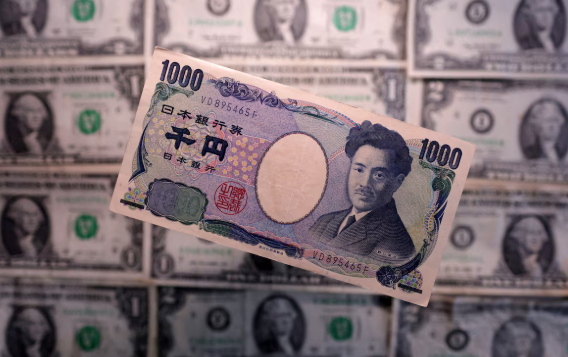
The Japanese yen has moved to the center of global financial markets after the United States joined Japan in a rare coordinated effort to support the currency, adding a new layer of significance to growing expectations that the Bank of Japan could raise interest rates again as early as September.
The intervention comes at a critical moment for Japan's economy. The yen has suffered prolonged weakness against the U.S. dollar, raising the cost of imported goods and adding pressure to Japanese households and businesses. At the same time, policymakers are becoming increasingly concerned that inflation could remain above the Bank of Japan's target for longer than previously expected.
Recent comments from BOJ Governor Kazuo Ueda have strengthened the impression that policymakers are becoming more willing to move interest rates higher if inflation risks intensify. That combination has changed the market's calculation. Japan is no longer relying solely on foreign-exchange intervention to defend its currency; the prospect of a higher Japanese interest rate now provides an additional potential source of support for the yen.
Markets are consequently turning their attention to the BOJ's September meeting, where investors will look for confirmation that policymakers are prepared to accelerate the pace of monetary tightening. The stakes are high. A stronger yen could help reduce imported inflation, while a higher BOJ policy rate could also push Japanese government bond yields higher and encourage investors to unwind positions built around Japan's historically low borrowing costs. The consequences could extend well beyond Japan, especially in markets that have benefited from cheap yen funding.
A Rare U.S.-Japan Currency Intervention
The coordinated intervention represents an unusual development in the global foreign-exchange market. Japan has intervened in currency markets before, particularly during periods when the yen weakened sharply. However, direct cooperation with the United States is far less common. The latest operation has been described as the first coordinated U.S.-Japan yen-buying intervention in roughly 28 years.
The move followed a period of extreme yen weakness. The dollar had climbed toward ¥164, taking the yen to levels not seen in roughly four decades. The sharp depreciation increased concern among Japanese policymakers because a weaker currency makes imported energy, food and raw materials more expensive.
Japan's Ministry of Finance has the authority to intervene directly in foreign-exchange markets when it considers currency movements excessively volatile or disorderly. Official Japanese data explain that intervention can be used when exchange rates move sharply over short periods or diverge significantly from economic fundamentals. This time, however, Washington's participation added considerable weight to the operation.
U.S. Treasury Secretary Scott Bessent has publicly expressed support for efforts to stabilize the yen and said he was confident that BOJ Governor Ueda would do what was best for Japan's monetary policy. The involvement of the United States has sent a clear message to currency traders: authorities are becoming increasingly uncomfortable with disorderly yen weakness.
Why the Yen Has Become a Global Market Issue
The yen is not simply another major currency. Because Japanese interest rates have remained relatively low for many years, the currency has played an important role in global financial markets through what is known as the yen carry trade. Investors can borrow yen at relatively low interest rates and use the proceeds to purchase assets that offer higher returns elsewhere. When the yen remains weak or stable, the strategy can be attractive.
But the calculation changes rapidly when the yen begins to strengthen. A sudden appreciation in the Japanese currency can increase the cost of repaying yen-denominated borrowing. Investors may then be forced to sell other assets and buy yen to close their positions. That process can amplify currency movements and create volatility across global equities, bonds and other risk-sensitive assets. This is one reason investors outside Japan are paying close attention to the BOJ's next move.
Ueda's Comments Put September in Focus
The possibility of a September rate hike has become one of the most important questions facing financial markets. BOJ officials have gradually moved away from the extraordinary monetary easing that characterized Japanese policy for much of the previous decade. The central bank has already raised rates from historically low levels, but policymakers have generally moved cautiously.
That approach now appears to be facing greater pressure. A summary of the BOJ's July 2026 meeting showed growing support among policymakers for a faster pace of rate increases. At least three of the nine board members favored moving more aggressively, citing concerns that inflation could overshoot the bank's 2% target.
The concerns are particularly relevant because the weak yen itself can contribute to inflation. When the yen loses value, Japanese companies pay more for imported fuel, food, machinery and other goods. Those higher costs can eventually be passed on to consumers. That creates a feedback loop: a weak yen can increase import prices, higher import prices can lift inflation, and persistent inflation can make it harder for the BOJ to justify keeping interest rates low. Ueda's recent messaging has therefore become increasingly important for investors.
The BOJ May Have More Room to Raise Rates
The BOJ's policy dilemma is complicated by the fact that Japanese interest rates remain relatively low compared with borrowing costs in several other major economies. That gap has helped make the yen a popular funding currency. A September rate hike would not necessarily eliminate the interest-rate differential between Japan and the United States, but it could narrow the gap enough to change the economics of some carry trades.
For currency traders, even a relatively small shift in expected interest rates can have a significant impact. If markets begin pricing in not just one rate hike but a series of additional increases, investors could start adjusting their portfolios before the BOJ actually delivers the move. That anticipation itself can strengthen the yen.
This is why policymakers' language is being scrutinized so closely. A clear signal from Ueda that rates could rise sooner or faster if inflation continues to accelerate could encourage investors to reduce short-yen positions.
Intervention and Monetary Policy Are Different Tools
Currency intervention and interest-rate policy can both support a currency, but they work in different ways. Foreign-exchange intervention directly affects supply and demand in the currency market. When authorities buy yen and sell foreign currency, they create immediate buying pressure for the Japanese currency. Monetary policy works through interest rates and financial conditions: higher Japanese rates can make yen-denominated assets more attractive while reducing the incentive to borrow yen for investments in higher-yielding markets.
This distinction is important because intervention alone may not permanently reverse a currency trend. If the underlying interest-rate differential remains unchanged, traders may eventually return to selling the yen after the initial intervention effect fades. A credible shift in BOJ policy could make the intervention more durable. That appears to be one reason markets are paying such close attention to the possibility of a September rate hike.
Japanese Bond Yields Could Rise
A stronger expectation of BOJ tightening is already affecting Japan's government bond market. Japanese government bond yields have become increasingly sensitive to speculation about future interest-rate increases. The two-year yield, in particular, tends to respond quickly to changes in expectations for BOJ policy.
Reuters reported that Japanese short-term government bond yields have risen as markets increased bets on additional monetary tightening. A September rate hike could push yields higher again. For Japan, that would be a significant development. The country has one of the world's largest government bond markets, and Japanese investors hold substantial amounts of foreign securities. If domestic bond yields become more attractive, some Japanese investors could reconsider their overseas allocations, resulting in capital flowing back toward Japan. Such a shift would potentially provide additional support for the yen while simultaneously putting pressure on international bond markets.
The Carry Trade Is a Key Risk
The yen carry trade may be one of the most important transmission channels between Japanese monetary policy and global markets. For years, investors have taken advantage of Japan's low borrowing costs by funding investments in assets offering higher yields. The strategy works particularly well when currency volatility is low, but the risk rises when the yen begins to appreciate rapidly.
If the BOJ raises rates and the yen strengthens at the same time, investors may begin closing carry positions. That can create forced selling in other markets. The impact could potentially be felt in U.S. stocks, emerging-market currencies, corporate bonds and cryptocurrencies. The exact outcome would depend on the scale of the positioning and the speed of the yen's move. Still, the possibility of a carry-trade unwind is one reason investors are treating the BOJ's September meeting as a potentially important global market event.
Washington's Involvement Changes the Calculation
The participation of the United States makes the latest yen intervention particularly unusual. Washington has historically been cautious about direct involvement in currency markets. The decision to participate therefore signals that U.S. officials see broader risks associated with continued yen weakness.
Bessent has linked the intervention to concerns about instability in Asian currencies and the broader financial system. Reuters reported that he viewed the experience of the Asian financial crisis of the 1990s as an important factor in the decision. The message to markets is significant: if traders believe the United States is willing to support Japan again, speculative bets against the yen may become more expensive and more difficult to maintain.
That does not guarantee that the yen will continue strengthening. Currency markets are too large and complex for intervention alone to control over an extended period. But coordinated intervention can change investor behavior by increasing the perceived risk of maintaining aggressive short positions.
Markets Will Look for Confirmation in September
The intervention has created immediate support for the yen, but investors now want evidence that the move is part of a broader policy shift. That evidence could come from the BOJ. A September rate increase would provide the clearest confirmation that Japanese policymakers are becoming more concerned about inflation and the economic consequences of a weak currency.
A stronger signal for additional rate increases would be even more important. If Ueda indicates that the BOJ could continue tightening beyond September, investors could begin pricing a more sustained normalization of Japanese monetary policy. That would represent a significant departure from the ultra-low-rate environment that shaped global markets for years. On the other hand, if the BOJ chooses to wait, the yen could face renewed selling pressure. Investors might conclude that policymakers remain uncomfortable with the economic risks of higher borrowing costs.
Inflation Will Be Critical
Inflation data will play an important role in determining the BOJ's next decision. The central bank has repeatedly emphasized that monetary tightening should be based on sustainable price and wage developments rather than temporary shocks. The problem is that the yen itself can amplify inflation through import costs. A weaker currency increases the local-currency cost of commodities and other imported products.
If Japanese wages are also rising, the BOJ could see stronger evidence of a sustained inflation cycle, making another rate hike easier to justify. If inflation begins easing and domestic demand weakens, however, policymakers may prefer to move cautiously. The market will therefore monitor inflation, wages, consumer spending and economic growth ahead of the September meeting.
Bitcoin and Other Risk Assets Could Face Volatility
The latest developments have also attracted attention from crypto and macroeconomic commentators, including Coin Bureau, which has previously discussed the relationship between BOJ policy, the yen and global risk assets, particularly the potential effect of a carry-trade unwind on markets such as Bitcoin.
A sharp change in Japanese monetary policy can influence global liquidity conditions, and global liquidity remains an important driver of risk appetite across financial markets. For cryptocurrency investors, the yen may therefore be more important than it initially appears. If Japanese investors repatriate capital or reduce leveraged exposure to foreign assets, the effect could potentially spread into equities, bonds and digital assets.
Bitcoin has increasingly traded as part of the broader global risk environment, particularly during periods when liquidity and leverage are major market drivers. A significant unwinding of yen-funded positions could reduce liquidity available for riskier assets. However, if a BOJ rate hike coincides with a sharp yen rally, rising Japanese bond yields and broad reductions in global leverage, cryptocurrencies could experience increased volatility. The opposite could also occur: if the BOJ moves gradually and communicates that additional tightening will be limited, markets could interpret the policy change as manageable. The yen could strengthen without triggering a major global deleveraging event. That is why investors will be watching not only the rate decision itself but also Ueda's guidance.
What Traders Should Watch Before the BOJ Meeting
Several indicators could provide clues about the direction of the yen before September. The first is USD/JPY. A sustained decline in the dollar-yen exchange rate would indicate continued yen strength. Japanese government bond yields will provide another important signal—rising short-term yields would suggest that markets are increasing expectations for additional BOJ tightening.
Inflation and wage data will also be crucial. Strong wage growth combined with persistent inflation would strengthen the case for higher rates. Positioning in the yen futures market could provide another indication of whether investors are still betting heavily against the currency. If speculative short positions decline following the intervention, authorities may already be achieving one of their immediate objectives.
The Bigger Picture for Japan
Japan's currency problem is not simply about the exchange rate. It is increasingly connected to the country's broader economic policy. For years, Japan relied on extremely low interest rates to support economic activity and fight deflation. That policy helped stabilize the economy but also contributed to an unusually large interest-rate gap with other developed markets.
Now, inflation has changed the equation. The BOJ must balance the benefits of normalizing rates against the risks of slowing economic activity and increasing borrowing costs for households, companies and the government. The yen adds another complication: allowing the currency to weaken too far can increase imported inflation, while moving too aggressively to support the yen through higher rates could create financial stress elsewhere. The central bank therefore faces a delicate balancing act.
A Critical Test for the Yen
The latest U.S.-Japan intervention marks a significant moment for the Japanese currency. Japan has demonstrated that it is willing to intervene directly, while Washington has shown that it is prepared to participate when currency instability becomes a broader concern. At the same time, the BOJ is showing signs of becoming more comfortable with the idea of faster interest-rate increases.
Those developments reinforce one another. Intervention can provide immediate support for the yen, while higher interest rates can provide a more lasting fundamental reason for investors to hold the currency. If both forces continue working in the same direction, the yen could be entering a fundamentally different phase.
The September BOJ meeting will therefore be closely watched by currency traders, bond investors and participants across global financial markets. A rate hike could strengthen the yen and push Japanese government bond yields higher. It could also increase pressure on carry trades that have relied on Japan's low borrowing costs. A decision to hold rates steady, meanwhile, could leave the market questioning whether intervention alone can reverse the yen's longer-term weakness.
For now, investors are waiting for confirmation. The U.S.-Japan intervention has raised the cost of betting aggressively against the yen, but the BOJ's next policy decision could determine whether the currency's rebound becomes a lasting trend. The outcome could have consequences far beyond Tokyo—influencing Japanese bond yields, global capital flows, carry trades, equities, cryptocurrencies and the broader appetite for risk. In that sense, the yen has become much more than a currency story. It is now one of the clearest indicators of how global investors are preparing for the next phase of monetary policy.
Source: hokanews.com
