US-Iran Tensions Raise Strait of Hormuz Shipping Risks and LNG Supply Fears
Key Takeaways
- •The Strait of Hormuz is a critical transit route for oil and LNG shipments, and renewed tensions have raised concerns about possible disruption there.
- •Global LNG markets were already tight before the latest escalation, and the added uncertainty is increasing buyer caution ahead of winter.
- •If the conflict lasts into the colder months, demand for US LNG exports could rise as customers look for alternative supply sources.
- •Sustained interference in Hormuz shipping could affect cargo movement, delivery timing and broader LNG pricing dynamics.
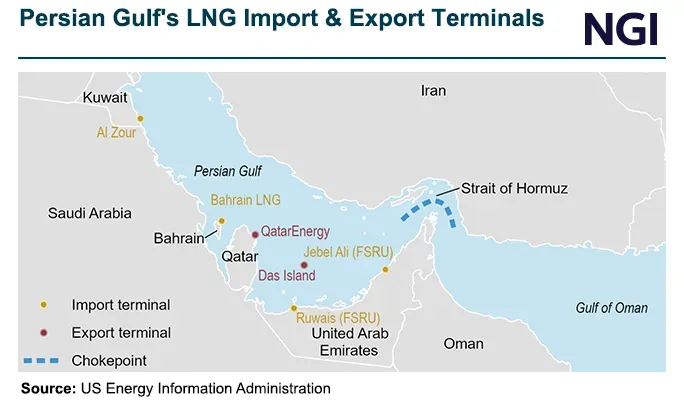
Escalating US-Iran hostilities this week raised fresh concerns about prolonged disruptions to energy shipments through the Strait of Hormuz, a chokepoint for oil and LNG flows that global markets monitor closely. The flare-up added to already simmering worries over global LNG supply and could increase demand for American exports — and affect pricing — if the conflict drags into the winter months, when heating demand typically keeps gas and LNG markets under tighter scrutiny.
At a Glance:
- US-Iran tensions flare up again
- Hormuz vessel traffic under pressure
- Global LNG supplies at high risk
The renewed tension comes as market participants continue to watch the Middle East for any signs of wider disruption to energy flows. The Strait of Hormuz remains a critical transit route for oil and LNG shipments, and any sustained interference there could have implications for cargo movement, delivery schedules and the broader supply picture.
Natural gas markets were already dealing with concerns over global LNG availability before this week’s escalation. The latest developments have added another layer of uncertainty to an already tight and closely watched market, particularly as winter approaches and buyers look for dependable supply.
If the conflict extends into the colder months, demand for US LNG exports could rise further as buyers seek alternative supply sources. That shift could also influence pricing dynamics in the global LNG market.
Related Tags
Feedgas Demand
Global LNG Supply
Iran War
NYMEX
Natural Gas Prices
Qatar
Shortages
United Arab Emirates
Kevin Dobbs
Kevin Dobbs joined the staff of NGI in April 2020. Prior to that, he worked as a financial reporter and editor for S&P Global Market Intelligence, covering financial companies and markets. Earlier in his career, he served as an enterprise reporter for the Des Moines Register. He has a bachelor's degree in English from South Dakota State University.
Initial Trading Leans Bullish as Natural Gas Futures Forge Ahead
Natural gas futures advanced early Wednesday as traders took stock of hefty supply, favorable but potentially fleeting weather, and robust LNG demand amid heightening tensions in the Middle East.
Gulf Coast Natural Gas Cash Gives Back $2 as Edouard Comes Ashore
Physical natural gas prices fell back across the Gulf Coast and Southeast Tuesday for Wednesday delivery, surrendering about two-thirds of Monday’s surge past $7 as Tropical Storm Edouard came ashore near the Texas-Louisiana border.
US Manufacturing Growth Supports Industrial Natural Gas Demand Heading Into Fall
US manufacturing continued to expand in August, with factory production remaining strong and Texas activity accelerating, providing a supportive backdrop for industrial natural gas demand heading into fall.
Natural Gas Futures Pare Early Losses as LNG Terminals Shrug Off Edouard
Natural gas futures clawed back most of their early losses Tuesday as the season’s first Gulf Coast tropical storm bore down on the Texas-Louisiana LNG corridor without denting feedgas nominations.
European Heat Widens LNG Price Premium Over Asia as Storage Clock Ticks
Cooling demand forecasts eased across both Europe and Asia this week, but European natural gas buyers are raising competitive bids for US LNG volumes as thin storage and Middle East supply risk outweigh temperatures.
US LNG Exports Surge 23% — So Why Is Henry Hub Still Below $3?
Despite an enormous increase in US LNG output this year, benchmark Henry Hub prices have barely budged.

