US Iran Sanctions Plan Targets Oil Trade and Global Partners
Key Takeaways
- •The United States will unveil new Iran sanctions on Monday, and Treasury Secretary Scott Bessent is scheduled to present the package at 2 p.m. Eastern time.
- •The planned measures are designed to target not only Iran but also foreign businesses, banks, ships, and other entities that support its trade network.
- •China is under particular scrutiny because Kpler data cited in the article show it bought more than 80% of Iran's shipped oil in 2025.
- •Iran has rejected the threat of new sanctions, with Foreign Minister Abbas Araqchi saying previous military and economic pressure failed to change Tehran's position.
- •Restrictions in the Strait of Hormuz have reduced tanker traffic and supported crude prices, adding to concerns over global energy supply.
The United States plans to unveil new sanctions on Iran on Monday, broadening pressure beyond Tehran to its wider trading network. Treasury Secretary Scott Bessent said the planned package is the toughest sanctions ever imposed on Iran, and he is scheduled to outline the measures at 2 p.m. Eastern time. Such programs are typically enforced by the Treasury Department's Office of Foreign Assets Control, which designates the people, companies, ships, and banks cut off from the US financial system.
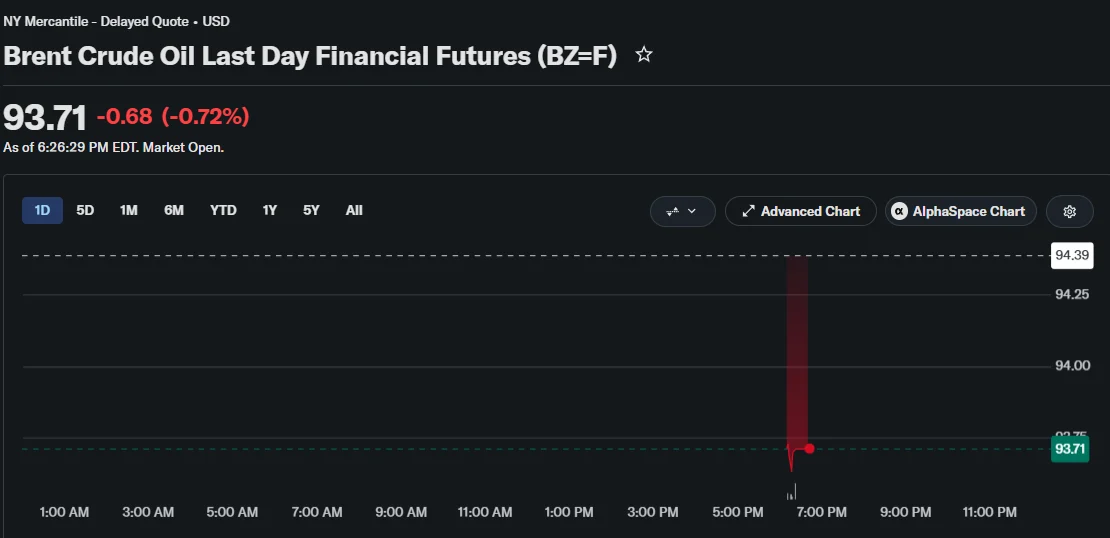
The threat has already intensified concerns over energy supplies and foreign companies that do business with Iran. Global benchmark Brent settled Friday at $93.71, up 0.65%, while US benchmark West Texas Intermediate closed at $87.06, rising 0.26%. Traders were assessing the risk of penalties for Iran's trade partners as tanker traffic remained severely restricted through the Strait of Hormuz.
US Iran sanctions target Tehran's oil trade partners
The sanctions are intended to isolate Tehran economically and punish countries or companies that provide financial or commercial support. President Donald Trump warned of consequences for any state that offers Iran a lifeline, placing Iran oil sanctions at the center of Washington's campaign.
China is drawing particular scrutiny because, according to 2025 data from Kpler, a commodity-analytics firm, it bought more than 80% of Iran's shipped oil, much of it processed by independent Chinese refineries. Bessent has urged Beijing to cooperate with Washington, but China has instead backed diplomacy and continued to promote negotiations between the two sides.
Chinese Vice Foreign Minister Miao Deyu met Iranian Deputy Foreign Minister Kazem Gharibabadi in Beijing on August 17. The officials discussed regional conditions and efforts to end the conflict.
Tehran has rejected the US sanctions threat and described Washington's approach as repetitive. Foreign Minister Abbas Araqchi said new restrictions would fail just as earlier military and economic pressure did. He also called for respectful negotiations based on justice and national dignity.
Even so, Iran's economy remains under strain from sanctions, infrastructure damage, and nearly six months of conflict. United States and Israeli attacks began on February 28 and damaged both military assets and civilian infrastructure.
Pakistan is also pursuing parallel mediation efforts. Army Chief Asim Munir plans to visit Tehran on Monday for talks on peace and security, and a Pakistani source said the threatened US Iran sanctions will be part of those discussions.
Hormuz disruption keeps pressure on global oil prices
The situation at the Strait of Hormuz, the narrow chokepoint between Iran and Oman that connects Persian Gulf producers to global markets, gives the dispute added importance for energy markets. Iran is currently restricting unauthorized tankers, leaving shipping near a virtual standstill. Tehran also retains missiles and drones that could disrupt regional maritime traffic.
Before the war, the waterway carried about one-fifth of global traded oil. US Energy Information Administration data show flows averaged 4.9 million barrels per day in the second quarter, compared with 21.6 million barrels per day in late 2025.
Those restrictions have reduced global inventories and helped support higher crude prices. The EIA expects Brent to average about $85 in the third quarter, assuming Hormuz traffic remains severely constrained through August before gradually improving in September.
Fresh US Iran sanctions could add another obstacle for refiners, shippers, insurers, and banks that serve Iran. Secondary penalties could force foreign businesses to choose between Tehran and access to United States markets, a tool Washington has applied before through earlier designations of refineries, port operators, and tankers handling Iranian crude. The exact targets will become clear when Bessent presents the package.
Iranian leaders have responded with mixed messages while rejecting external pressure. Parliament Speaker Mohammad Baqer Qalibaf said neighboring states have proposed regional security and economic arrangements, although he did not identify those governments.
President Masoud Pezeshkian has supported diplomacy, even as Tehran rejects Washington's current terms. Trump said Iran wants an agreement but is not ready to accept the right deal. Those competing positions leave the US sanctions announcement tied to both oil security and stalled negotiations.
The Strait of Hormuz blockade preserves some of Tehran's leverage despite military losses. At the same time, Iran oil sanctions are testing how far China and other partners are willing to resist Washington. The new sanctions package will show whether Treasury targets oil buyers, banks, tankers, insurers, or multiple categories together.
The post US Iran Sanctions Plan Targets Oil Trade and Global Partners appeared first on Blockonomi.

