Trump Demands Decades of Compensation From Iran as Brent Crude Approaches $90
Key Takeaways
- •President Trump declared on August 11, 2026, that the US will pursue financial compensation from Iran for fifty years of damages tied to Iranian-backed military activities.
- •Omani-mediated negotiations to reopen the Strait of Hormuz are nearing failure as both nations present conflicting demands for reparations.
- •Brent crude prices briefly approached $90 per barrel due to concerns over the constrained passage of the 20 million barrels of oil that transit the strait daily.
- •Saudi and UAE bypass pipelines lack the capacity to offset the volume of petroleum typically moving through the Strait of Hormuz.
- •The complete halt of Iranian oil exports poses a significant supply risk to China, which has historically been Iran's largest oil customer.
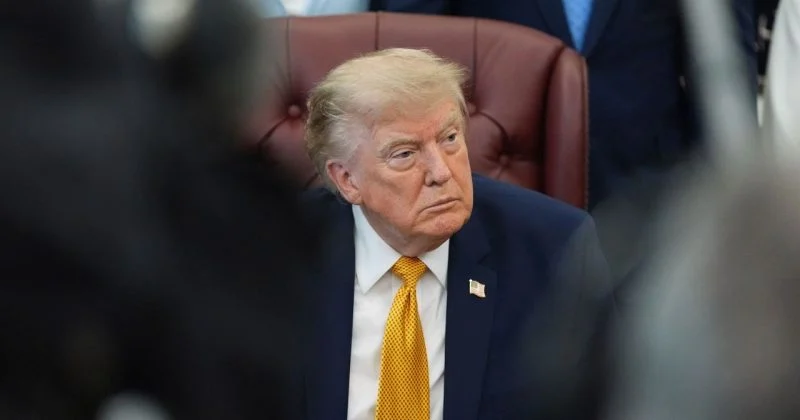
President Donald Trump announced on August 11, 2026, that the United States will pursue financial compensation from Iran for damages incurred across five decades of Iranian-backed military actions. The claims encompass casualties from roadside bombings, regional armed conflicts, and violent crackdowns on protesters.
The declaration arrived at a critical juncture, as Omani-mediated negotiations over the reopening of the Strait of Hormuz showed increasing signs of collapse. Brent crude briefly surged toward $90 per barrel on the news before retracing some gains.
A Chokepoint for Global Oil
The Strait of Hormuz facilitates approximately 20% of the world's oil and petroleum liquids trade, moving roughly 20 million barrels per day under normal conditions.
Since the US-Iran conflict escalated in early 2026, traffic through the strait has dropped sharply. Iranian oil exports from Kharg Island have been halted entirely, and the United States has reinstated naval blockade measures, asserting operational control over maritime activity in the region.
Iran has outlined its own conditions for reopening the strait: US war reparations, a full lifting of sanctions, and a formal cessation of military threats before any further negotiations proceed. Trump's compensation demand effectively mirrors that demand in reverse, producing a standoff in which each side insists the other must pay first.
The standoff echoes a pattern that has defined the waterway for decades. During the Iran-Iraq War in the 1980s, the so-called Tanker War saw attacks on Gulf shipping draw US naval intervention, and Iran has periodically threatened to close the strait in response to Western pressure. Each prior episode prompted temporary shipping disruptions and insurance premium spikes, though none achieved a sustained closure.
Some bypass infrastructure exists but is far too limited to absorb the full volume at risk. Saudi Arabia's East-West pipeline can redirect crude to Red Sea terminals at Yanbu, and the UAE's Habshan-Fujairah line reaches the Gulf of Oman without transiting the strait. Combined, however, these routes handle only a fraction of the roughly 20 million barrels per day that normally pass through Hormuz.
Market Reaction
Brent crude's push toward $90 per barrel reflects a direct concern among market participants: if the strait remains closed or constrained, the approximately 20 million barrels per day that typically transit through it must be sourced elsewhere, and no alternative route exists that can handle comparable volumes.
Analysts observing the situation note that mutual escalation by both sides is making de-escalation increasingly difficult to achieve. Within oil markets, prolonged uncertainty is already prompting refiners and shippers to adjust procurement strategies, with freight costs rising in advance of any actual physical supply disruption. China, historically Iran's largest oil customer, faces particular exposure to the halt in Iranian exports, a dynamic that could cascade through Asian energy supply chains.
Political and Strategic Pressures
Approaching US midterm elections are adding layers of complexity to an already challenging negotiating environment. Oman, which has historically functioned as a diplomatic back-channel between the two nations, continues to play a significant role as mediator in the current talks. Additionally, US munitions stockpiles are reportedly under strain following an extended period of military engagement in the region.
The convergence of a compensation standoff, a sustained chokepoint disruption, and domestic political pressure in both Washington and Tehran leaves few obvious off-ramps. Whether Oman's mediation can produce even a partial arrangement—such as humanitarian or third-party oil passage—may determine whether the current crisis hardens into a protracted closure or follows the pattern of earlier flashpoints in eventually receding.

