US Government's New AI Chatbot Answers Minecraft Questions With a Rewritten 'End Poem'
Key Takeaways
- •America.gov's newly launched AI chatbot responds to Minecraft queries with a roughly 1,800-word rewrite of the game's "End Poem," replacing the original's cosmic imagery with bureaucratic references such as a ZIP code.
- •The Minecraft response was an intentional easter egg rather than a hallucination, but TechCrunch could not determine who added it to the chatbot.
- •The platform, which launched on Sept. 29 and draws on roughly 29,000 government websites, is powered by Google's Gemini and Elon Musk's Grok, with Edward Coristine serving as a lead engineer.
- •The chatbot's easter egg follows a series of disputes over the White House's use of games and anime in messaging, with objections from The Pokémon Company, the official Yu-Gi-Oh! account, Halo voice actor Steve Downes, and Japan's economic security minister Kimi Onoda.
- •The site currently directs users to government services, with capabilities to complete and track processes directly on the platform expected in 2027.
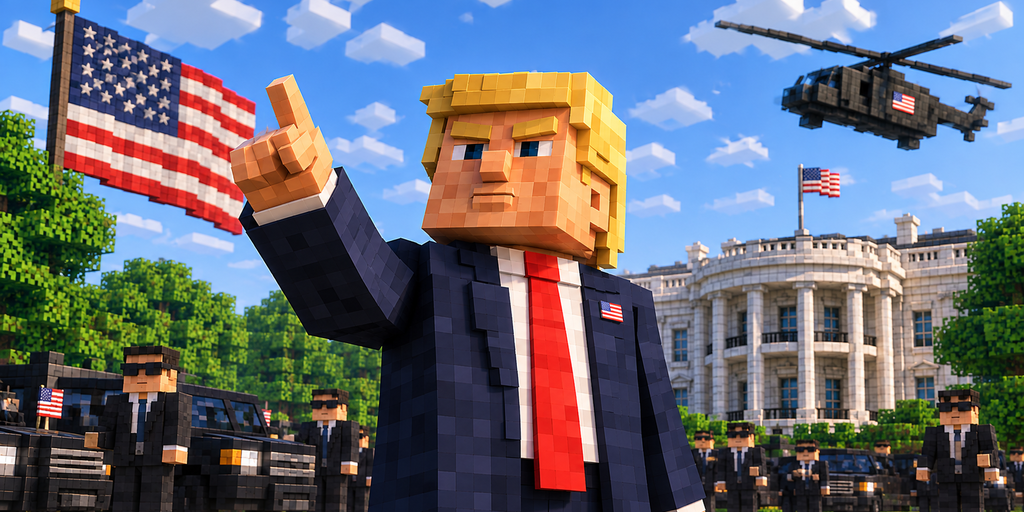
The U.S. government's newly launched AI chatbot responds to Minecraft questions with a roughly 1,800-word rewrite of the game's famous "End Poem," according to a TechCrunch report. The behavior is an intentional easter egg rather than a hallucination, though TechCrunch says it could not determine who added it.
The chatbot lives at America.gov, which launched on Tuesday, Sept. 29. Per FedScoop, the site draws on information from roughly 29,000 government websites, allowing users to ask about tasks such as booking a campsite, obtaining a passport, or replacing a Social Security card. Techunch published its findings the same day the site launched.
Ask about Minecraft, however, and the bot departs from help-desk territory. TechCrunch's Amanda Silberling found that the prompt triggers a monologue of roughly 1,800 words that reads like an existential crisis. The text is a rewrite of the Minecraft "End Poem", written by Irish author Julian Gough, which the game displays after a player defeats the Ender Dragon and steps into the exit portal.
The government version preserves the original piece's structure but swaps its cosmic imagery for bureaucratic paperwork. In the passage TechCrunch published, the poem's signature line about love becomes a line about a ZIP code. It is an easter egg, not a malfunction—and no one has yet said who put it there.
The discovery lands amid a broader pattern: the White House has repeatedly borrowed cartoons and games for political messaging, and the rights holders who have spoken up say they never signed off. In March, it posted Pikachu artwork from the game Pokémon Pokopia overlaid with "Make America Great Again" text, and The Pokémon Company said it was not involved and that no permission was granted. White House videos about the Iran strikes also mixed in footage from Yu-Gi-Oh! and Dragon Ball, and Yu-Gi-Oh!'s official X account said no one connected to the manga or anime was involved.
Steve Downes, the voice actor behind Halo's Master Chief, demanded the White House remove his voice from a strike video he called "disgusting and juvenile war porn." After Trump posted an AI video of himself as Naruto on Truth Social in June, Japan's economic security minister, Kimi Onoda, warned that such misuse can damage a work's image, according to the Honolulu Star-Advertiser. A fan petition against the practice has gathered roughly 24,000 signatures, while Bandai Namco and Studio Pierrot did not comment, and no manga creator has been reported responding. Taken together, the objections to the White House's use of games and anime have come from rights holders, a voice actor, and a foreign government official.
Per CNBC, the platform is powered by Google's Gemini and Elon Musk's Grok. Edward Coristine, the 20-year-old DOGE alum nicknamed "Big Balls," was a lead engineer on the project.
The current version of the site directs users to government services. There are plans to let people continue processes on the platform itself and track their progress, with those features expected in 2027—a shift that would move America.gov from pointing users toward services to handling them directly.

